Design decision
Why this idea works
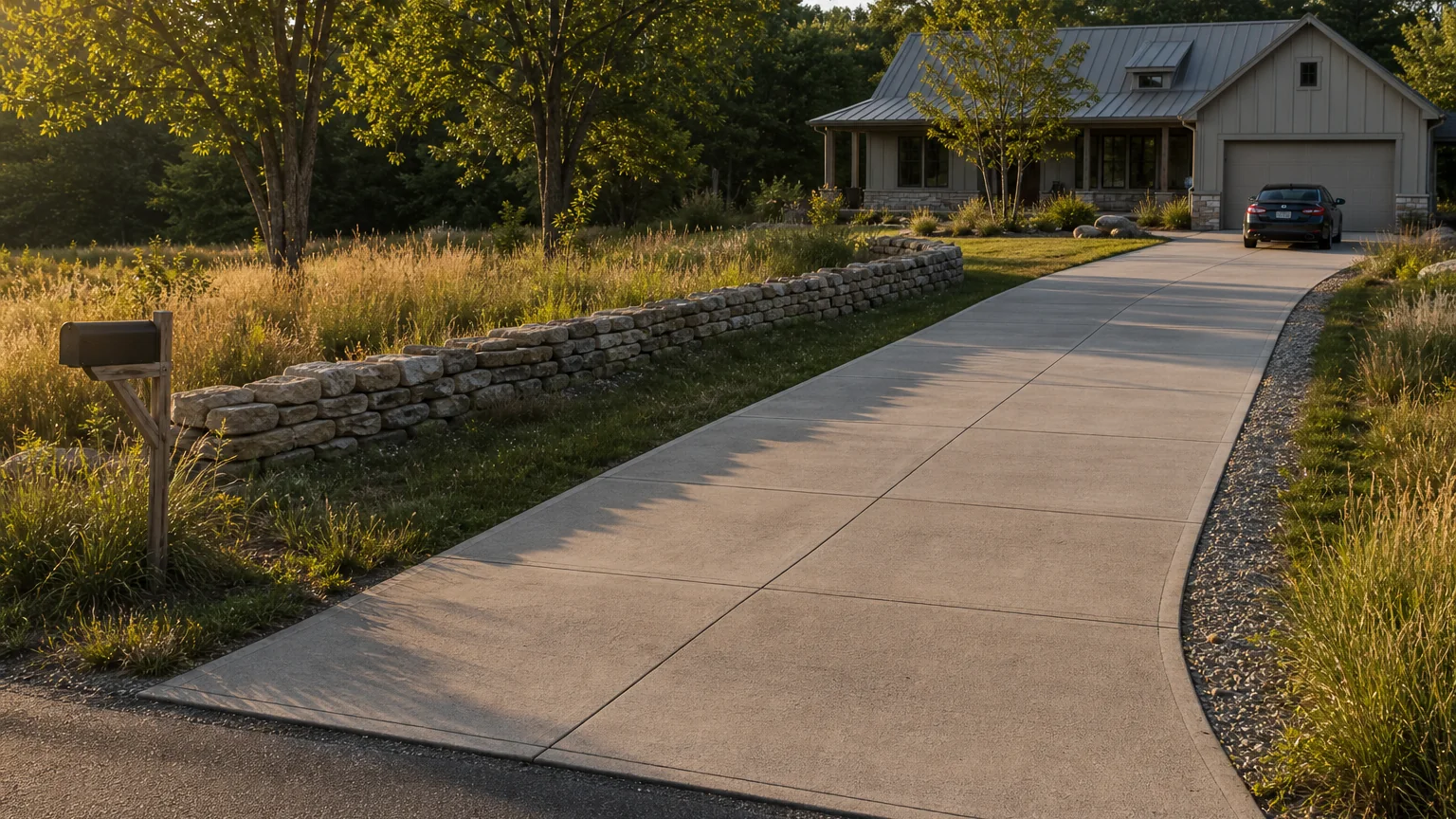
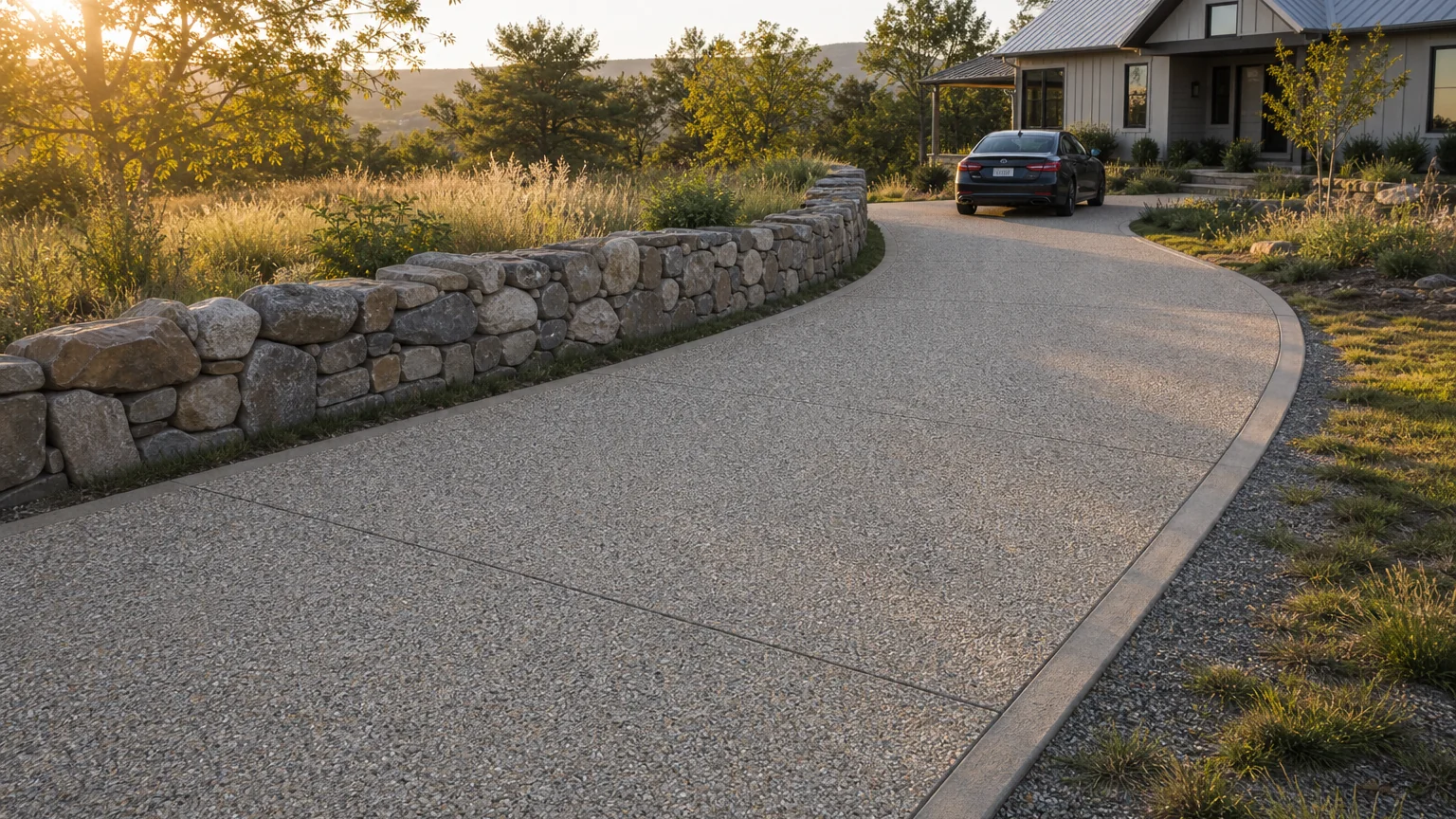
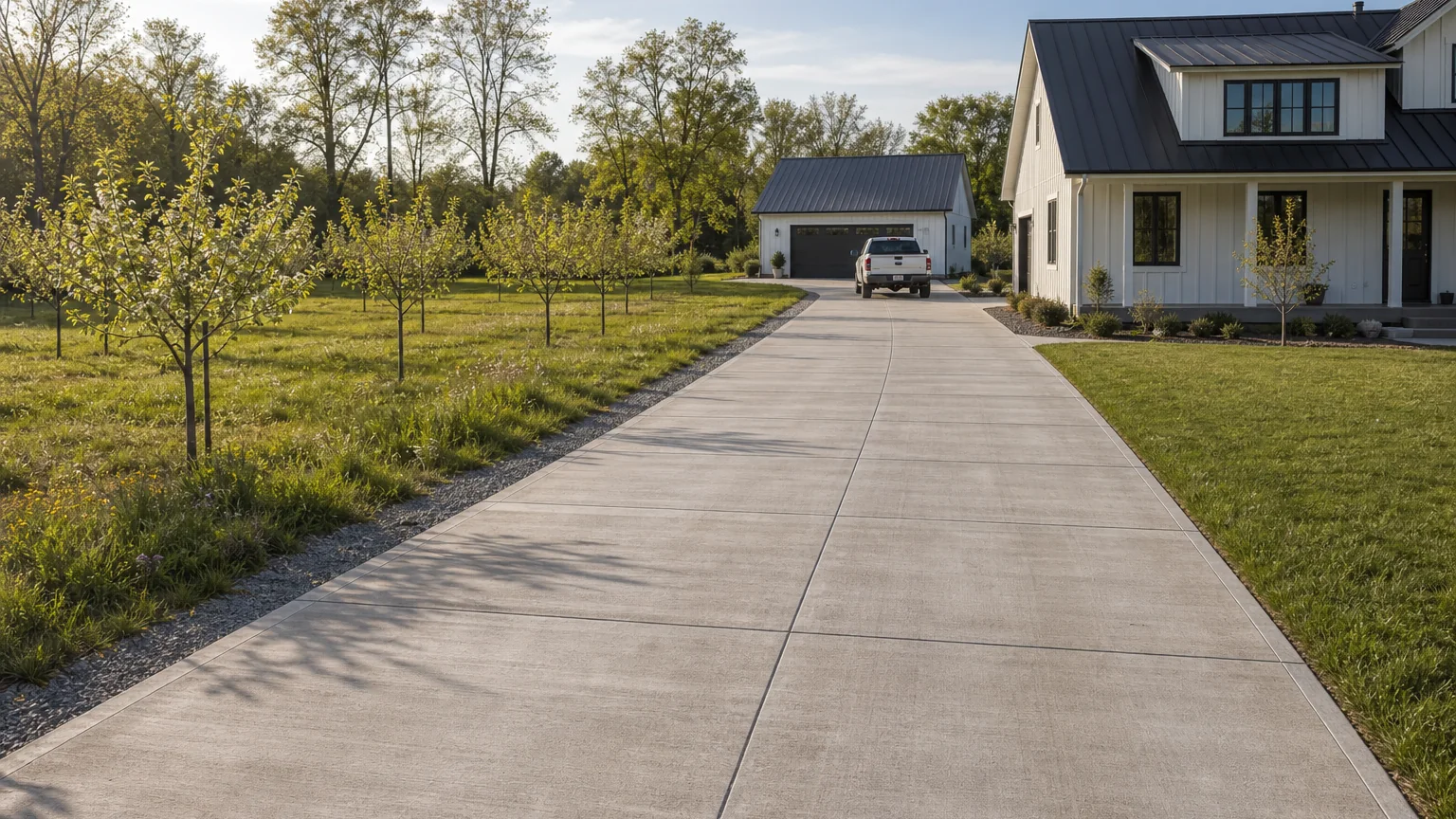
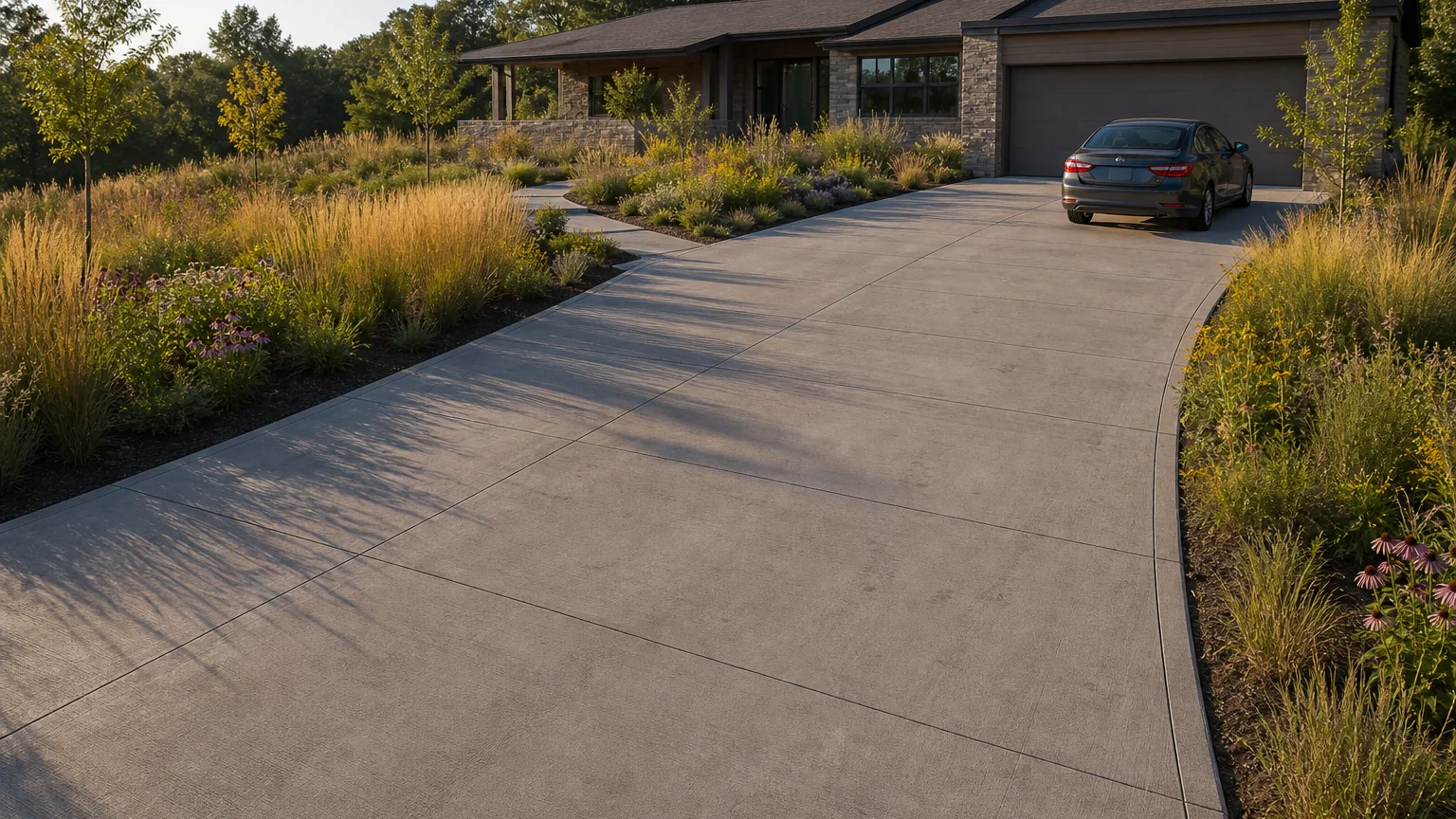
Native prairie planting frames a drive with movement, color, and habitat while asking little water or mowing, which suits a modern home that wants softness without high upkeep. The grasses read as intentional and tie the paving into the wider landscape.
- The tradeoff
- Prairie planting softens a large drive and supports a changing landscape, but it needs establishment care and clear edge control.
- How to measure it
- Conceptual range: the driveway rectangle plus separately measured prairie planting beds along the edges.
On your property
Plan it for your site
Keep the drive a simple broom field so the planting carries the interest, and detail the slab edge clean where it meets the beds. Choose natives that tolerate the runoff and reflected heat near paving, and set the beds back enough for mature growth.
- Choose native grasses and perennials that tolerate runoff and reflected heat near paving.
- Set the beds back enough for mature spread so plants do not overhang the drive.
- Keep the slab edge clean and stable against the planted ground.
Before forms are set
Build implications
- Confirm before estimating Native plant choices suited to the exposure and runoff.
- Confirm before estimating Bed setbacks that allow for mature growth.
- Confirm before estimating A stable, clean slab edge against the beds.
- Measure the site and establish elevations Record boundaries, thresholds, grade changes, utilities, and the dimensions of vehicles, furniture, equipment, or structures that affect the layout.
- Test how the space will be used Check walking routes, turning paths, door swings, working clearances, maintenance access, and the route back to the house or street.
- Resolve drainage, services, and structural support Decide where water goes and coordinate drains, conduit, irrigation, fuel, electrical work, footings, and independent supports before forms are set.
- Define and estimate each concrete element Confirm the slab or footing section, base, joints, edges, and finish, then estimate simple measurable fields separately from steps, walls, drains, and supported features.
Prevent these problems
- Planting without a maintenance edgeStems and soil can cover slab edges, hold moisture, and make trimming or joint service difficult.
What changes the work and quote
- Site preparation, plants or seed, establishment watering, and seasonal careKeep it simpler: Use a narrow native bed at one focal edge and keep the remaining verge low.
Next step
Turn the idea into your estimate
Enter the dimensions and section for your property. The image does not provide a takeoff.
Estimate your drivewayQuestions this idea raises
Is native planting really lower maintenance?
Established natives suited to the site usually need far less water, feeding, and mowing than lawn or exotics, though they take a season or two to fill in. Choose species matched to your conditions.
Will the grasses overhang the drive?
They can if planted too close, so set the beds back for the mature spread and trim as needed. Plan for full-grown size, not the nursery pot.
- Best when
- The site supports native meadow planting outside the clear vehicle zone and the owner accepts seasonal change.
- Reconsider when
- Tall plants would hide pedestrians, crowd doors, obstruct snow storage, or spread into joints.
- Verify first
- Plan mature plant height and width, sightlines, runoff, irrigation, and a maintenance strip at the slab.
- Professional input
- A concrete contractor should confirm the slab, base, joints, and drainage. Ask an engineer or the local authority to review retaining work, structures, unusual loads, or public-right-of-way changes.
Sources and further reading
- NRMCA CIP 6: Joints in Concrete Slabs on GradeJoint spacing, panel shape, isolation, and saw-cut depth for slabs on grade.
- FHWA: Bases and Subbases for Concrete PavementsProfessional guidance on uniform support, subgrade risks, drainage, and stable base layers.
- U.S. EPA: Types of Green InfrastructureHow rain gardens, swales, and permeable pavement store, slow, or infiltrate runoff.