Design decision
Why this idea works
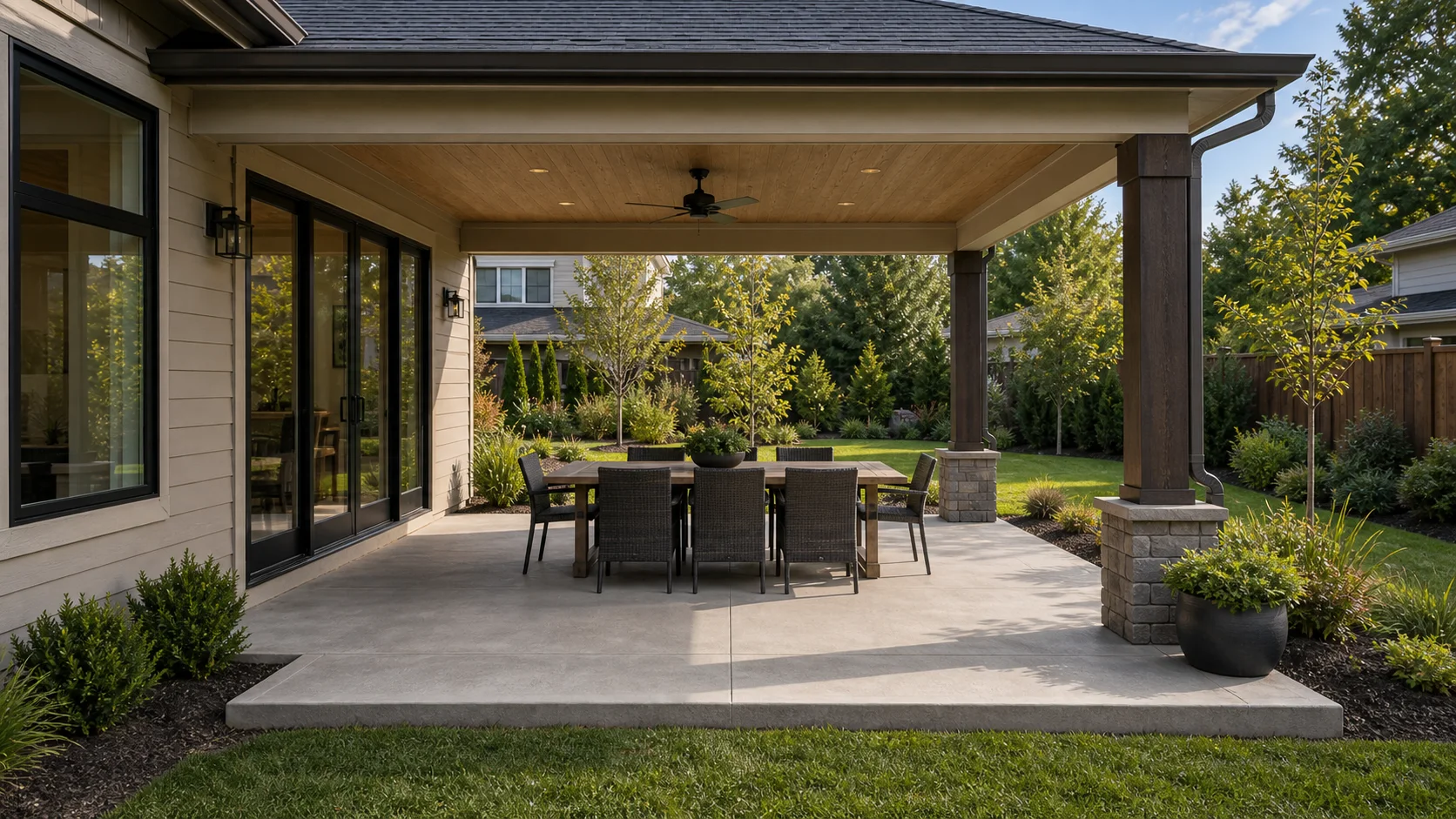
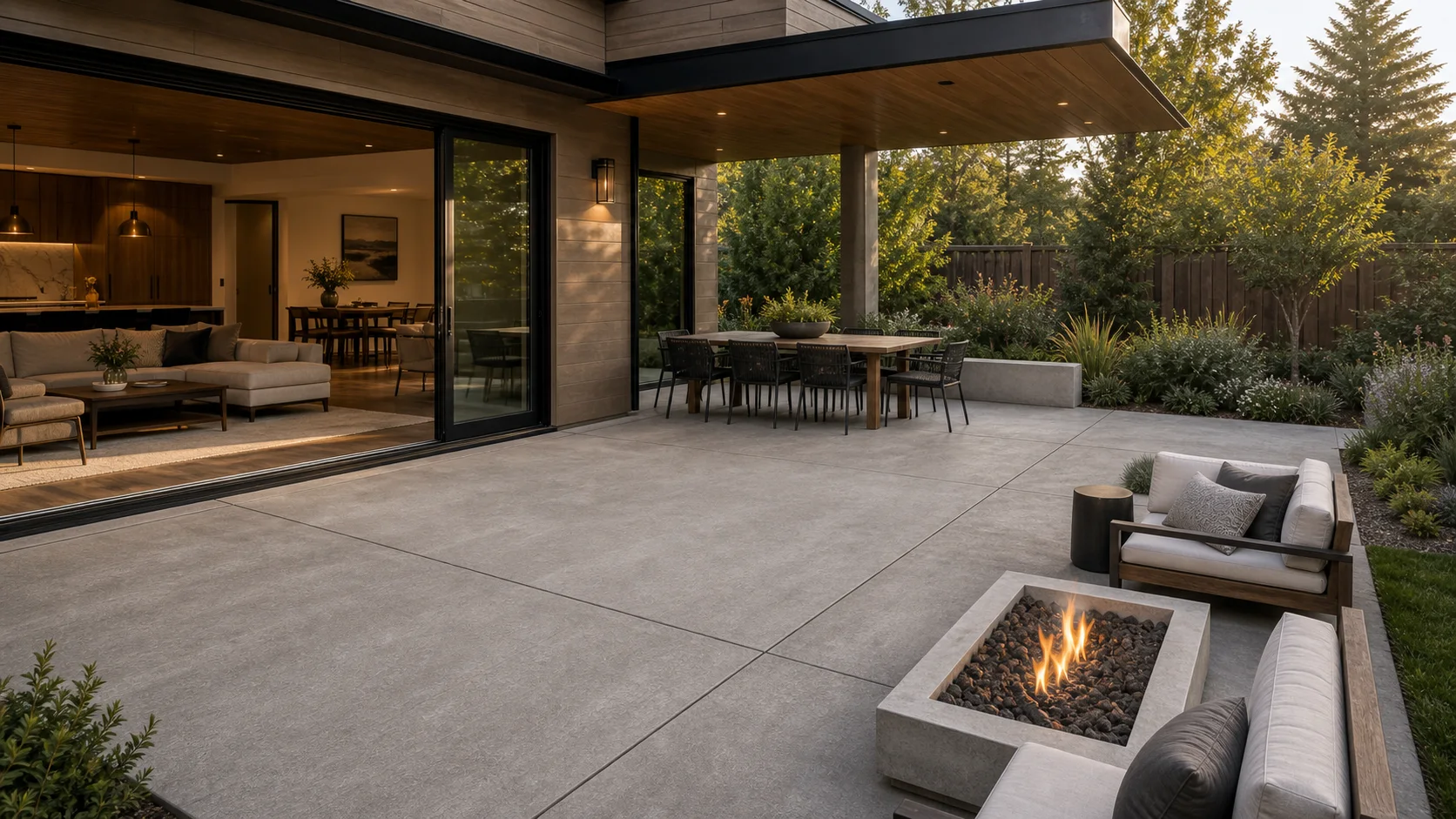
A large flush-looking connection can make indoor and outdoor rooms read as one sequence. The patio works when the furniture zones extend the interior logic but still leave direct circulation to the yard.
- The tradeoff
- The fixed features give the patio a clear purpose, but they reduce room for later changes. Threshold elevation, water management, movement joints, roof drainage, and door operation are more important than the final furniture styling.
- How to measure it
- Conceptual range: about 20 × 24 ft to 30 × 36 ft, with any covered zone, posts, steps, or drains measured separately.
On your property
Plan it for your site
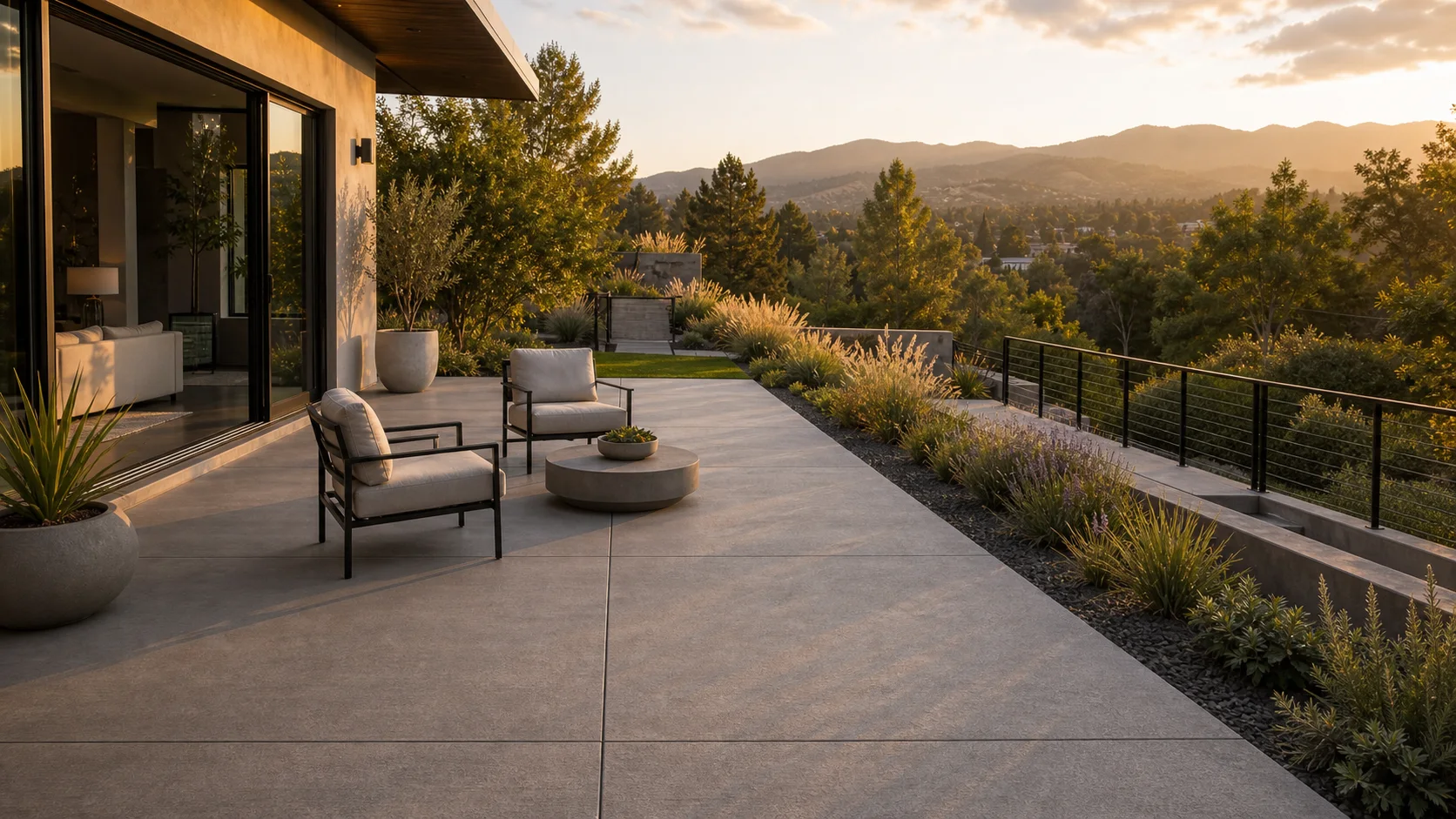
A restrained large-panel finish supports the architecture and allows doors, roof lines, and garden edges to set the rhythm. Avoid a pattern that competes with the glass wall or makes the threshold busy.
- Keep finished concrete, drains, and grading coordinated with door thresholds and waterproofing.
- Place joints and isolation details so house movement and slab movement are not confused.
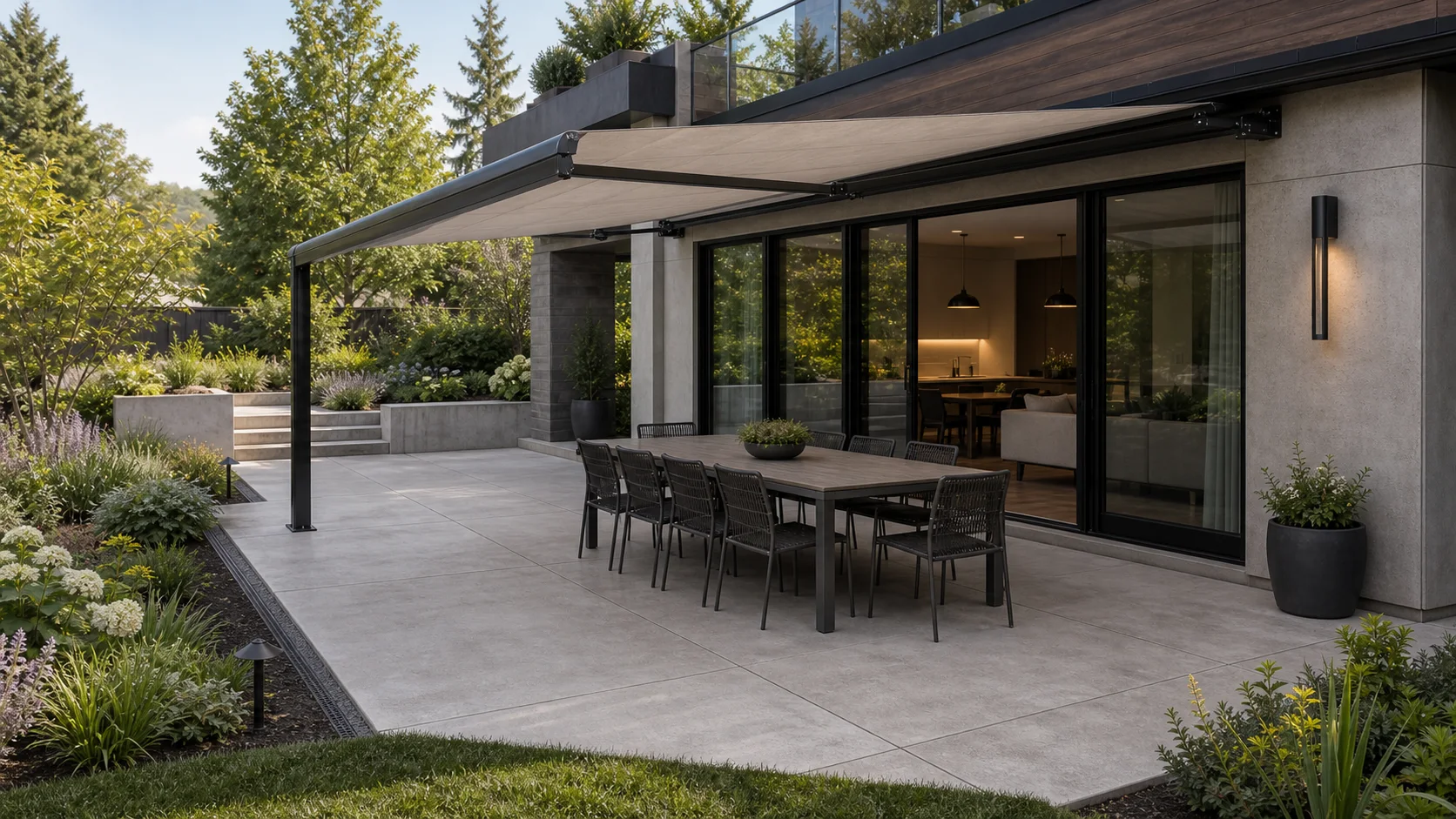
- Manage roof runoff before it reaches the terrace or doorway.
Before forms are set
Build implications
- Confirm before estimating Door manufacturer requirements, threshold elevation, waterproofing, and drainage.
- Confirm before estimating Post foundations, roof structure, and any covered-outdoor electrical.
- Confirm before estimating Actual furniture zones, access, and how the patio meets lawn or steps.
- Measure the site and establish elevations Record boundaries, thresholds, grade changes, utilities, and the dimensions of vehicles, furniture, equipment, or structures that affect the layout.
- Test how the space will be used Check walking routes, turning paths, door swings, working clearances, maintenance access, and the route back to the house or street.
- Resolve drainage, services, and structural support Decide where water goes and coordinate drains, conduit, irrigation, fuel, electrical work, footings, and independent supports before forms are set.
- Define and estimate each concrete element Confirm the slab or footing section, base, joints, edges, and finish, then estimate simple measurable fields separately from steps, walls, drains, and supported features.
Prevent these problems
- Crowding the usable areaFurniture can fit in a drawing while still blocking doors, chair movement, serving routes, or the direct path back to the house.
- Sending water toward the houseA terrace that appears level can hold runoff at thresholds unless finished elevations and a discharge route are established first.
- Treating added features as decorationPergolas, fire features, kitchens, walls, and planters need their own supports, clearances, utilities, drainage, and maintenance access.
Next step
Turn the idea into your estimate
Enter dimensions measured on the property. The conceptual image does not provide a takeoff.
Estimate your patioQuestions this idea raises
Can a patio be flush with large sliding doors?
A low or flush-looking transition requires careful coordination of thresholds, waterproofing, slope, drainage, and local construction requirements.
Where should patio joints go near a house?
Joint and isolation details depend on the slab geometry, walls, openings, and construction. Coordinate them with the actual project rather than a visual reference.
- Best when
- Contemporary rear elevation with wide openings, covered exterior structure, and enough yard depth for dining and lounge zones to stay distinct.
- Reconsider when
- Reconsider the idea if drainage, circulation, and support for added features cannot be resolved on the property.
- Verify first
- Threshold elevation, water management, movement joints, roof drainage, and door operation are more important than the final furniture styling.
- Professional input
- Concrete contractor; specialist review for supported structures, fire features, or utilities
Sources and further reading
- NRMCA CIP 6: Joints in Concrete Slabs on GradeA concise industry reference for planning panel and control joints on a patio slab instead of improvising them.
- Building America Solution Center: Slope Patios Away from the HouseDOE-affiliated guidance on setting patio grade so surface water moves away from the house.
- NRMCA CIP 11: Curing In-Place ConcretePractical guidance on curing methods and timing for new concrete.