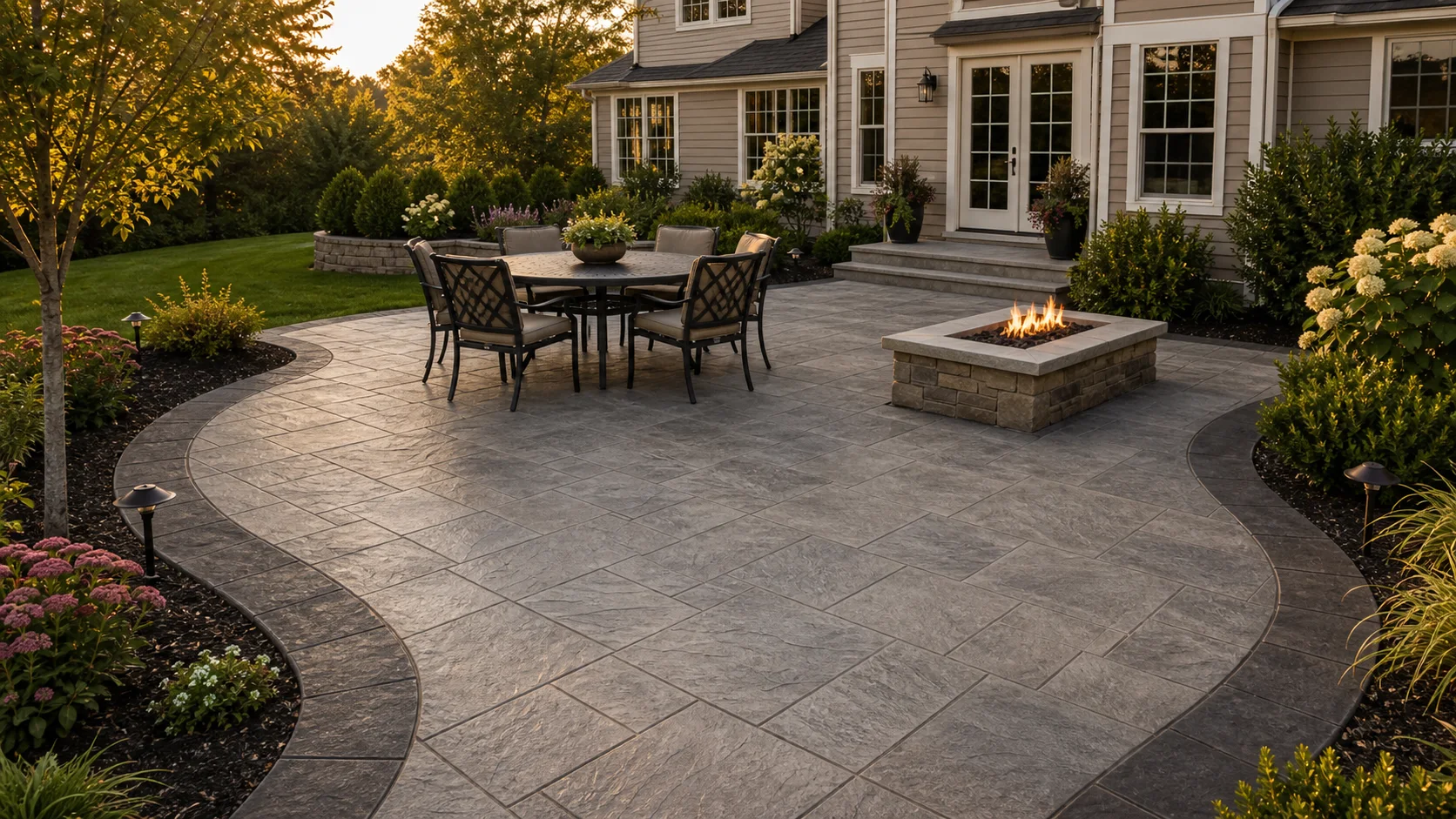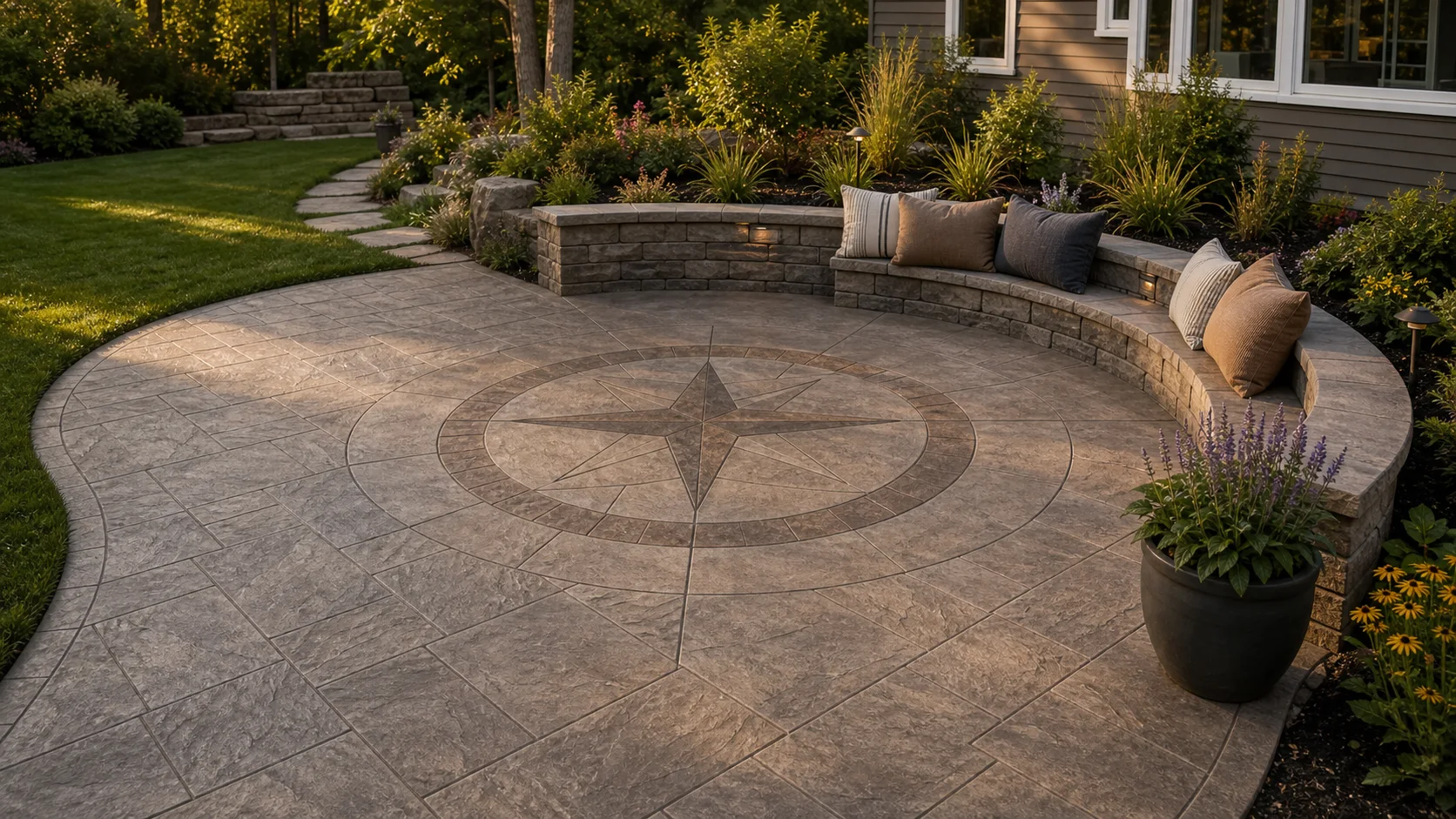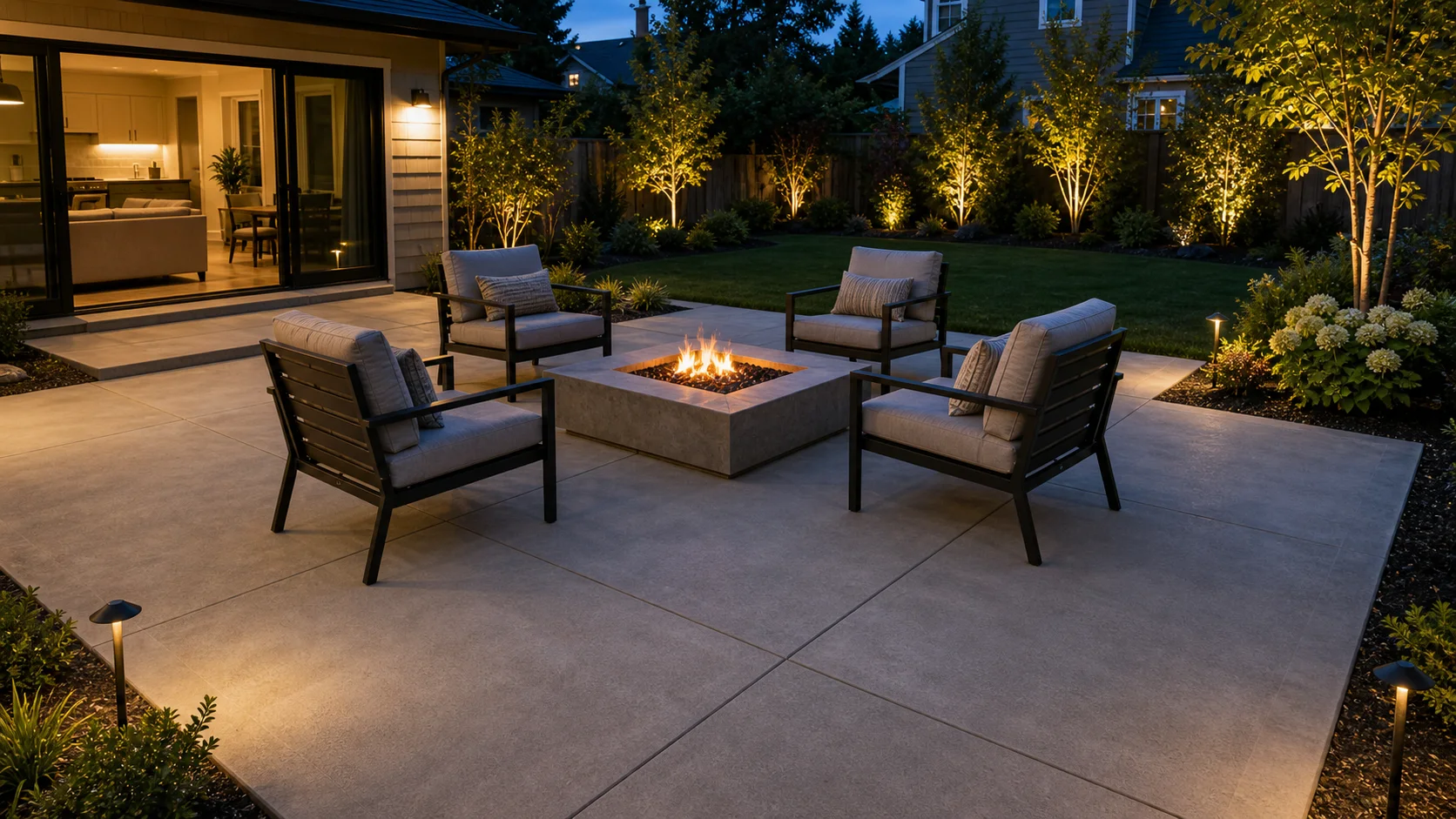
Design decision
Why this idea works
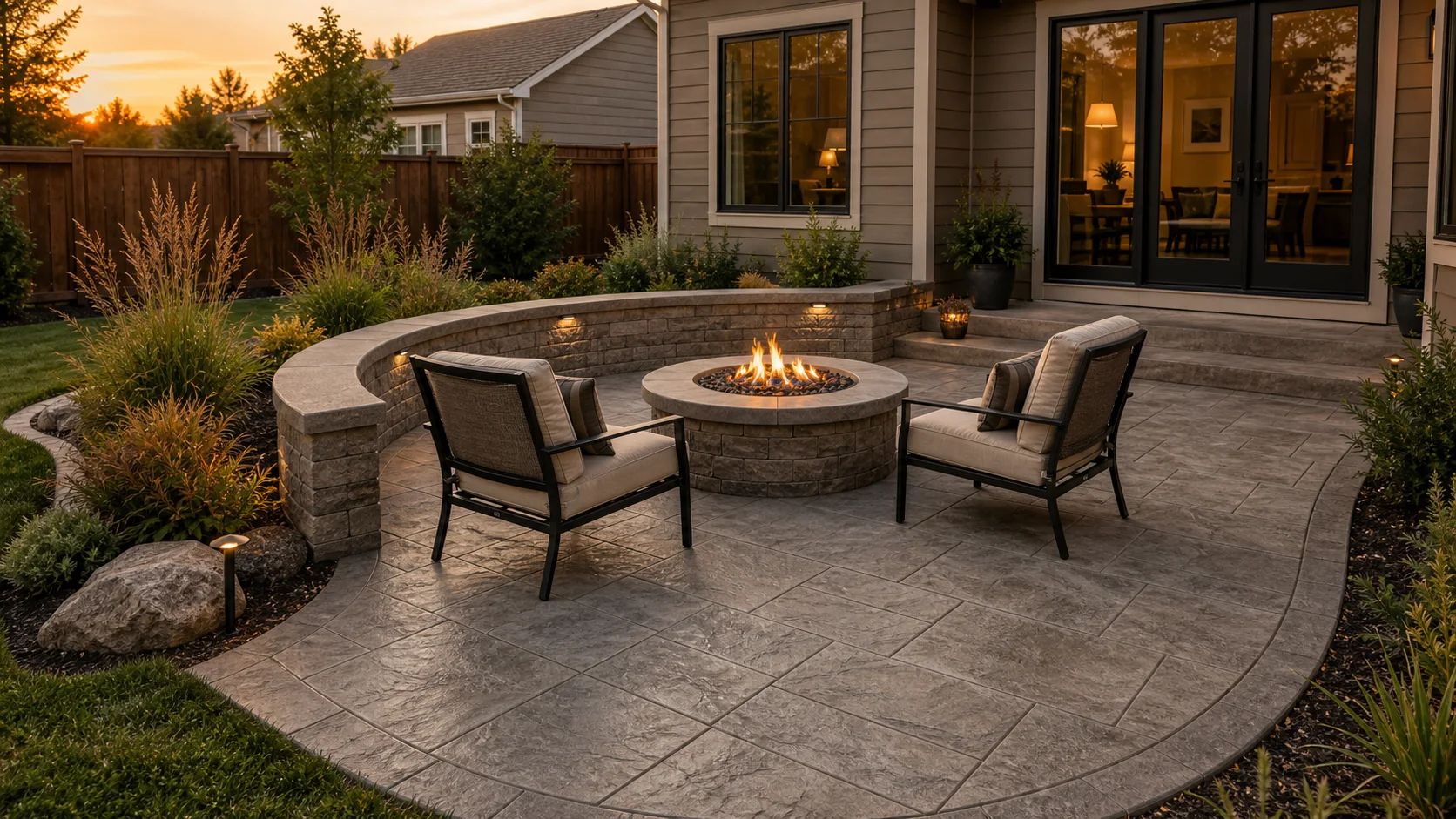
The curved wall concentrates seating at the edge and keeps the center open around the fire area. It can make a compact patio feel sociable without requiring a much larger furniture field.
- The tradeoff
- The fixed features give the patio a clear purpose, but they reduce room for later changes. The seat wall, fire feature, and their supports must be treated as separate coordinated elements rather than as decoration added after the slab layout.
- How to measure it
- Conceptual range: about 16 × 18 ft to 20 × 22 ft, including a clear walking ring around the fire and seat wall.
On your property
Plan it for your site
A warm-gray stamped field works best when the seat-wall material is simpler and the curve is broad. The joint plan should avoid creating narrow wedges where the curve meets the slab.
- Maintain safe, practical clearances between flame, cushions, wood, and planting.
- Provide drainage and durable caps for a seat wall exposed to weather.
- Keep the wall height and radius comfortable for actual seated use.
Before forms are set
Build implications
- Confirm before estimating Fire-feature instructions, fuel route, local approvals, and clearances.
- Confirm before estimating Wall support, footing, reinforcement, drainage, and cap detail.
- Confirm before estimating Accessibility and circulation around the wall, fire area, and house approach.
- Measure the site and establish elevations Record boundaries, thresholds, grade changes, utilities, and the dimensions of vehicles, furniture, equipment, or structures that affect the layout.
- Test how the space will be used Check walking routes, turning paths, door swings, working clearances, maintenance access, and the route back to the house or street.
- Resolve drainage, services, and structural support Decide where water goes and coordinate drains, conduit, irrigation, fuel, electrical work, footings, and independent supports before forms are set.
- Define and estimate each concrete element Confirm the slab or footing section, base, joints, edges, and finish, then estimate simple measurable fields separately from steps, walls, drains, and supported features.
Prevent these problems
- Crowding the usable areaFurniture can fit in a drawing while still blocking doors, chair movement, serving routes, or the direct path back to the house.
- Sending water toward the houseA terrace that appears level can hold runoff at thresholds unless finished elevations and a discharge route are established first.
- Treating added features as decorationPergolas, fire features, kitchens, walls, and planters need their own supports, clearances, utilities, drainage, and maintenance access.
Next step
Turn the idea into your estimate
Enter dimensions measured on the property. The conceptual image does not provide a takeoff.
Estimate your patioQuestions this idea raises
Does a low seat wall need a footing?
A masonry or concrete seat wall can require support, reinforcement, and drainage that are separate from a typical patio slab. Confirm the final system before construction.
How much room should surround a fire pit?
The required clearance depends on the product and site. Plan the actual fire feature, furniture, walking routes, and local rules rather than copying only the visual layout.
- Best when
- Medium-size backyard for a conversation zone where extra loose chairs would make the patio feel crowded.
- Reconsider when
- Reconsider the idea if drainage, circulation, and support for added features cannot be resolved on the property.
- Verify first
- The seat wall, fire feature, and their supports must be treated as separate coordinated elements rather than as decoration added after the slab layout.
- Professional input
- Concrete contractor; specialist review for supported structures, fire features, or utilities
Sources and further reading
- NRMCA CIP 6: Joints in Concrete Slabs on GradeA concise industry reference for planning panel and control joints on a patio slab instead of improvising them.
- Building America Solution Center: Slope Patios Away from the HouseDOE-affiliated guidance on setting patio grade so surface water moves away from the house.
- NRMCA CIP 11: Curing In-Place ConcretePractical guidance on curing methods and timing for new concrete.