Design decision
Why this idea works
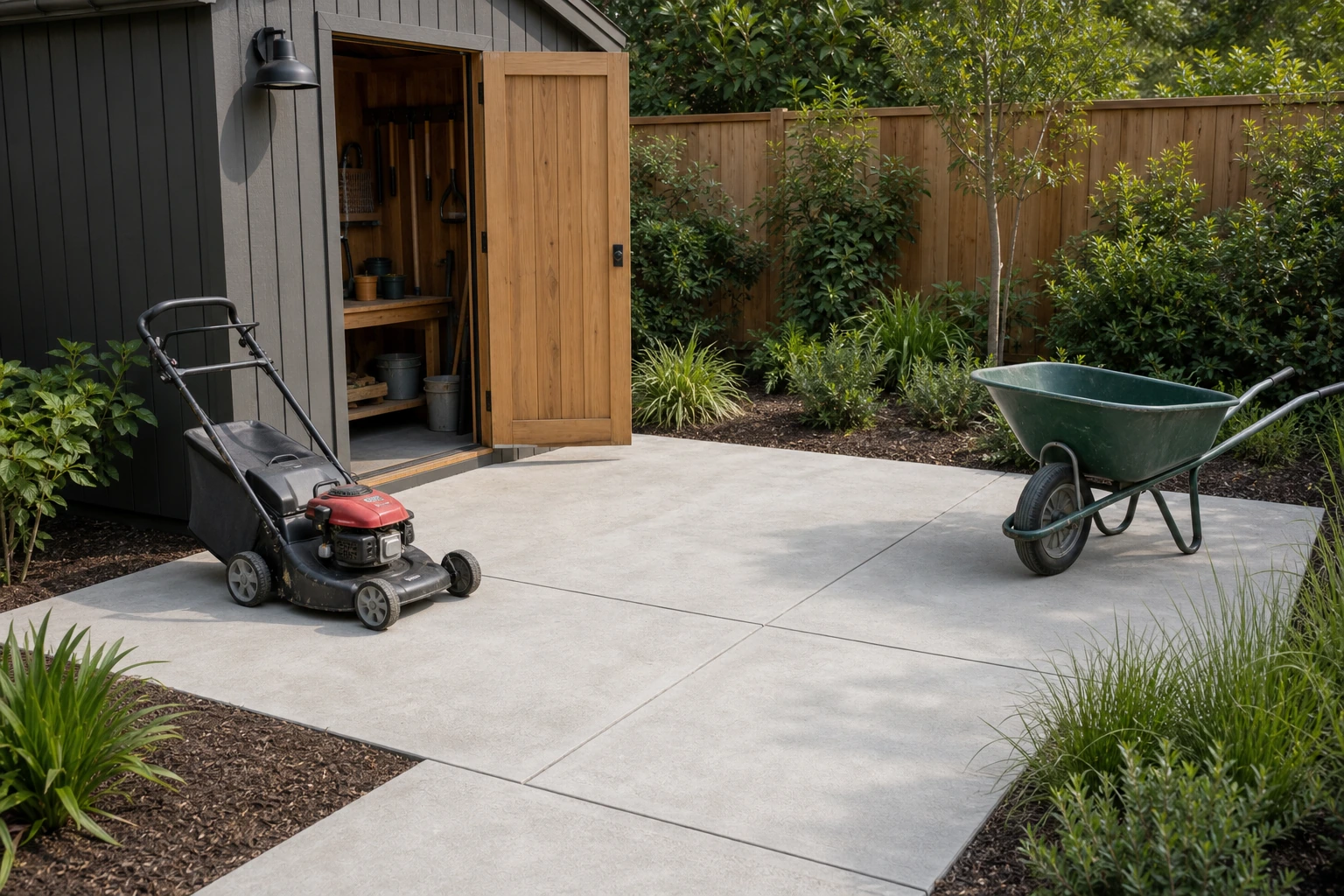
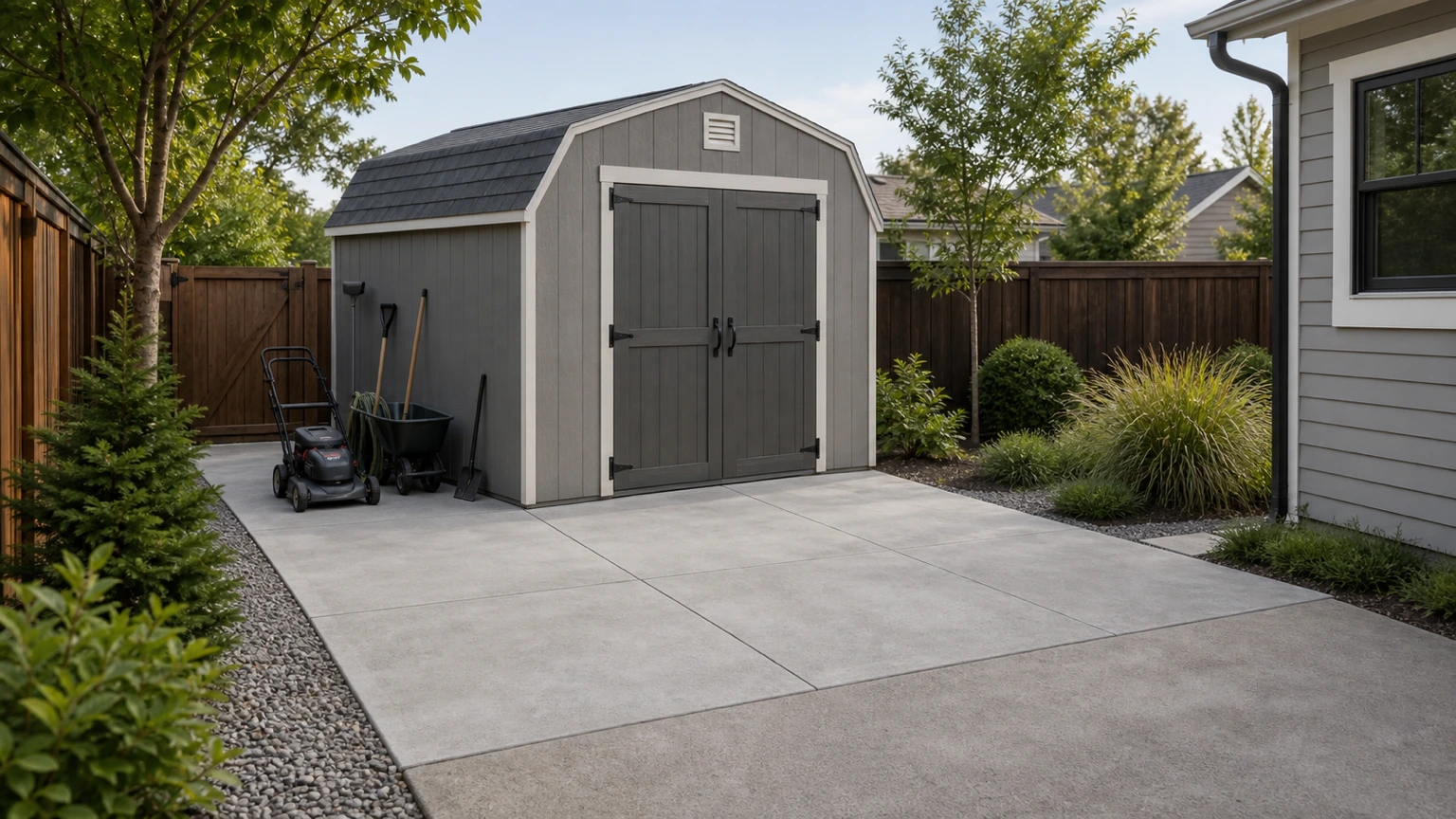
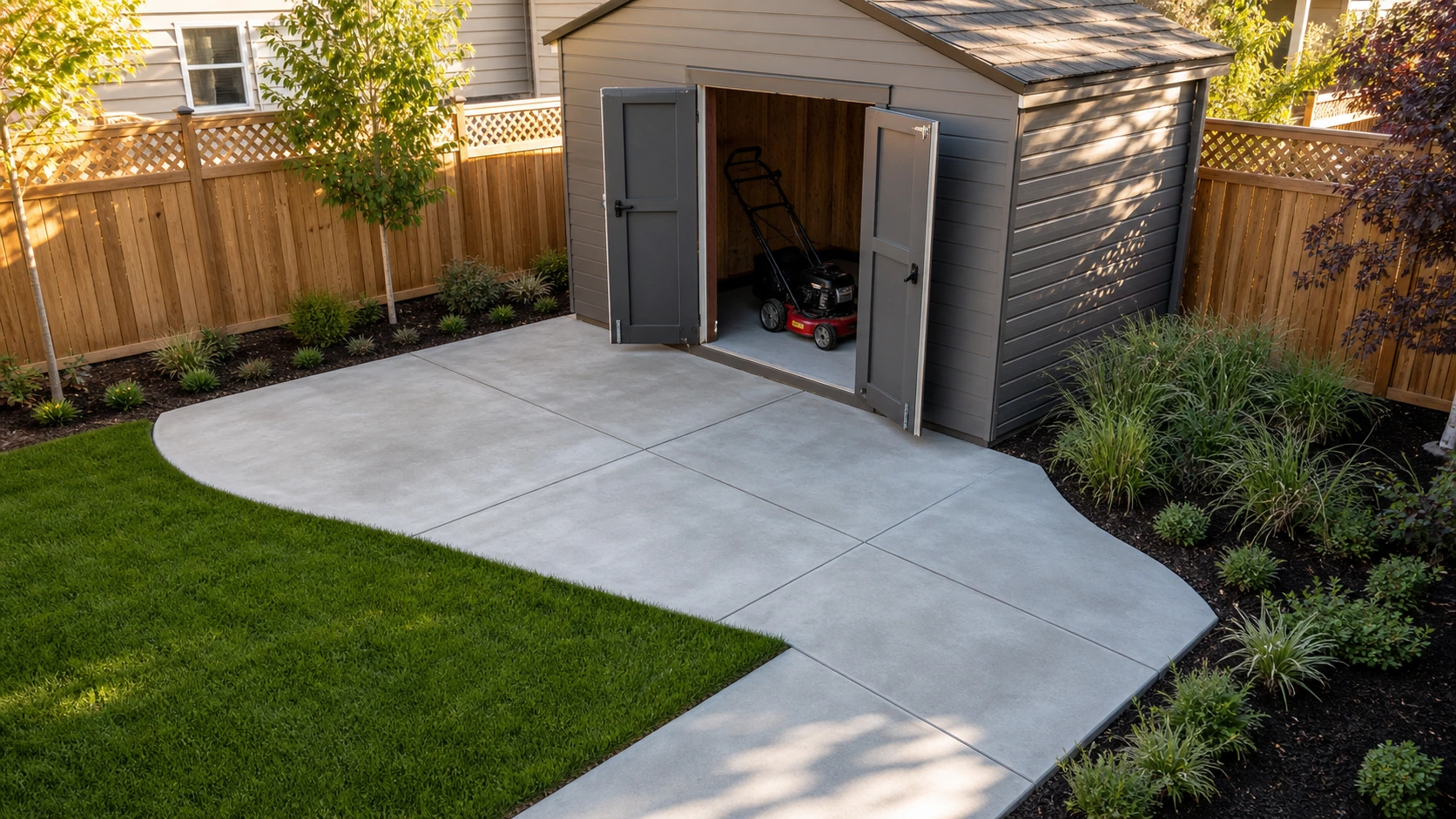
Getting a mower or garden cart in and out of a shed means turning in a tight space, and a firm turning pad keeps that maneuvering off the lawn. The concrete stops the ruts and mud that form right at the shed door and lets equipment come and go cleanly, which the grass in front of a shed otherwise never survives.
- The tradeoff
- The layout sets a clear direction, but it also commits the project to fixed relationships. Size the pad to the equipment’s turning room.
- How to measure it
- Conceptual range: the turning pad measured to the equipment’s maneuvering room in front of the shed.
On your property
Plan it for your site
A durable, level pad sized for the turn suits the equipment, with a grippy surface for traction. Keep the pad above grade and sloped so it drains and the equipment enters dry.
- Size the pad to the turning and maneuvering the equipment needs.
- Keep the surface grippy so a mower or cart has traction.
- Slope the pad so it drains and the shed stays dry.
Before forms are set
Build implications
- Confirm before estimating A pad sized to the equipment’s turning room.
- Confirm before estimating A grippy surface for traction.
- Confirm before estimating A slope that drains and keeps the shed dry.
- Measure the site and establish elevations Record boundaries, thresholds, grade changes, utilities, and the dimensions of vehicles, furniture, equipment, or structures that affect the layout.
- Test how the space will be used Check walking routes, turning paths, door swings, working clearances, maintenance access, and the route back to the house or street.
- Resolve drainage, services, and structural support Decide where water goes and coordinate drains, conduit, irrigation, fuel, electrical work, footings, and independent supports before forms are set.
- Define and estimate each concrete element Confirm the slab or footing section, base, joints, edges, and finish, then estimate simple measurable fields separately from steps, walls, drains, and supported features.
Prevent these problems
- Matching the wall footprint exactlyA small dry perimeter can improve the threshold, door clearance, maintenance access, and runoff control.
- Using one uniform thin sectionBearing walls, anchors, heavier storage, or manufacturer requirements may call for thickened edges or a footing.
- Allowing wet soil against the slabPoor grading, mulch, and irrigation can keep the pad edge damp and undermine the base or the structure above.
Next step
Turn the idea into your estimate
Enter measurements from the property. The conceptual image does not provide a takeoff.
Estimate a similar shed padQuestions this idea raises
Why put a turning pad at an equipment shed?
Maneuvering a mower or cart in a tight space churns the grass and creates ruts at the door, which a firm pad prevents. It keeps equipment coming and going cleanly.
How big should the turning pad be?
Sized to the maneuvering the equipment actually needs, which depends on the mower or cart. Measure the turn before setting the pad.
- Best when
- Shed pads
- Reconsider when
- Reconsider the idea if base preparation, bearing edges, anchors, drainage, and building-manufacturer requirements cannot be resolved on the property.
- Verify first
- Size the pad to the equipment’s turning room.
- Professional input
- Concrete contractor; verify the building manufacturer’s foundation requirements
Sources and further reading
- American Concrete InstituteTechnical references for small slab-on-grade pours and thickened edges.
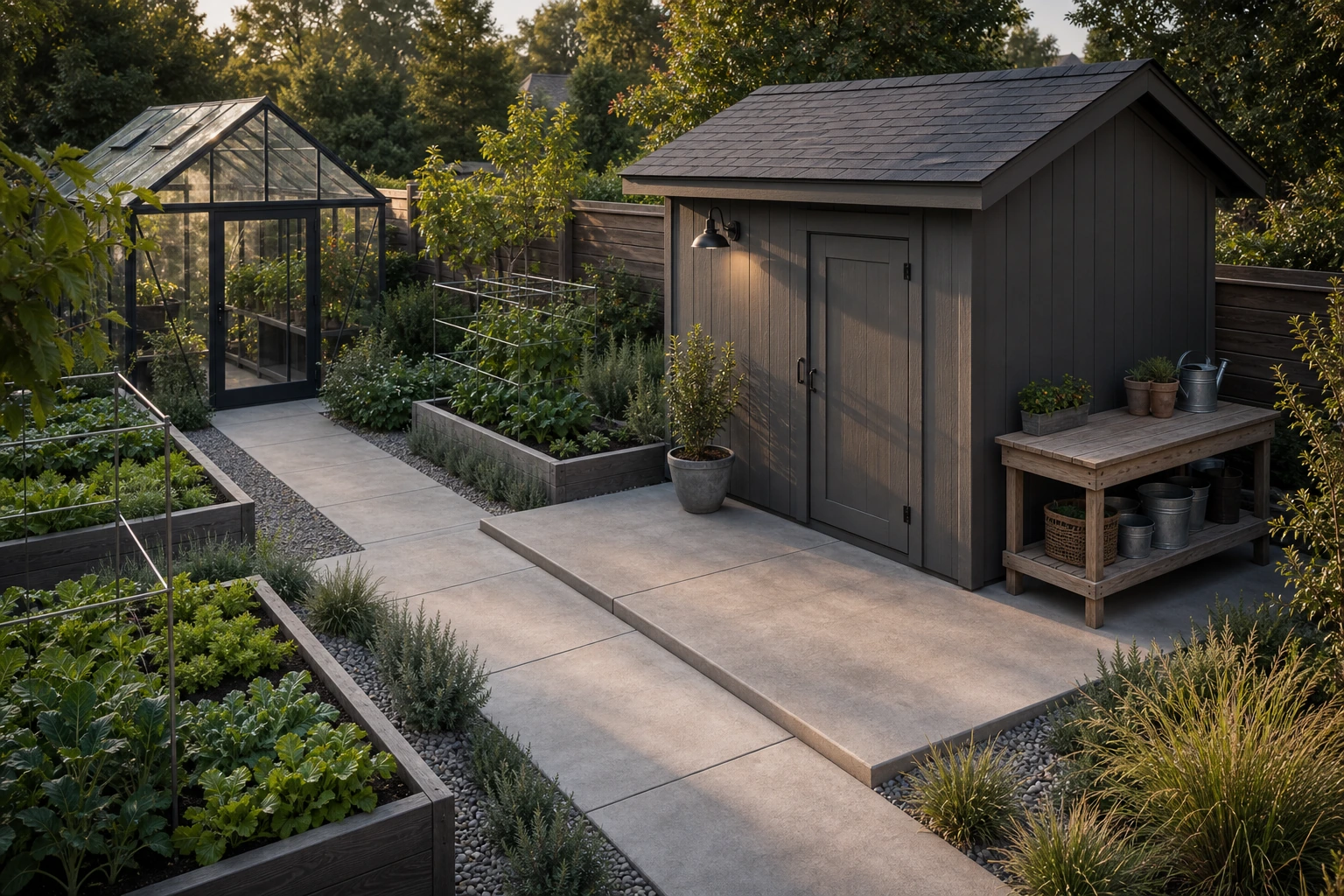
- NRMCA CIP 6: Joints in Concrete Slabs on GradeUseful when a longer garden or greenhouse pad needs planned crack control.
- ICC model code portalCheck whether an accessory building or its slab needs a permit or setback in your area.