Design decision
Why this idea works
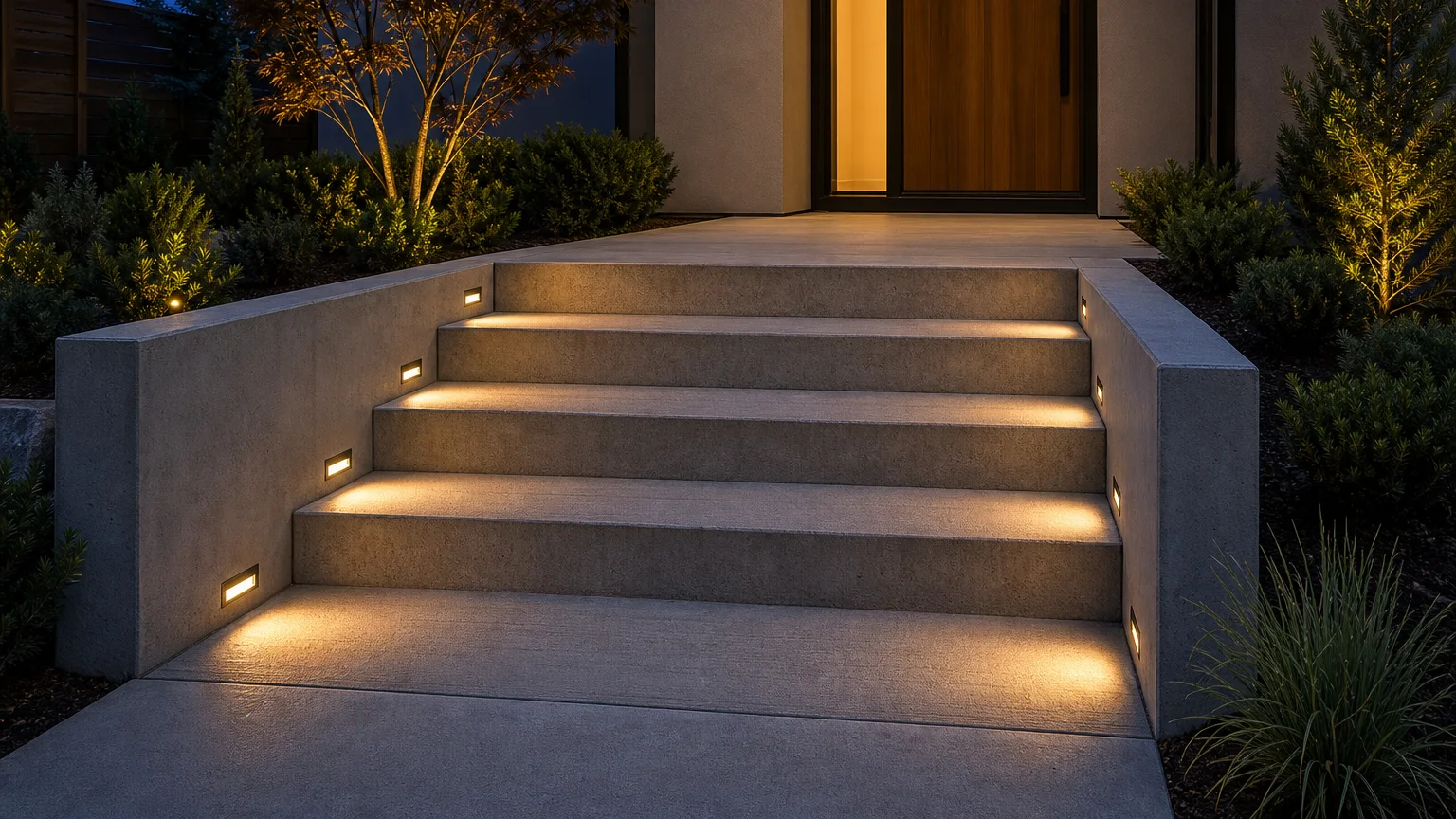
Recessed wall lights wash the treads and edges from the sides, marking the steps after dark without visible fixtures cluttering the entry. At blue hour the soft glow makes the modern stoop welcoming while doing real safety work on the climb.
- The tradeoff
- The layout sets a clear direction, but it also commits the project to fixed relationships. Set the recessed lights and conduit before the pour and keep steps uniform.
- How to measure it
- Conceptual range: the stepped element, with recessed wall lights and conduit planned in.
On your property
Plan it for your site
Broom-finish the treads for traction and round the nosings, and set the recessed wall lights and their conduit before the pour. Aim the lights to wash the treads without glare, keep every riser and tread uniform, and detail the fixtures to drain and stay serviceable.
- Set the recessed wall lights and conduit before placing concrete.
- Aim the lights to wash the treads without glare.
- Keep every riser and tread uniform and detail fixtures to drain and stay serviceable.
Before forms are set
Build implications
- Confirm before estimating Recessed lights and conduit set before the pour.
- Confirm before estimating Light aimed to mark the treads without glare.
- Confirm before estimating Uniform steps and serviceable, draining fixtures.
- Measure the site and establish elevations Record boundaries, thresholds, grade changes, utilities, and the dimensions of vehicles, furniture, equipment, or structures that affect the layout.
- Test how the space will be used Check walking routes, turning paths, door swings, working clearances, maintenance access, and the route back to the house or street.
- Resolve drainage, services, and structural support Decide where water goes and coordinate drains, conduit, irrigation, fuel, electrical work, footings, and independent supports before forms are set.
- Define and estimate each concrete element Confirm the slab or footing section, base, joints, edges, and finish, then estimate simple measurable fields separately from steps, walls, drains, and supported features.
Prevent these problems
- Fixing risers before final elevationsFinish layers at the landing or threshold can change the first or last riser and create an uncomfortable or unsafe flight.
- Allowing one irregular stepUsers expect a repeated rhythm; a single different riser height or tread depth is a common trip hazard.
- Treating open-looking stairs as ordinary flatworkCantilevered, folded, open, or suspended concrete stairs require engineered support, reinforcement, connections, and guard details.
Next step
Turn the idea into your estimate
Enter measurements from the property. The conceptual image does not provide a takeoff.
Estimate similar stepsQuestions this idea raises
Are recessed wall lights hard to maintain?
They need planning so fixtures drain and can be reached for replacement without breaking concrete, decided before the pour. Plan the access early.
Why recessed instead of surface lights?
Recessed wall lights mark the treads without visible fixtures, keeping a modern stoop uncluttered. Choose the look and light spread you want.
- Best when
- Finishes & details
- Reconsider when
- Reconsider the idea if finished elevations, consistent stair geometry, drainage, and safe support cannot be resolved on the property.
- Verify first
- Set the recessed lights and conduit before the pour and keep steps uniform.
- Professional input
- Qualified concrete contractor; engineer for suspended, cantilevered, or supported stairs
Sources and further reading
- International Code CouncilModel-code context for residential stairs and local code adoption.
- U.S. Access Board: Ramps and curb rampsUseful accessibility context when a grade change may need a ramp rather than steps.
- American Concrete InstituteTechnical references for concrete practice and reinforced structural work.