Design decision
Why this idea works
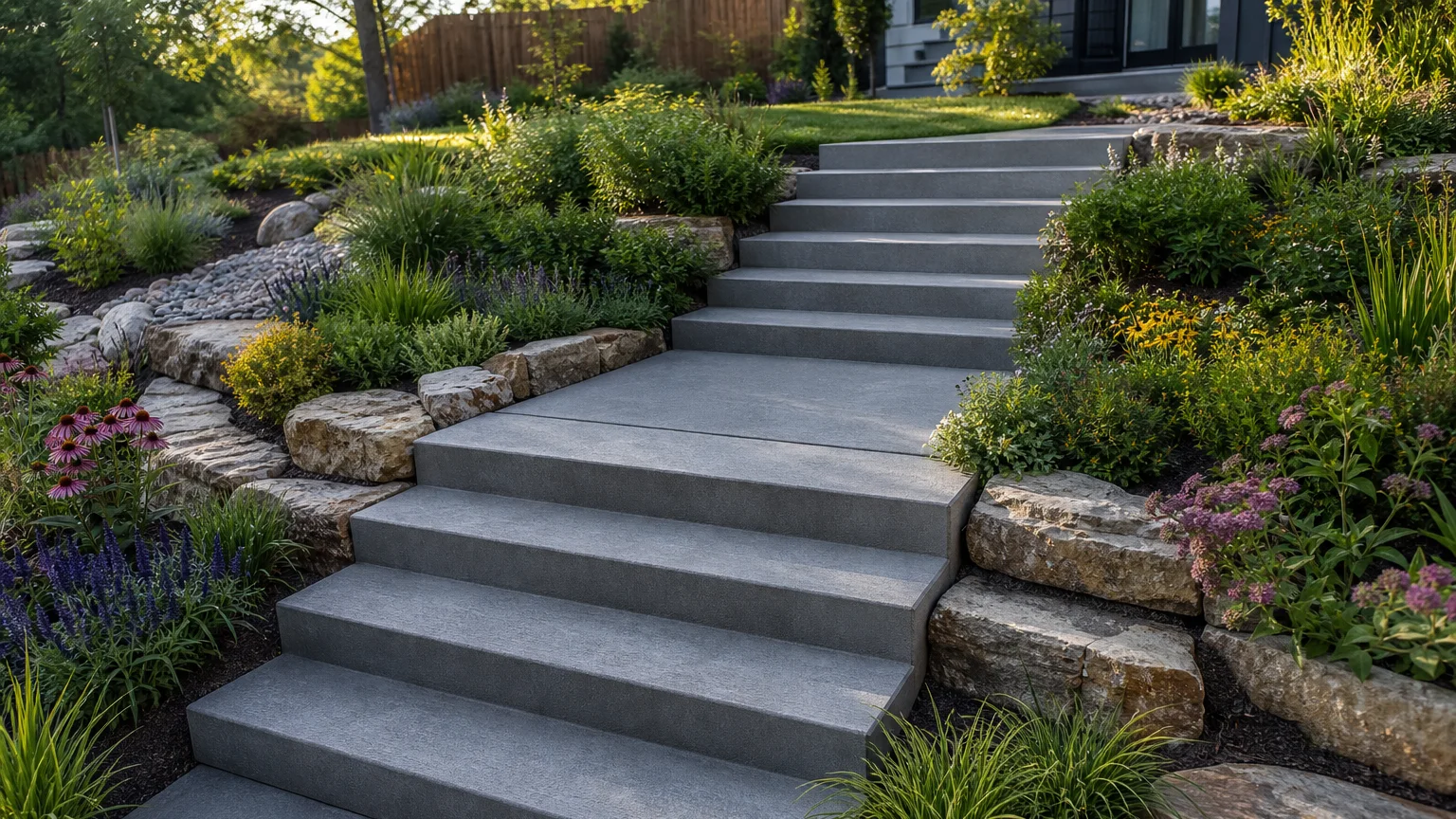
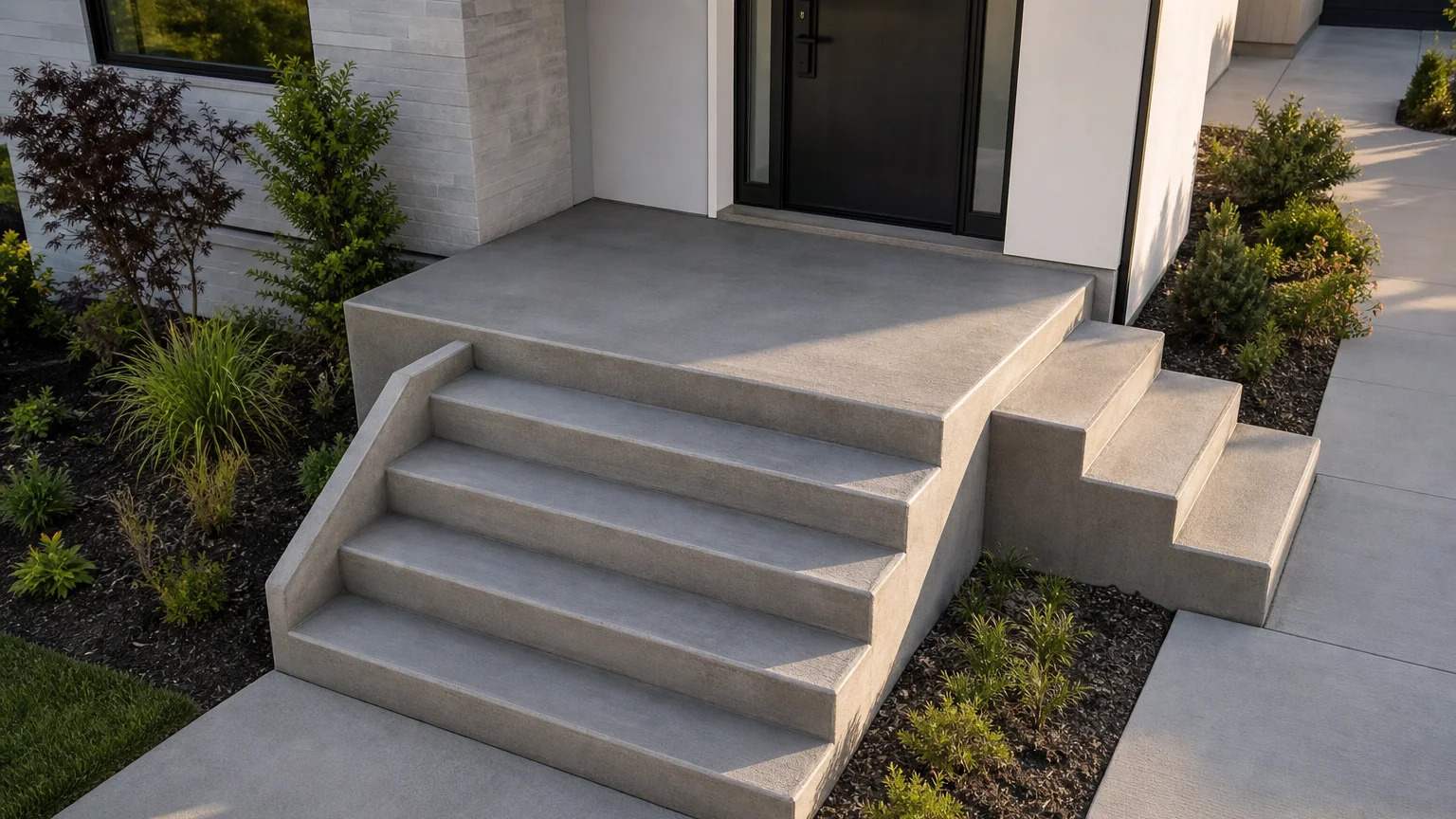
A taller climb is easier and safer split into two flights with a mid-landing, which gives a rest point and breaks the height visually. The low landscape walls hold the grade and frame the stair, making a big rise feel manageable and designed.
- The tradeoff
- The layout sets a clear direction, but it also commits the project to fixed relationships. Keep both flights uniform and give the mid-landing full depth before finishing.
- How to measure it
- Conceptual range: two stepped flights plus the mid-landing and the landscape walls figured separately.
On your property
Plan it for your site
Broom-finish the treads and landing for traction and round the nosings, and keep every riser and tread uniform across both flights. Give the mid-landing real depth, build the landscape walls with drainage, and pitch surfaces to drain.
- Keep every riser and tread uniform across both flights so the climb is predictable.
- Give the mid-landing real depth as a rest point, at least 36 inches.
- Build the landscape walls with drainage and set footings below frost.
Before forms are set
Build implications
- Confirm before estimating Uniform steps across both flights within code limits.
- Confirm before estimating A mid-landing at least 36 inches deep.
- Confirm before estimating Landscape walls with drainage and footings below frost.
- Measure the site and establish elevations Record boundaries, thresholds, grade changes, utilities, and the dimensions of vehicles, furniture, equipment, or structures that affect the layout.
- Test how the space will be used Check walking routes, turning paths, door swings, working clearances, maintenance access, and the route back to the house or street.
- Resolve drainage, services, and structural support Decide where water goes and coordinate drains, conduit, irrigation, fuel, electrical work, footings, and independent supports before forms are set.
- Define and estimate each concrete element Confirm the slab or footing section, base, joints, edges, and finish, then estimate simple measurable fields separately from steps, walls, drains, and supported features.
Prevent these problems
- Fixing risers before final elevationsFinish layers at the landing or threshold can change the first or last riser and create an uncomfortable or unsafe flight.
- Allowing one irregular stepUsers expect a repeated rhythm; a single different riser height or tread depth is a common trip hazard.
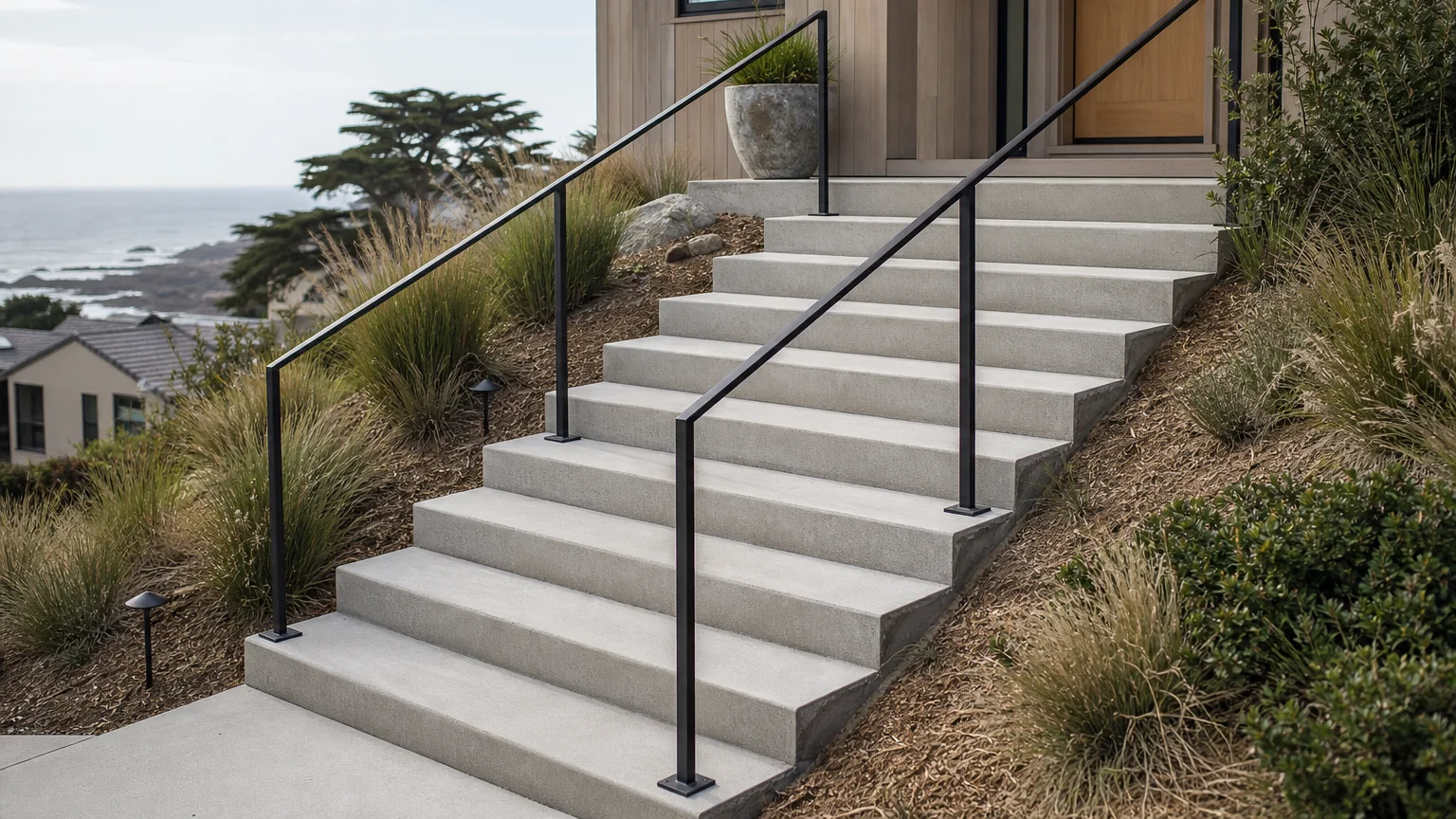
- Treating open-looking stairs as ordinary flatworkCantilevered, folded, open, or suspended concrete stairs require engineered support, reinforcement, connections, and guard details.
Next step
Turn the idea into your estimate
Enter measurements from the property. The conceptual image does not provide a takeoff.
Estimate similar stepsQuestions this idea raises
When should stairs be split with a mid-landing?
A taller rise is easier and safer broken into flights with a landing, and codes often require a landing beyond a certain rise. Confirm the threshold and give the landing full depth.
Do the landscape walls need engineering?
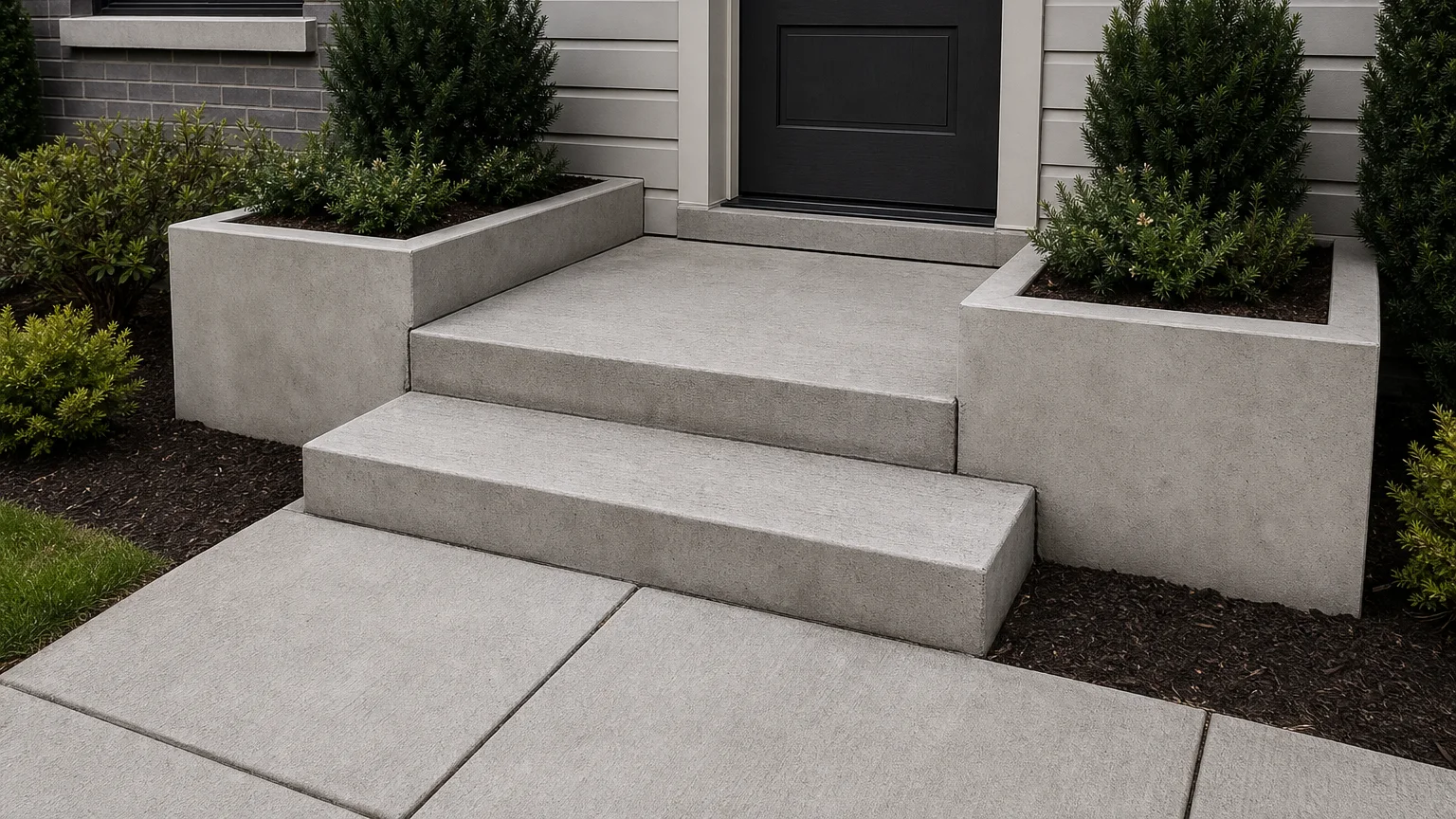
Low walls on stable ground may be within a competent installer, but taller walls holding a real grade become structural. Confirm the height threshold and drainage.
- Best when
- Landings & entries
- Reconsider when
- Reconsider the idea if finished elevations, consistent stair geometry, drainage, and safe support cannot be resolved on the property.
- Verify first
- Keep both flights uniform and give the mid-landing full depth before finishing.
- Professional input
- Qualified concrete contractor; engineer for suspended, cantilevered, or supported stairs
Sources and further reading
- International Code CouncilModel-code context for residential stairs and local code adoption.
- U.S. Access Board: Ramps and curb rampsUseful accessibility context when a grade change may need a ramp rather than steps.
- American Concrete InstituteTechnical references for concrete practice and reinforced structural work.