Design decision
Why this idea works
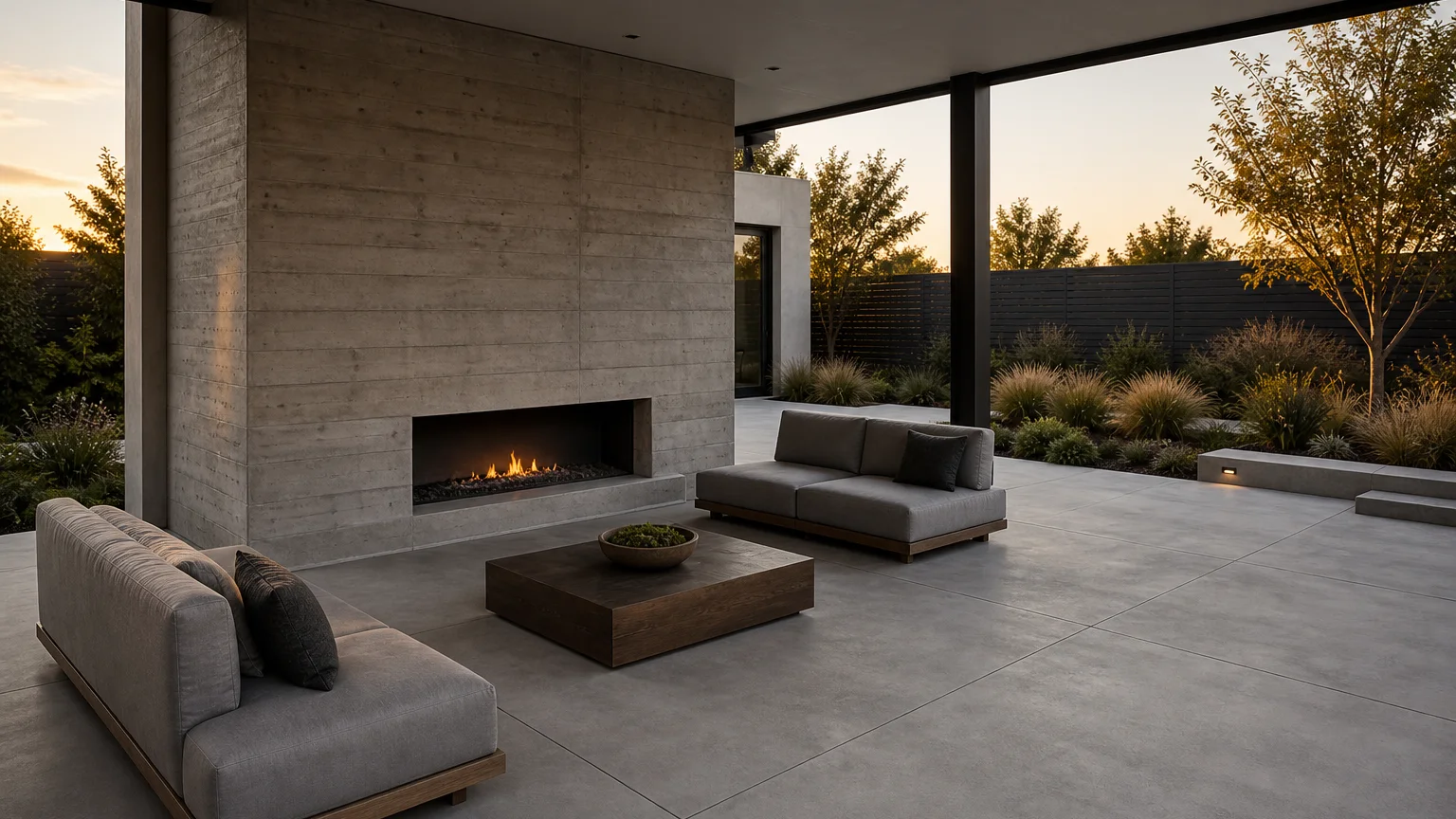
A fireplace wall under a covered patio makes a true outdoor room, giving a hearth to gather around in cool weather while the roof keeps it usable. Both the cover and the fireplace are built systems, so the structure, flue, and clearances lead the design.
- The tradeoff
- The layout sets a clear direction, but it also commits the project to fixed relationships. Design the fireplace structure and flue and the cover footings before finishing.
- How to measure it
- Conceptual range: the covered patio field plus the fireplace wall and cover footings figured separately.
On your property
Plan it for your site
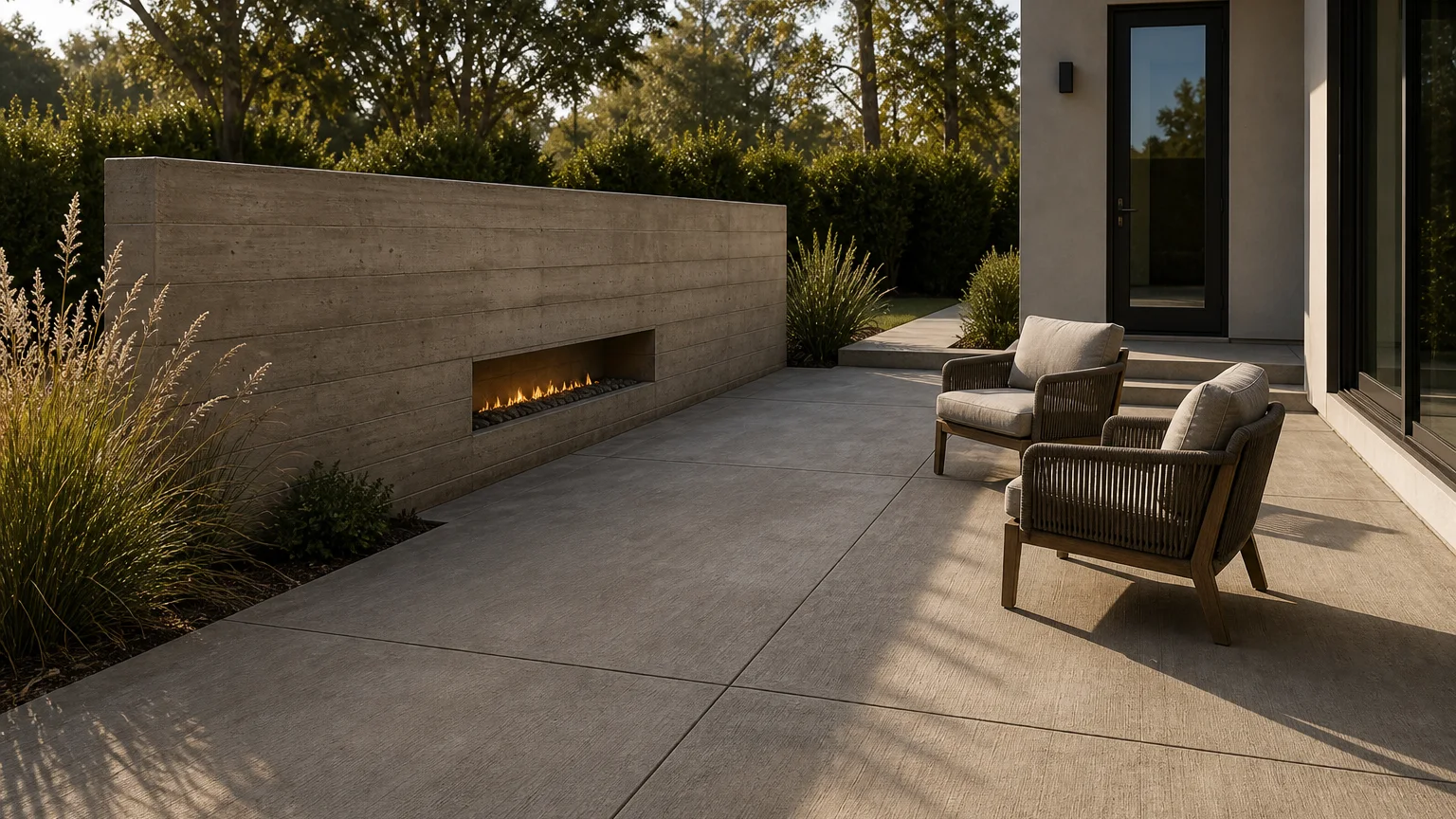
Keep the concrete field calm so the board-formed fireplace is the feature, and slope the patio to drain. Build the fireplace to its structural, flue, and clearance needs, set the cover posts on footings sized for wind and roof loads, and coordinate the two.
- Build the fireplace to its structural, flue, ventilation, and clearance needs.
- Set the cover posts on footings sized for wind and roof loads.
- Coordinate the fireplace and cover, and slope the patio to drain.
Before forms are set
Build implications
- Confirm before estimating Fireplace structure, flue, ventilation, and clearances.
- Confirm before estimating Cover post footings sized for wind and roof loads.
- Confirm before estimating Coordinated structure and patio drainage.
- Measure the site and establish elevations Record boundaries, thresholds, grade changes, utilities, and the dimensions of vehicles, furniture, equipment, or structures that affect the layout.
- Test how the space will be used Check walking routes, turning paths, door swings, working clearances, maintenance access, and the route back to the house or street.
- Resolve drainage, services, and structural support Decide where water goes and coordinate drains, conduit, irrigation, fuel, electrical work, footings, and independent supports before forms are set.
- Define and estimate each concrete element Confirm the slab or footing section, base, joints, edges, and finish, then estimate simple measurable fields separately from steps, walls, drains, and supported features.
Prevent these problems
- Starting with furniture instead of movementDining, cooking, and lounge zones need working clearances and a direct route to the house before the slab outline is fixed.
- Adding services after the pourGas, electric, water, drainage, lighting, and future conduit are easier to coordinate before concrete placement.
- Assuming the slab supports every featureRoofs, pergolas, kitchens, fireplaces, and seat walls often need separate footings or structural details.
Next step
Turn the idea into your estimate
Enter measurements from the property. The conceptual image does not provide a takeoff.
Estimate a similar concrete areaQuestions this idea raises
Does an outdoor fireplace under a cover need a flue?
A solid-fuel fireplace needs a proper flue and clearances, especially under a cover, and gas units have their own venting needs. Build it to the maker and code.
How is the board-formed wall made?
Timber form boards press their grain into the concrete face, so the look is set by the forms and planned before the pour. Choose boards for the grain you want.
- Best when
- Covered patios
- Reconsider when
- Reconsider the idea if circulation, utility coordination, clearances, and independent support for built features cannot be resolved on the property.
- Verify first
- Design the fireplace structure and flue and the cover footings before finishing.
- Professional input
- Coordinate the concrete contractor with utility and feature installers before the pour
Sources and further reading
- American Concrete InstituteTechnical context for the concrete work beneath outdoor features and furniture zones.
- NRMCA CIP 6: Joints in Concrete Slabs on GradeA practical reference for planning slab panels around fixed outdoor features.
- NRMCA CIP 11: Curing In-Place ConcretePractical guidance on curing methods and timing for new exterior concrete.