Design decision
Why this idea works
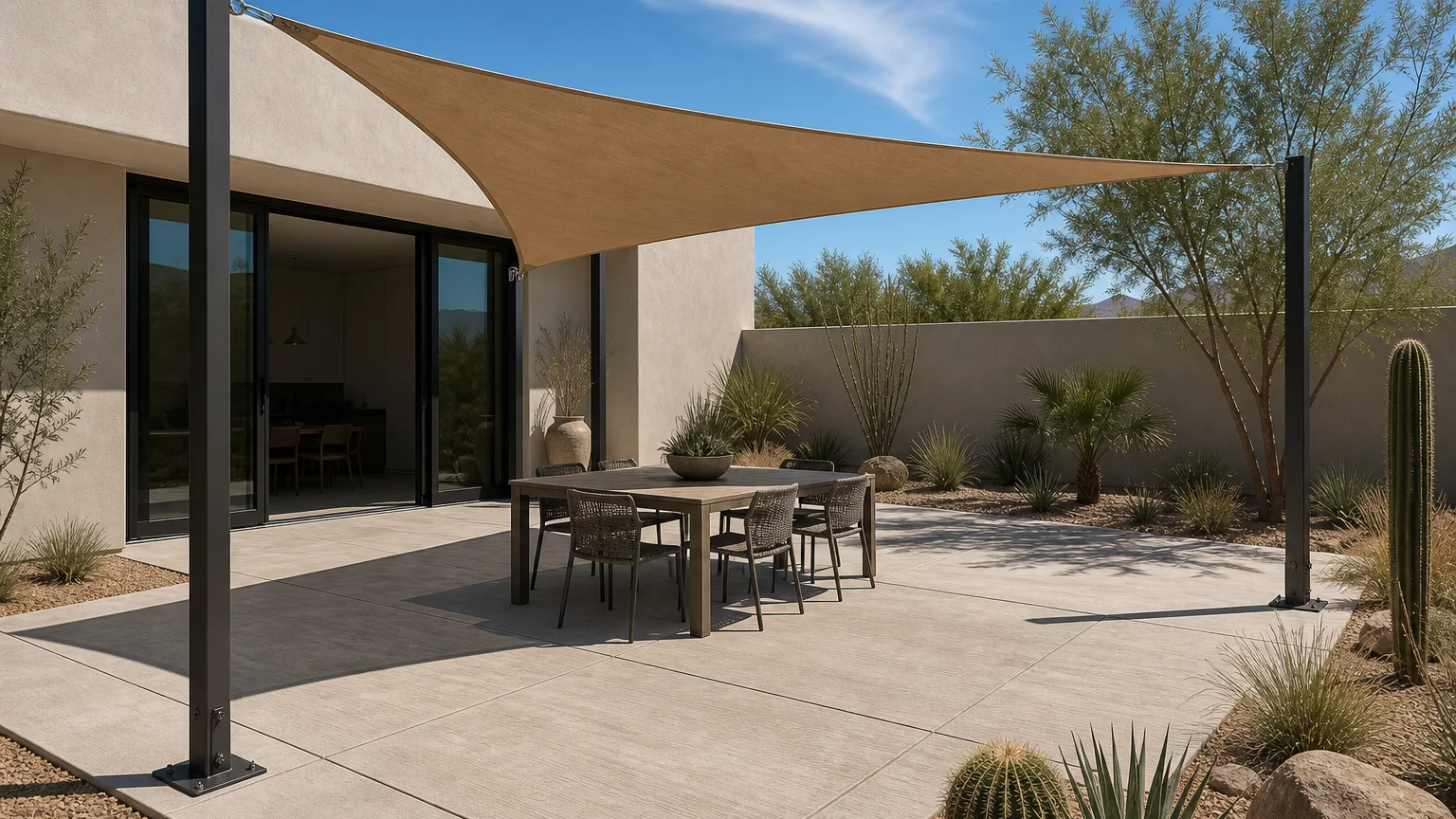
A tensioned shade sail throws cool shade over the dining patio without the mass of a solid roof, which suits an arid, sunny setting. The sail pulls hard on its anchors, so those posts and footings are engineered, and the planting keeps water use low.
- The tradeoff
- The layout sets a clear direction, but it also commits the project to fixed relationships. Design the shade-sail anchors and footings for tension and wind before finishing.
- How to measure it
- Conceptual range: the dining patio field plus the shade-sail anchor footings figured separately.
On your property
Plan it for your site
Keep the concrete field calm and heat-aware so the table stays comfortable, and slope the patio to drain. Set the sail anchor posts on footings sized for the real tension and wind loads, angle the sail to shed rain, and set drought-tolerant planting back.
- Set the sail anchor posts on footings sized for the tension and wind loads.
- Angle the sail to shed rain and confirm the concrete manages heat underfoot.
- Set drought-tolerant planting back and slope the patio to drain.
Before forms are set
Build implications
- Confirm before estimating Sail anchor footings sized for tension and wind loads.
- Confirm before estimating A sail angled to shed rain and heat-aware concrete.
- Confirm before estimating Drought-tolerant planting and patio drainage.
- Measure the site and establish elevations Record boundaries, thresholds, grade changes, utilities, and the dimensions of vehicles, furniture, equipment, or structures that affect the layout.
- Test how the space will be used Check walking routes, turning paths, door swings, working clearances, maintenance access, and the route back to the house or street.
- Resolve drainage, services, and structural support Decide where water goes and coordinate drains, conduit, irrigation, fuel, electrical work, footings, and independent supports before forms are set.
- Define and estimate each concrete element Confirm the slab or footing section, base, joints, edges, and finish, then estimate simple measurable fields separately from steps, walls, drains, and supported features.
Prevent these problems
- Starting with furniture instead of movementDining, cooking, and lounge zones need working clearances and a direct route to the house before the slab outline is fixed.
- Adding services after the pourGas, electric, water, drainage, lighting, and future conduit are easier to coordinate before concrete placement.
- Assuming the slab supports every featureRoofs, pergolas, kitchens, fireplaces, and seat walls often need separate footings or structural details.
Next step
Turn the idea into your estimate
Enter measurements from the property. The conceptual image does not provide a takeoff.
Estimate a similar concrete areaQuestions this idea raises
Do shade sails pull hard on their anchors?
Yes, a tensioned sail loads its anchors heavily, especially in wind, so the posts and footings are engineered for it. Size them properly.
Does a shade sail keep rain off?
Angled well it sheds some rain and gives strong shade, but it is for sun rather than full weather cover. Angle it to drain and shade.
- Best when
- Dining terraces
- Reconsider when
- Reconsider the idea if circulation, utility coordination, clearances, and independent support for built features cannot be resolved on the property.
- Verify first
- Design the shade-sail anchors and footings for tension and wind before finishing.
- Professional input
- Coordinate the concrete contractor with utility and feature installers before the pour
Sources and further reading
- American Concrete InstituteTechnical context for the concrete work beneath outdoor features and furniture zones.
- NRMCA CIP 6: Joints in Concrete Slabs on GradeA practical reference for planning slab panels around fixed outdoor features.
- NRMCA CIP 11: Curing In-Place ConcretePractical guidance on curing methods and timing for new exterior concrete.