Design decision
Why this idea works
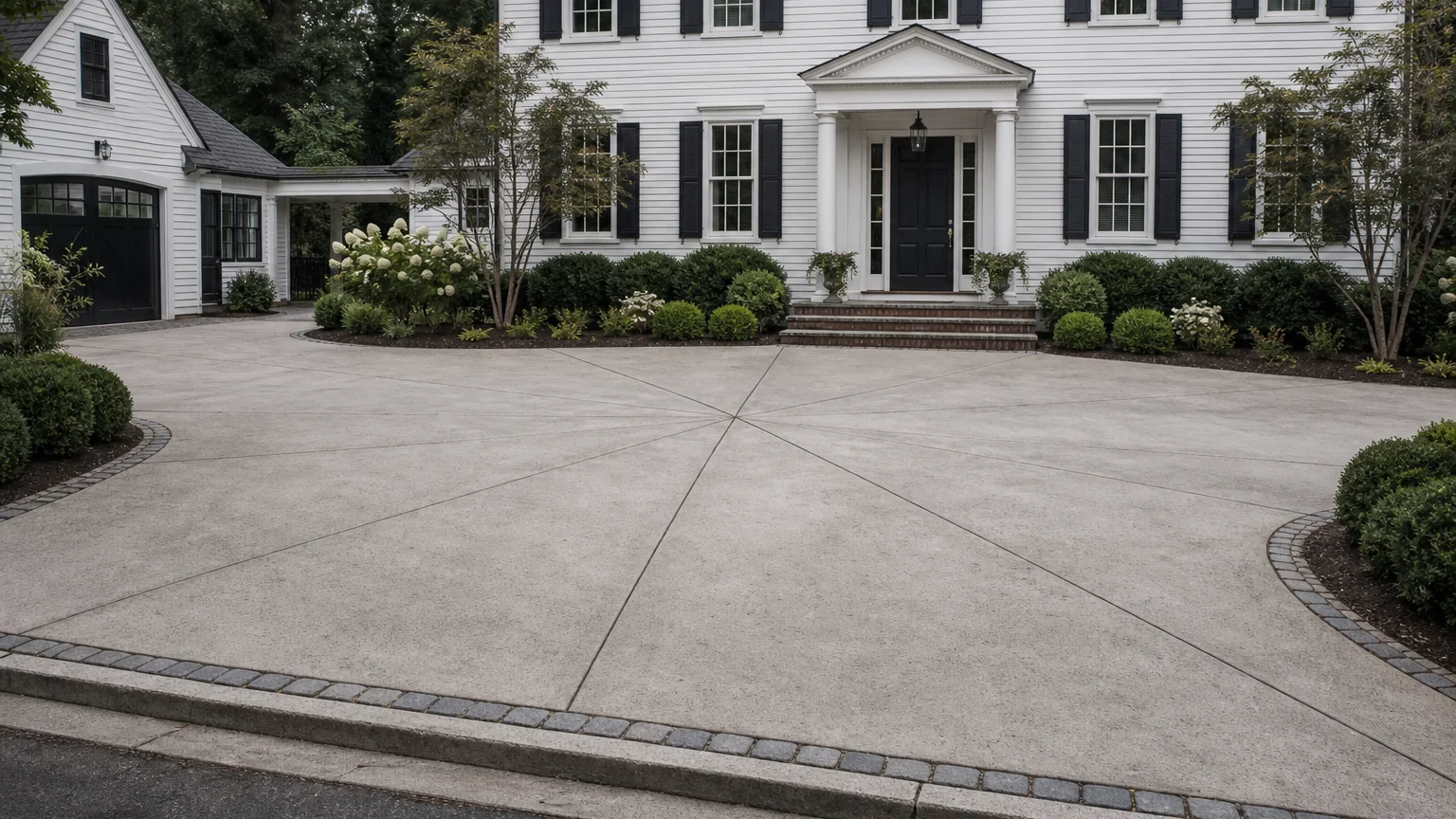
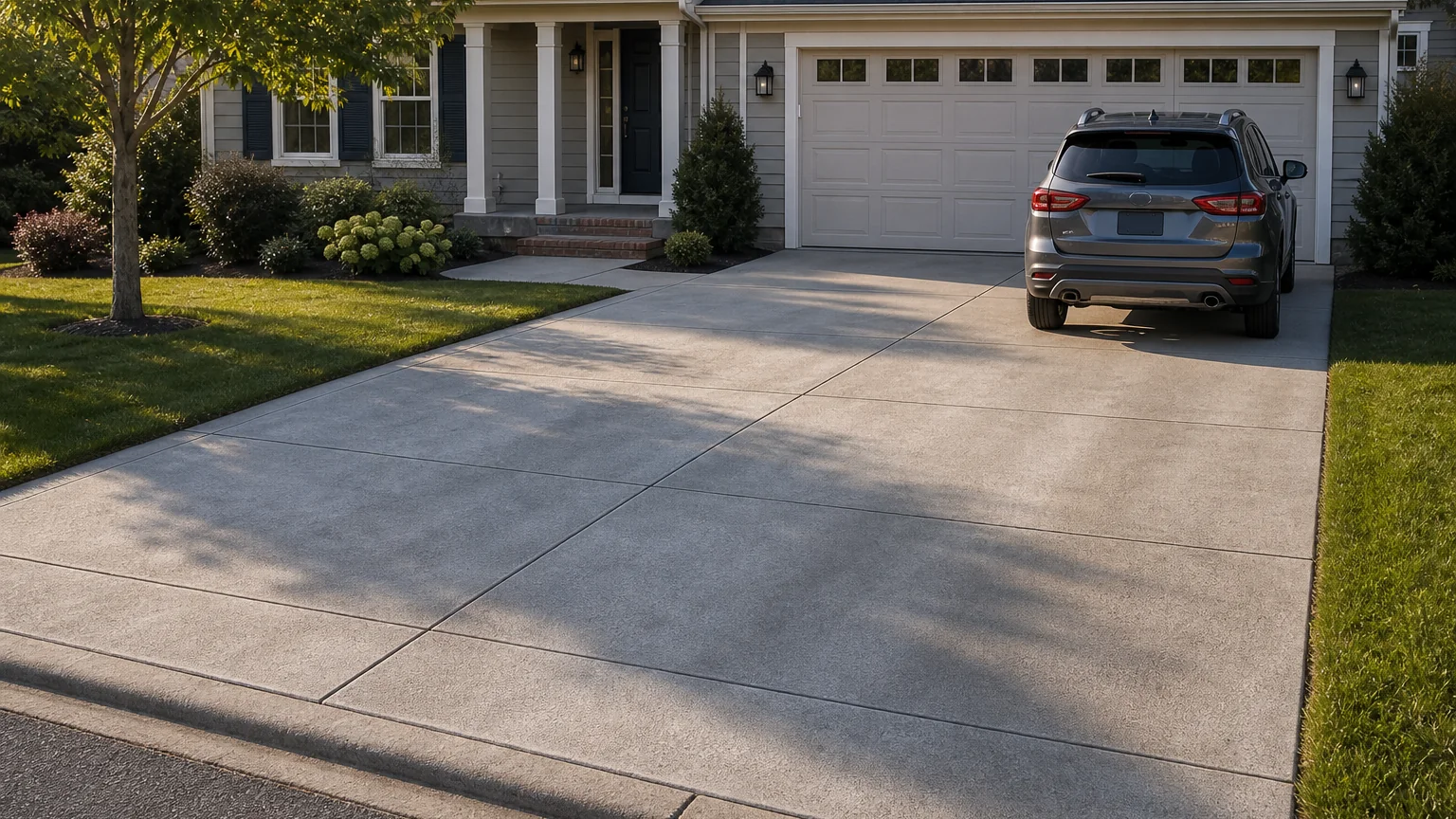
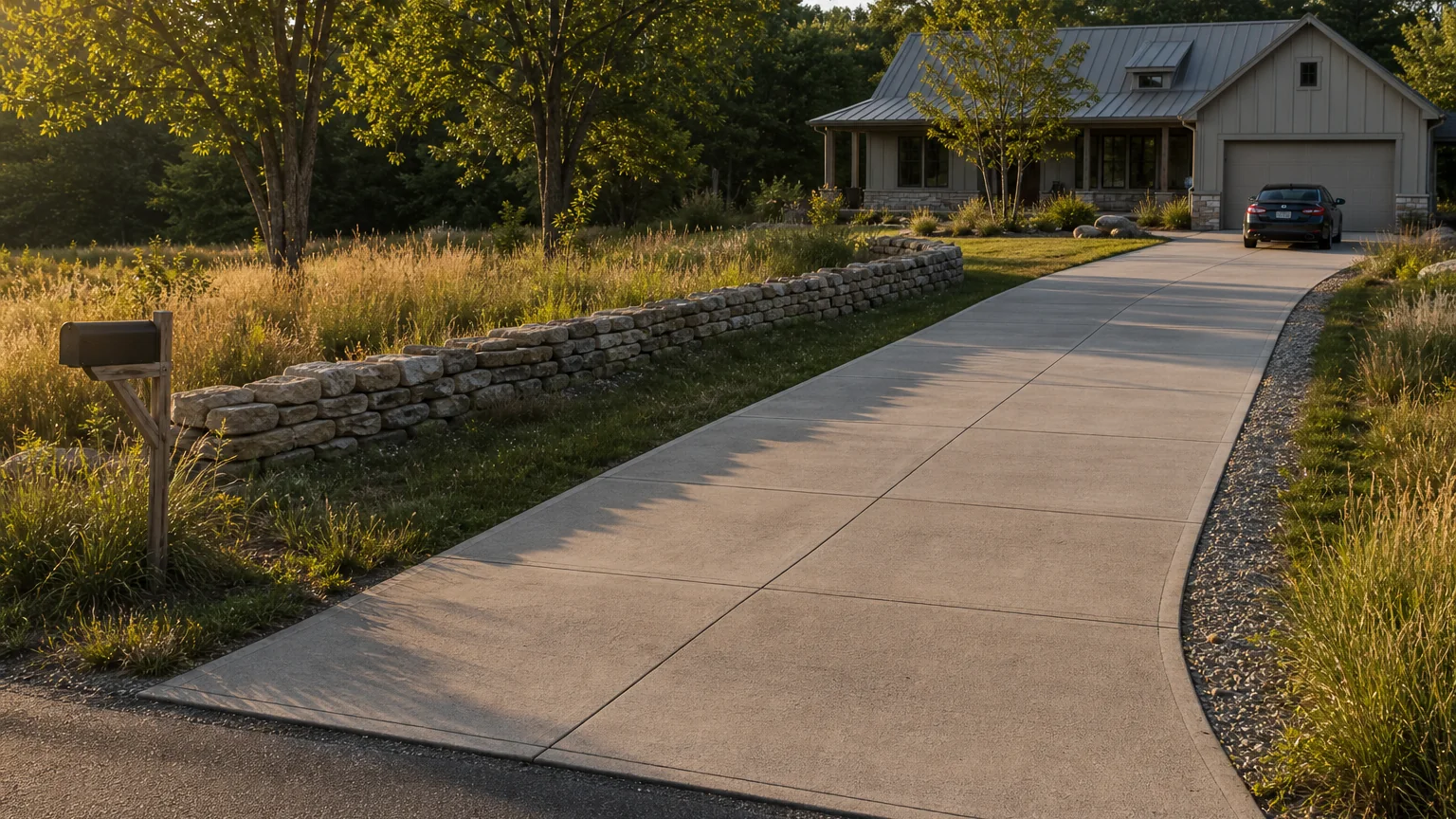
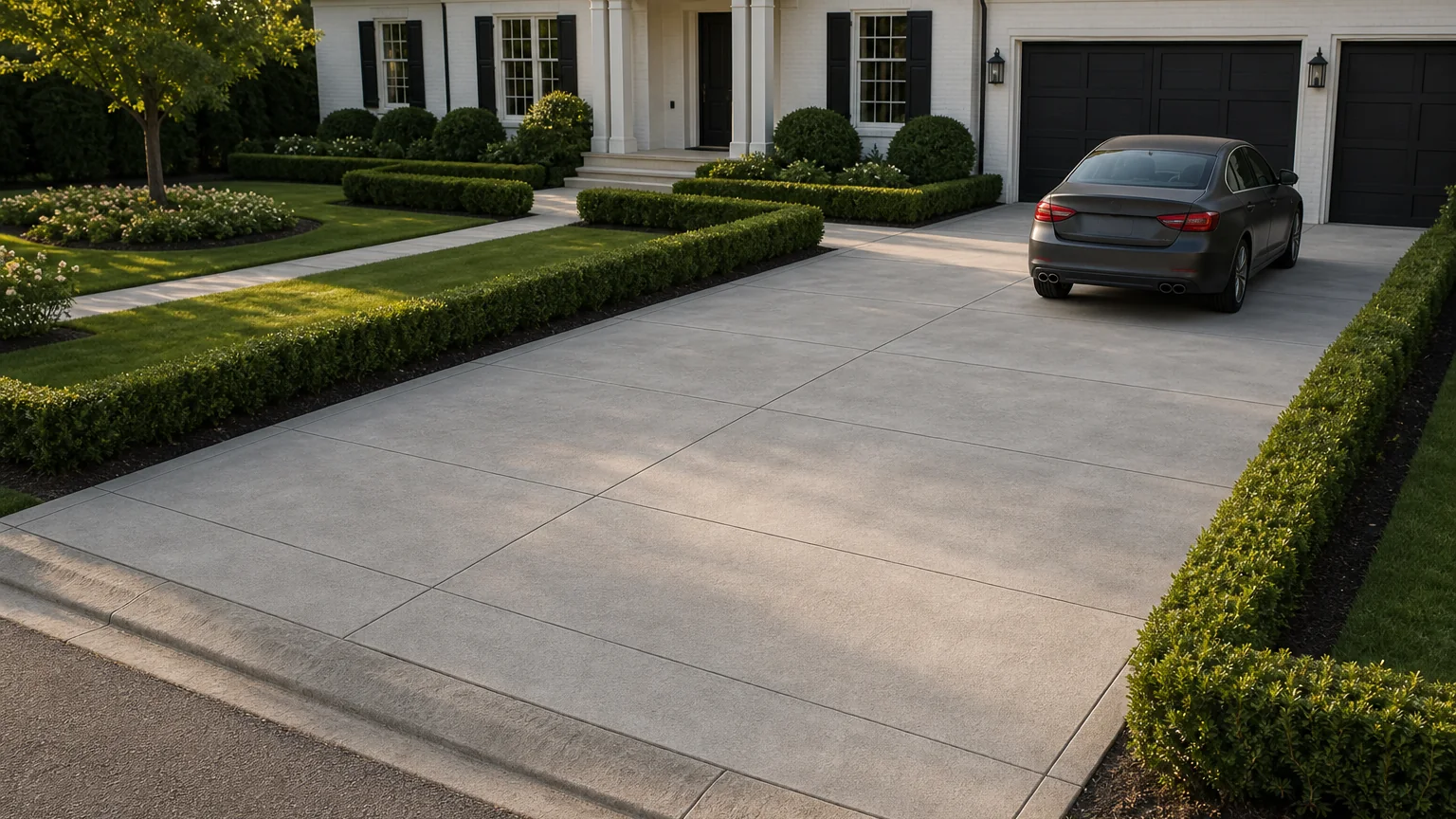
Low clipped hedges turn a plain drive into a formal allee, framing the approach and drawing the eye to the door. The green structure does the styling while the concrete stays a simple, durable surface, and the hedges screen and organize the arrival.
- The tradeoff
- Clipped hedges give strong order, but they demand pruning and can reduce clear width as they mature.
- How to measure it
- Conceptual range: the driveway rectangle plus separately measured hedge beds along each side.
On your property
Plan it for your site
Keep the drive a quiet broom field so the hedges carry the formality, and detail the slab edge clean where it meets the planting beds. Keep hedge roots and irrigation clear of the slab edge so neither undermines the other.
- Set the hedge beds far enough from the slab that roots and irrigation do not undermine the edge.
- Keep the slab edge clean and stable against the planted beds.
- Choose a hedge that stays low and dense enough to frame without crowding the drive.
Before forms are set
Build implications
- Confirm before estimating Hedge setback and root clearance from the slab edge.
- Confirm before estimating A stable, clean slab edge against the beds.
- Confirm before estimating A hedge species and irrigation plan that keeps water off the concrete.
- Measure the site and establish elevations Record boundaries, thresholds, grade changes, utilities, and the dimensions of vehicles, furniture, equipment, or structures that affect the layout.
- Test how the space will be used Check walking routes, turning paths, door swings, working clearances, maintenance access, and the route back to the house or street.
- Resolve drainage, services, and structural support Decide where water goes and coordinate drains, conduit, irrigation, fuel, electrical work, footings, and independent supports before forms are set.
- Define and estimate each concrete element Confirm the slab or footing section, base, joints, edges, and finish, then estimate simple measurable fields separately from steps, walls, drains, and supported features.
Prevent these problems
- Planting sized at installationA young hedge can fit neatly and then grow into mirrors, door swings, walks, and drainage paths.
What changes the work and quote
- Soil preparation, irrigation, planting, and long-term pruningKeep it simpler: Use wider planting pockets with low grasses or a single hedge on one side.
Next step
Turn the idea into your estimate
Enter the dimensions and section for your property. The image does not provide a takeoff.
Estimate your drivewayQuestions this idea raises
Will hedge roots damage the driveway?
Low hedges set back from the slab with contained irrigation rarely trouble it, but planting tight against the edge invites root and moisture problems. Give the beds a sensible setback.
How do I keep a formal look low-maintenance?
Choose a dense, slow-growing hedge and keep the concrete a simple field so the upkeep is mostly trimming. The formality comes from the green structure, not from fussy paving.
- Best when
- A formal home has room for low planting outside door swings, sightlines, and snow storage.
- Reconsider when
- Hedges would narrow the usable drive, hide pedestrians, or trap runoff and road salt.
- Verify first
- Mark mature hedge width and sight triangles, then test parking and backing space.
- Professional input
- A concrete contractor should confirm the slab, base, joints, and drainage. Ask an engineer or the local authority to review retaining work, structures, unusual loads, or public-right-of-way changes.
Sources and further reading
- NRMCA CIP 6: Joints in Concrete Slabs on GradeJoint spacing, panel shape, isolation, and saw-cut depth for slabs on grade.
- FHWA: Bases and Subbases for Concrete PavementsProfessional guidance on uniform support, subgrade risks, drainage, and stable base layers.
- U.S. EPA: Types of Green InfrastructureHow rain gardens, swales, and permeable pavement store, slow, or infiltrate runoff.
- U.S. Access Board: Accessible RoutesSurface, slope, clear-width, and route guidance where formal accessibility rules apply.