Design decision
Why this idea works
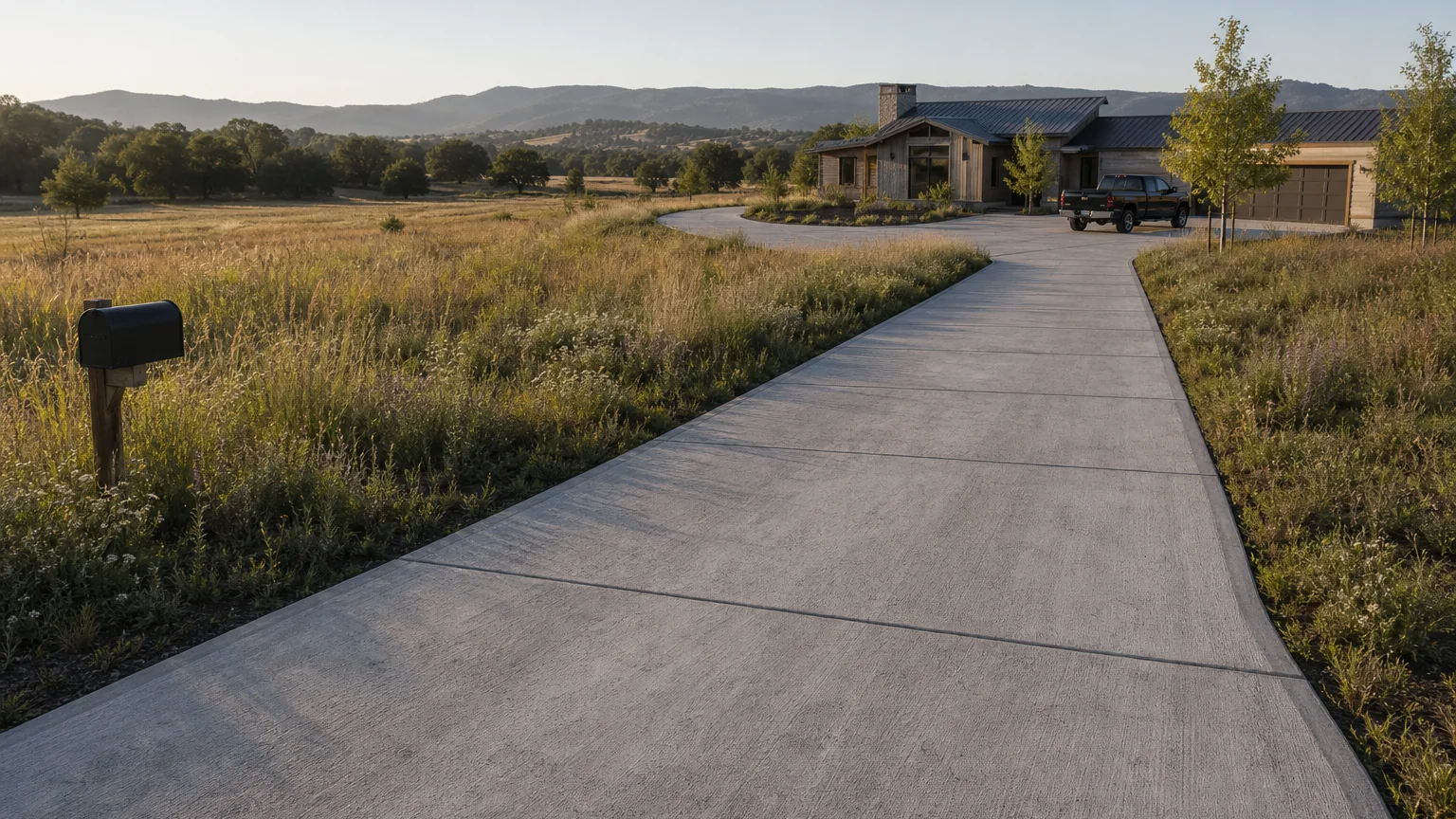
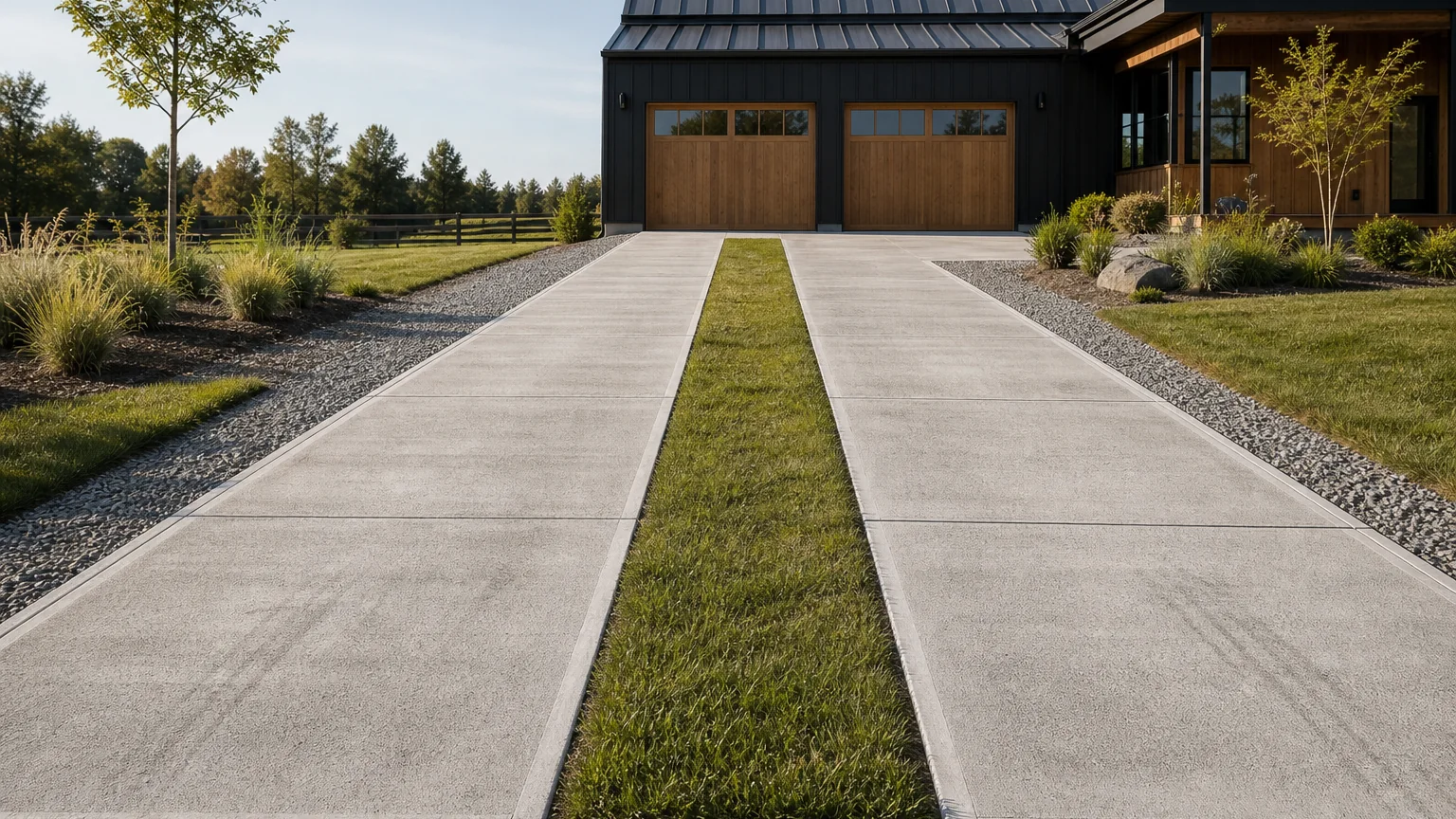
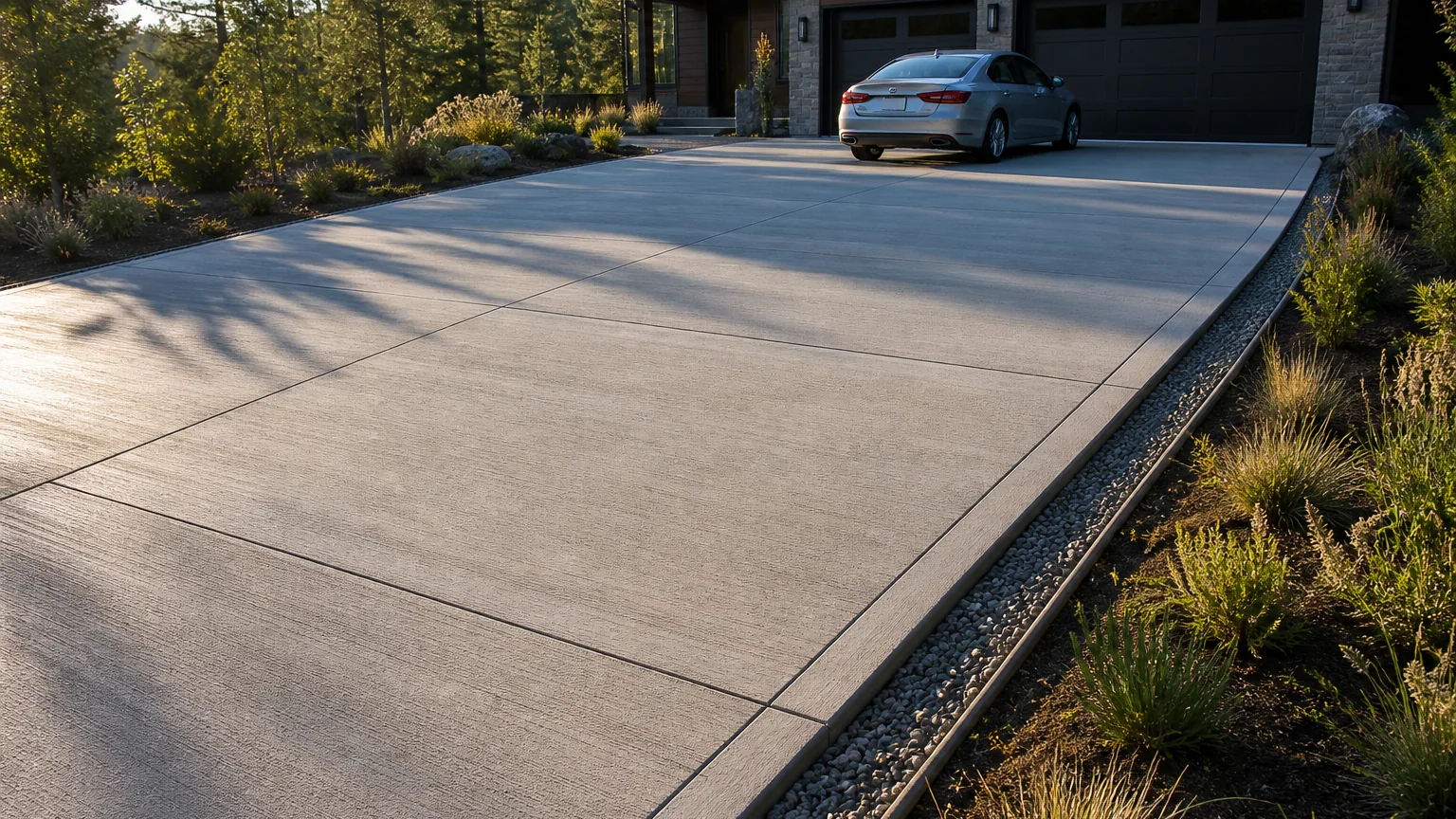
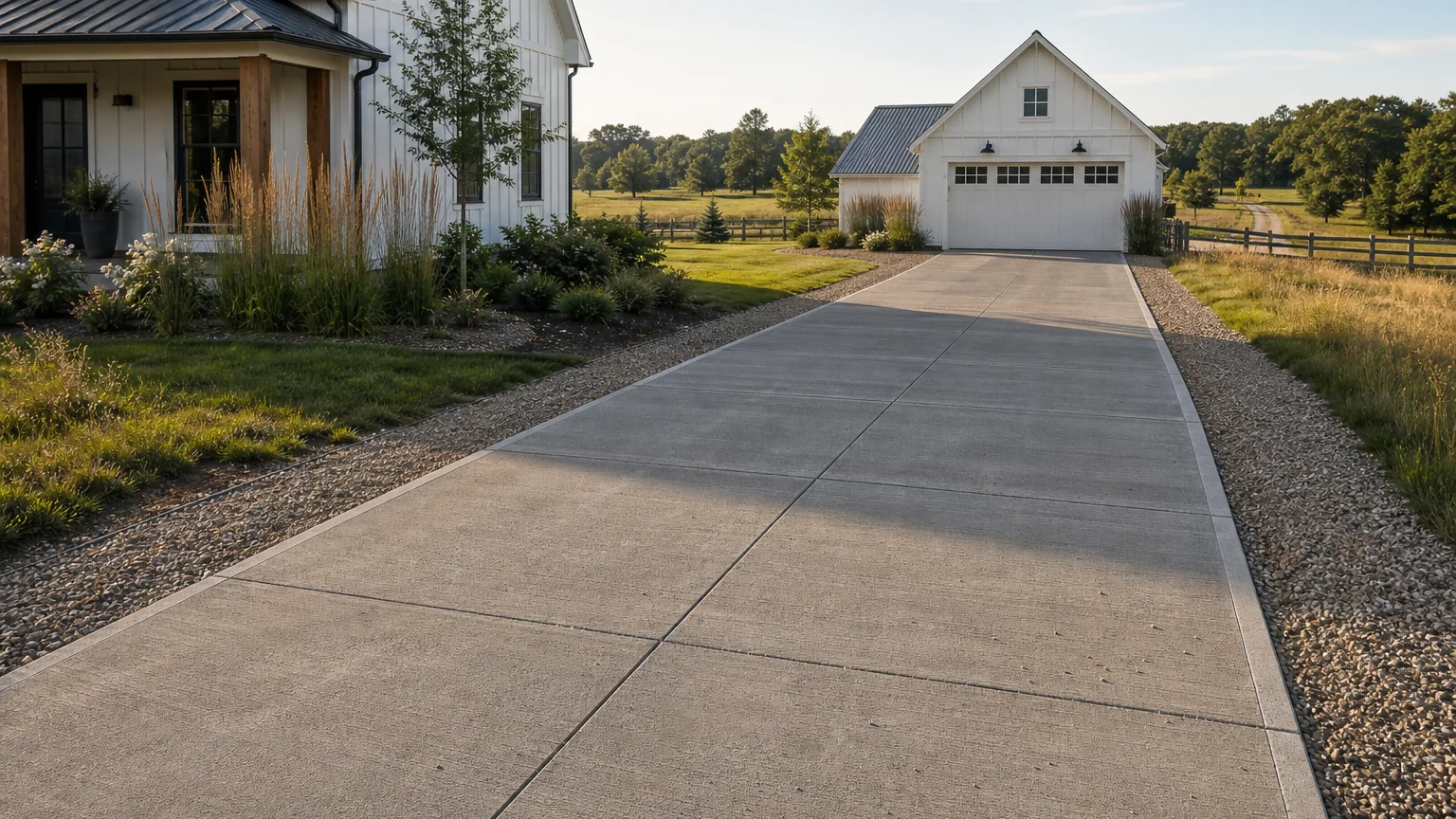
Putting concrete where the car rolls and gravel or grass on the shoulders gives you a firm, clean surface where it counts and a lower-cost, permeable margin for overflow and character. The mix suits a rural or farmhouse setting and keeps the paved area modest.
- The tradeoff
- Gravel shoulders reduce concrete area and suit a rural setting, but they need grading and replenishment.
- How to measure it
- Conceptual range: the concrete track plus separately measured gravel shoulders and grass margins.
On your property
Plan it for your site
Detail the concrete edge as a clean containment lip against the gravel so the stone stays put, and keep the concrete field a simple broom finish. Compact the gravel shoulders on a proper base so they do not rut, and drain water through them where useful.
- Give the concrete a defined edge so gravel cannot creep onto the track.
- Compact the gravel shoulders on a base so they do not rut under occasional loads.
- Drain so water moves through the gravel rather than sheeting onto the concrete.
Before forms are set
Build implications
- Confirm before estimating A containment edge that keeps gravel off the concrete.
- Confirm before estimating A compacted gravel base for the shoulder loads.
- Confirm before estimating Drainage that uses the gravel permeability.
- Measure the site and establish elevations Record boundaries, thresholds, grade changes, utilities, and the dimensions of vehicles, furniture, equipment, or structures that affect the layout.
- Test how the space will be used Check walking routes, turning paths, door swings, working clearances, maintenance access, and the route back to the house or street.
- Resolve drainage, services, and structural support Decide where water goes and coordinate drains, conduit, irrigation, fuel, electrical work, footings, and independent supports before forms are set.
- Define and estimate each concrete element Confirm the slab or footing section, base, joints, edges, and finish, then estimate simple measurable fields separately from steps, walls, drains, and supported features.
Prevent these problems
- Shoulders that sit below the slabA growing edge drop can expose concrete, catch tires, and channel water along the pavement.
What changes the work and quote
- Shoulder aggregate, compaction, drainage, and periodic maintenanceKeep it simpler: Use one compacted shoulder on the passing or unloading side.
Next step
Turn the idea into your estimate
Enter the dimensions and section for your property. The image does not provide a takeoff.
Estimate your drivewayQuestions this idea raises
Why mix concrete and gravel on a driveway?
Concrete handles the hard-working tire path while gravel offers a cheaper, permeable shoulder, so you spend on durability only where needed. A firm edge keeps them separate.
How do I keep gravel off the concrete?
Detail the concrete edge as a raised containment lip and compact the gravel properly so it does not wander. The edge detail keeps the transition tidy over time.
- Best when
- A rural drive needs concrete in the main tire area and stable gravel can handle occasional edge use.
- Reconsider when
- Loose shoulders would wash out, rut, or create a step at the slab edge.
- Verify first
- Define the wheel path, shoulder section, cross-slope, ditch or verge, and maintenance access.
- Professional input
- A concrete contractor should confirm the slab, base, joints, and drainage. Ask an engineer or the local authority to review retaining work, structures, unusual loads, or public-right-of-way changes.
Sources and further reading
- NRMCA CIP 6: Joints in Concrete Slabs on GradeJoint spacing, panel shape, isolation, and saw-cut depth for slabs on grade.
- FHWA: Bases and Subbases for Concrete PavementsProfessional guidance on uniform support, subgrade risks, drainage, and stable base layers.
- U.S. EPA: Types of Green InfrastructureHow rain gardens, swales, and permeable pavement store, slow, or infiltrate runoff.