Design decision
Why this idea works
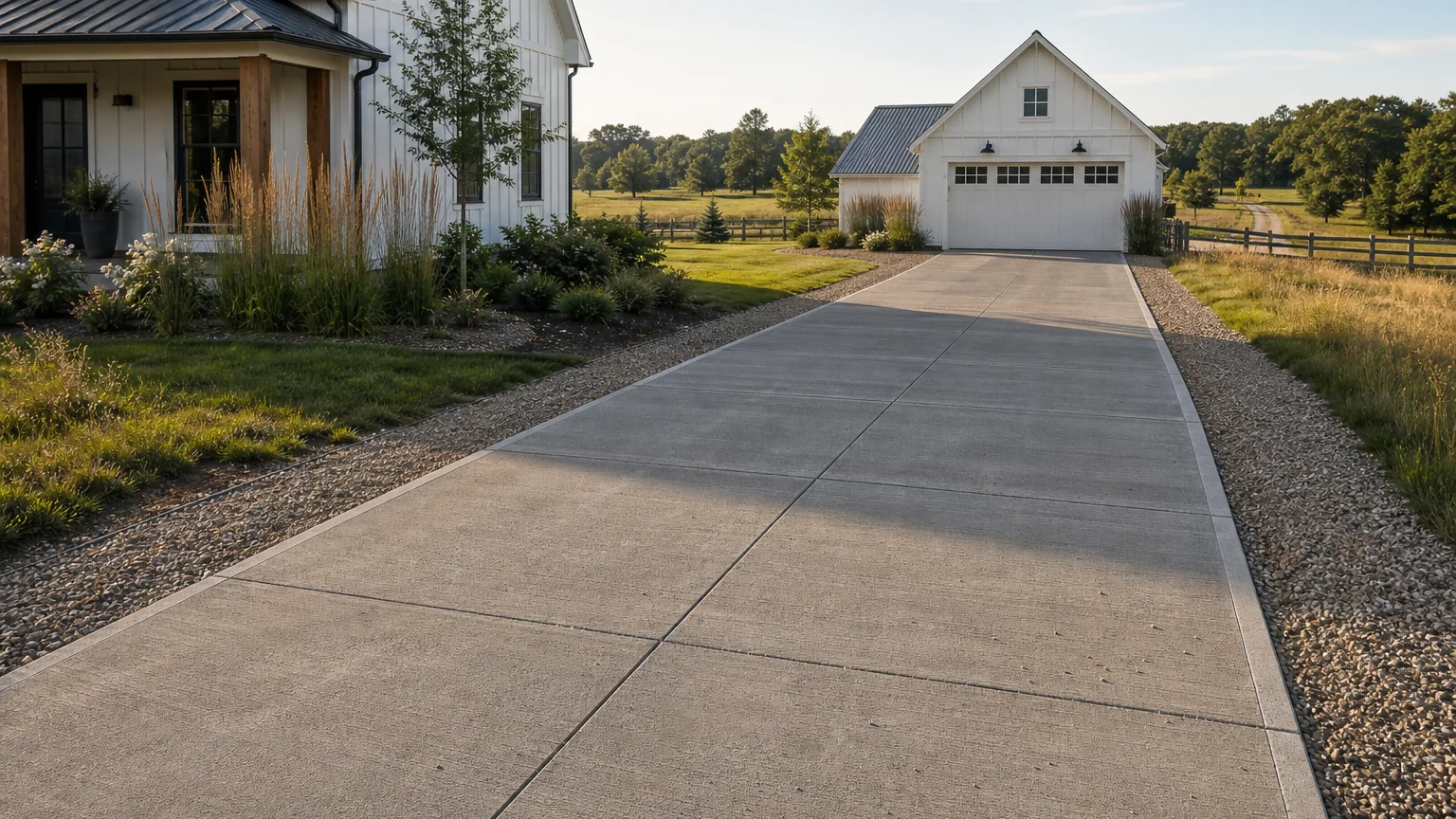
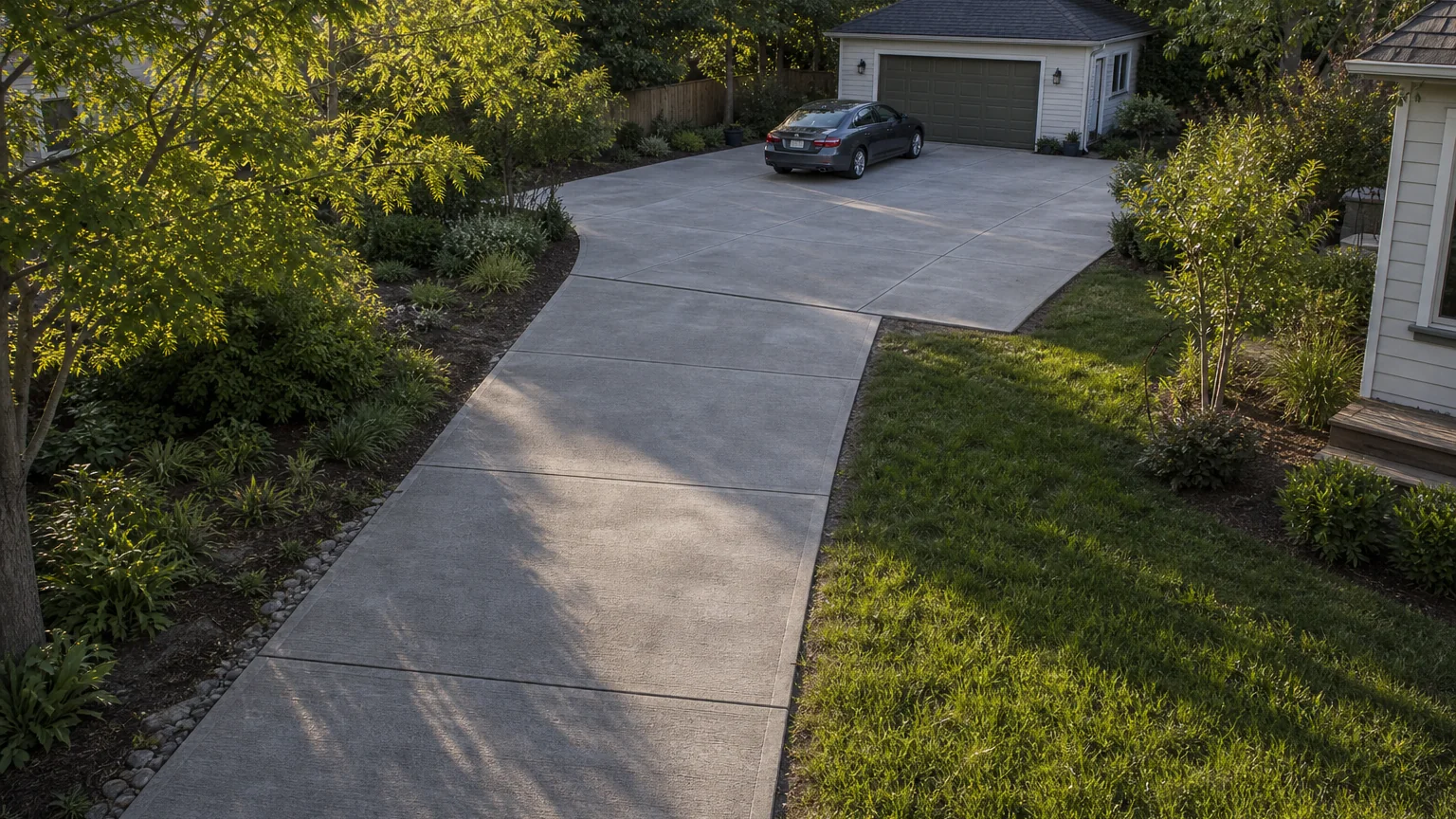
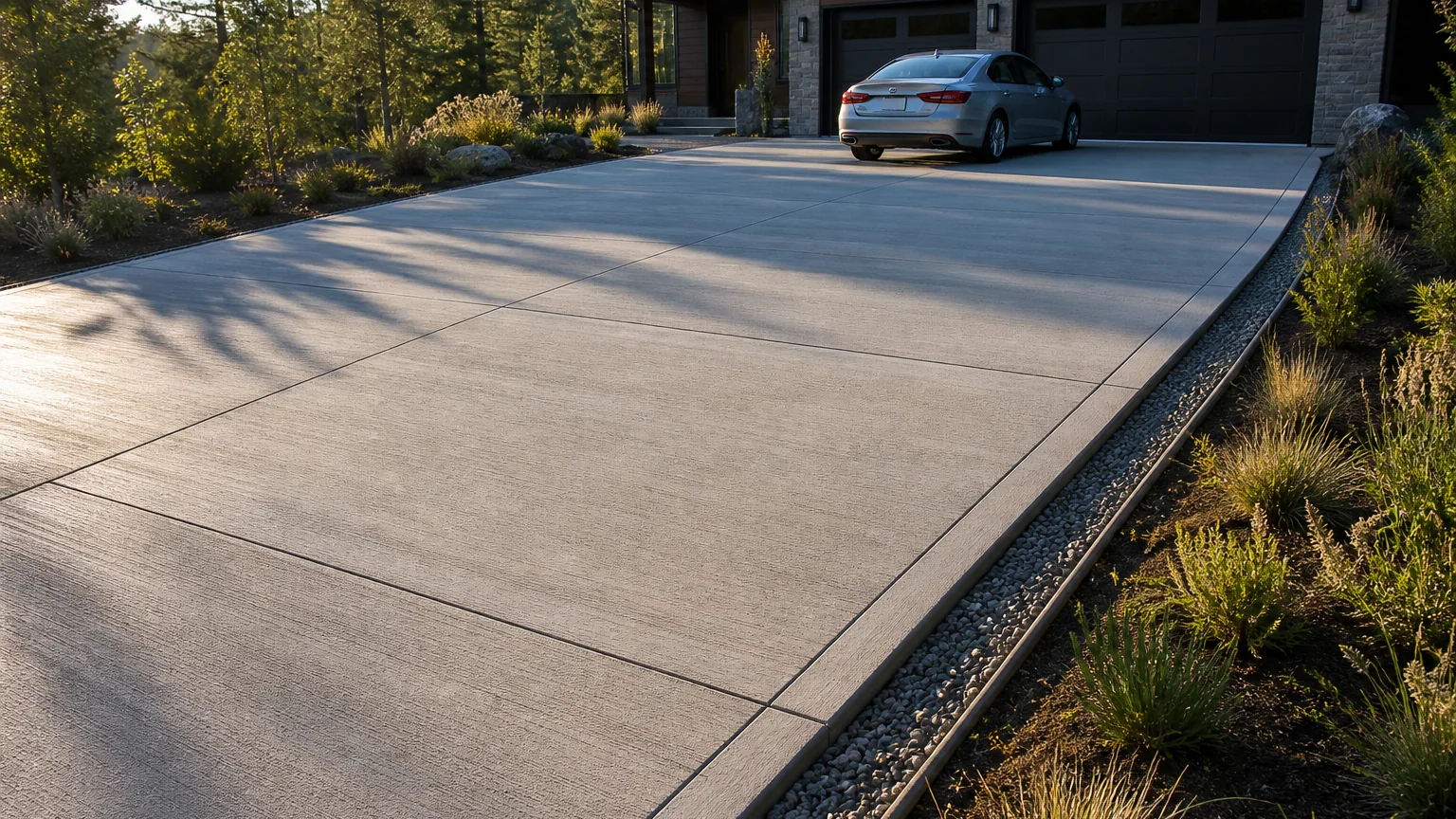
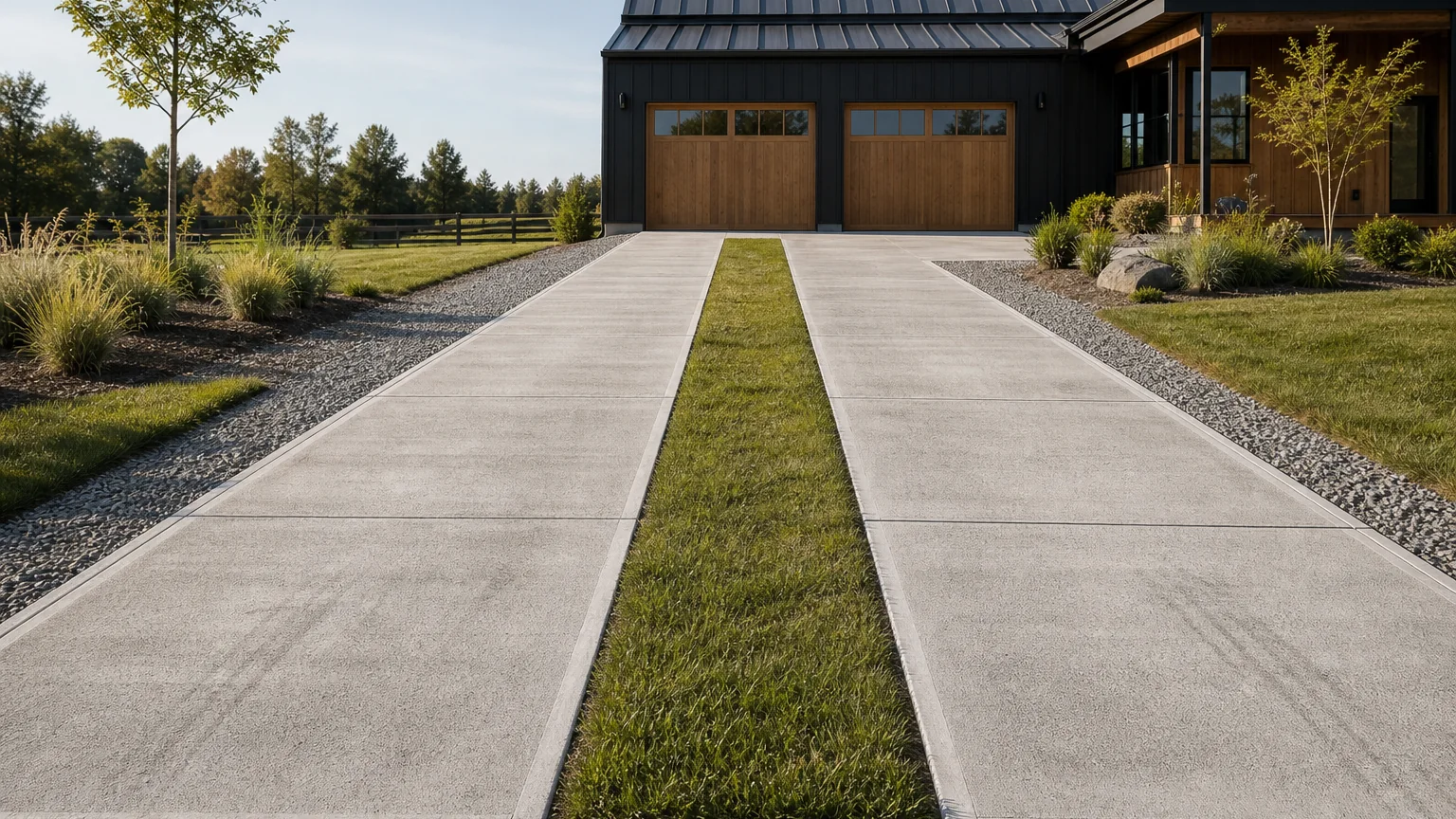
Concrete strips make sense on a long rural approach because they carry the tires while leaving the center green. The practical version changes character before the garage: the final arrival zone becomes a continuous apron so doors, cargo, snow clearing, and lateral walking all happen on stable concrete.
- The tradeoff
- Ribbon paving reduces concrete and keeps more ground open, but it limits vehicle paths and increases exposed edges.
- How to measure it
- Conceptual range: two approach strips measured separately, plus a full-width garage apron and entry connection.
On your property
Plan it for your site
Use broom-finished strips with crisp formed edges on the approach, then transition cleanly into a full-width apron with its own joint grid. The apron should read as intentional working concrete, not as the last few feet of a ribbon drive stretched to the garage doors.
- Keep the two-strip layout only on the travel approach, not in the normal parking and unloading zone.
- Make the apron at least one vehicle length deep so doors and cargo stay on concrete.
- Coordinate drainage across the transition so water does not collect where the strips meet the apron.
Before forms are set
Build implications
- Confirm before estimating Wheel-track spacing and strip width for the approach vehicles.
- Confirm before estimating Full-width apron depth, door clearance, and connection to the entry.
- Confirm before estimating Joint, base, and drainage detailing at the strip-to-apron transition.
- Measure the site and establish elevations Record boundaries, thresholds, grade changes, utilities, and the dimensions of vehicles, furniture, equipment, or structures that affect the layout.
- Test how the space will be used Check walking routes, turning paths, door swings, working clearances, maintenance access, and the route back to the house or street.
- Resolve drainage, services, and structural support Decide where water goes and coordinate drains, conduit, irrigation, fuel, electrical work, footings, and independent supports before forms are set.
- Define and estimate each concrete element Confirm the slab or footing section, base, joints, edges, and finish, then estimate simple measurable fields separately from steps, walls, drains, and supported features.
Prevent these problems
- Wheel strips that do not fit the fleetDifferent cars, trailers, and service vehicles can ride the edges or the soft center.
What changes the work and quote
- Extra forming, exposed edges, and the strip-to-apron transitionKeep it simpler: Use a narrow full-width drive with reinforced edges at the arrival apron.
Next step
Turn the idea into your estimate
Enter the dimensions and section for your property. The image does not provide a takeoff.
Estimate your drivewayQuestions this idea raises
Can a ribbon driveway work at a garage?
It can work on the approach, but the garage arrival usually needs a full-width hard surface for parking, doors, unloading, and snow clearing. Transition before the normal stopping zone.
Does the full apron erase the low-impact benefit?
No. The longer approach can still reduce paved area. The apron simply puts concrete where daily use actually needs it.
- Best when
- A low-traffic rural approach can use concrete wheel strips and widen to a full slab where parking and turning occur.
- Reconsider when
- Vehicles vary in track width, snow removal needs a full surface, or the strips cross weak or wet soil.
- Verify first
- Track every regular vehicle and define drainage, strip edges, the center surface, and the full-width transition.
- Professional input
- A concrete contractor should confirm the slab, base, joints, and drainage. Ask an engineer or the local authority to review retaining work, structures, unusual loads, or public-right-of-way changes.
Sources and further reading
- NRMCA CIP 6: Joints in Concrete Slabs on GradeJoint spacing, panel shape, isolation, and saw-cut depth for slabs on grade.
- FHWA: Bases and Subbases for Concrete PavementsProfessional guidance on uniform support, subgrade risks, drainage, and stable base layers.
- U.S. EPA: Types of Green InfrastructureHow rain gardens, swales, and permeable pavement store, slow, or infiltrate runoff.