Design decision
Why this idea works
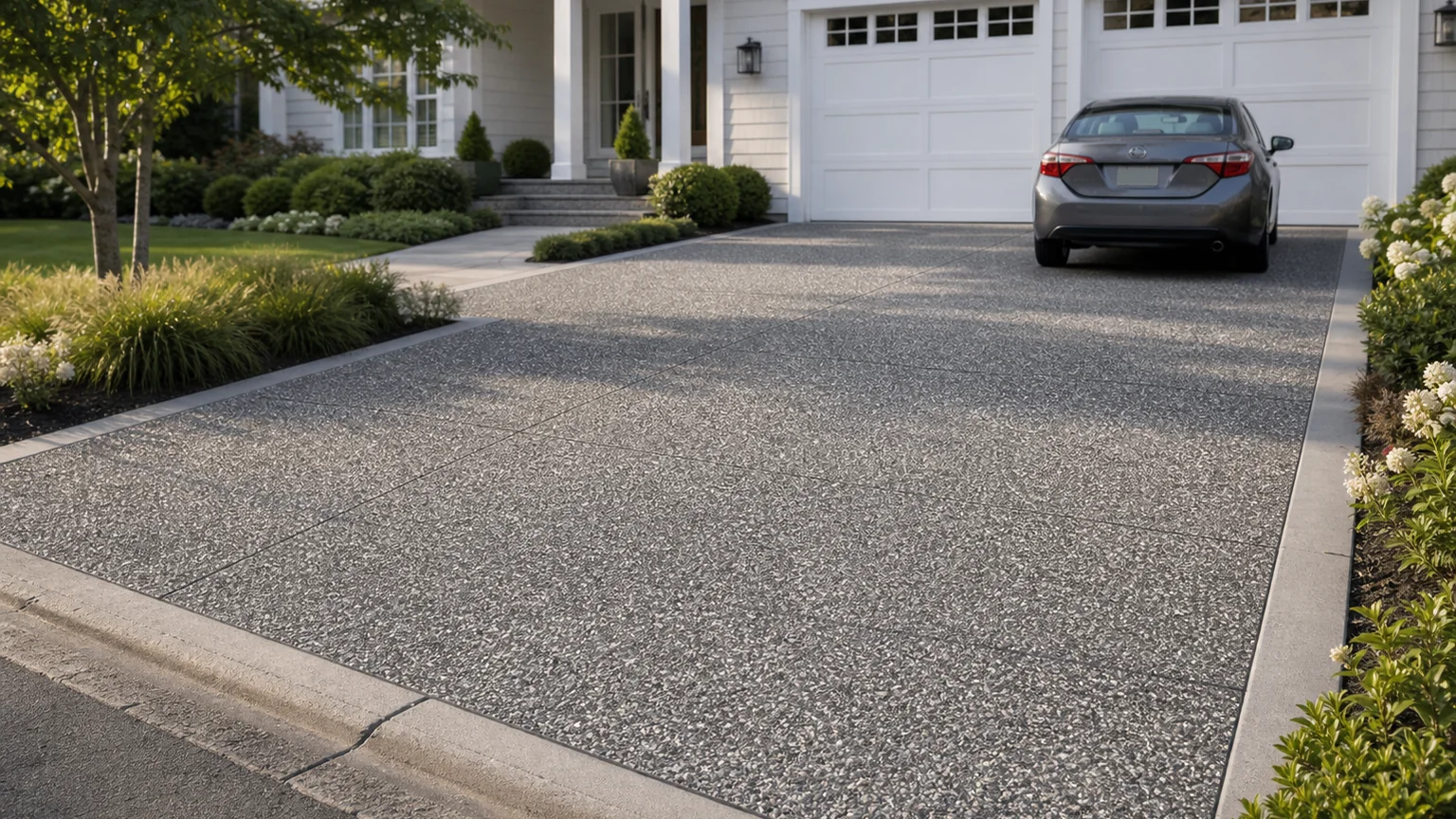
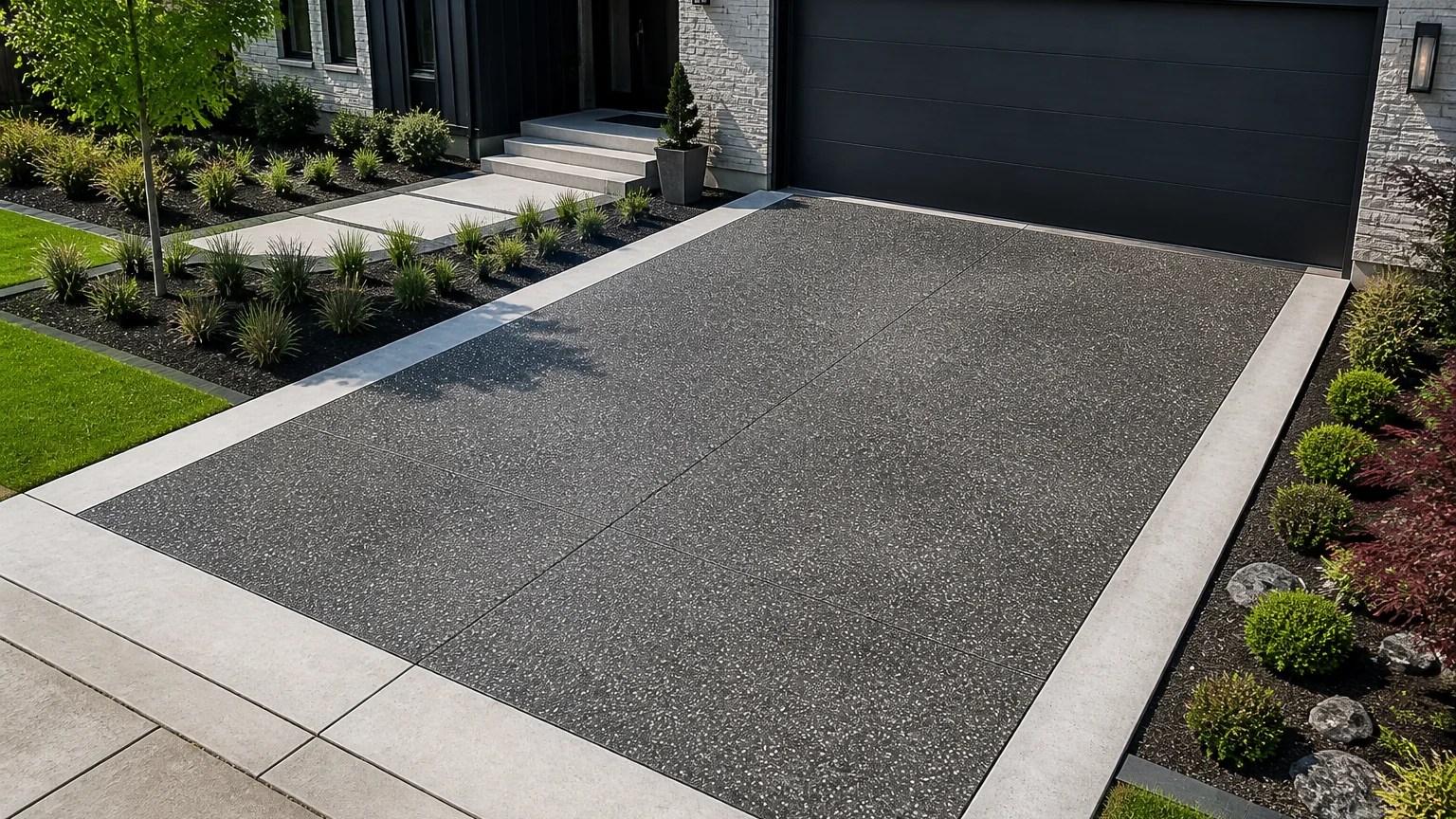
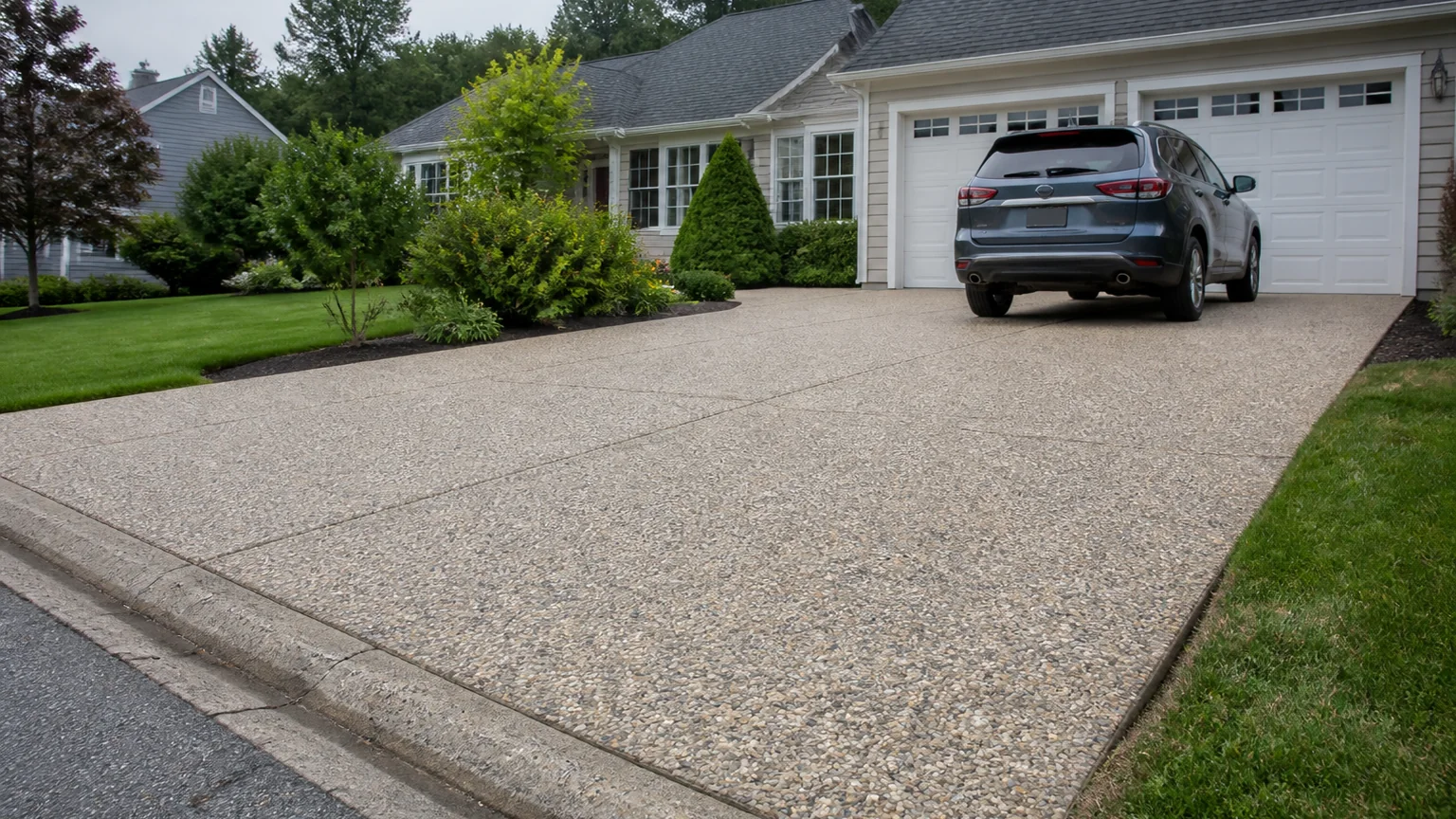
Exposed aggregate softens the plainness of a poured slab with the texture of real stone, which suits an established home better than a stark finish, and the exposed grain adds grip in wet weather. You get a warmer look and surer footing from the same surface.
- The tradeoff
- Exposed aggregate hides marks and adds texture, but it requires finish skill and can feel rougher under small wheels or bare feet.
- How to measure it
- Conceptual range: one driveway rectangle, with the aggregate figured as a surface treatment rather than added volume.
On your property
Plan it for your site
A fine, evenly exposed aggregate reads as refined; a coarse, uneven expose looks rough and traps grit. Seal it to hold the stone and color, keep the exposure consistent across the field, and confirm the finish still grips and drains where tires turn and brake.
- Keep the exposure fine and even so the surface stays comfortable and easy to clean.
- Seal the finish to lock in the stone and color and make washing easier, and plan the resealing upkeep.
- Confirm the finish grips where tires turn and that it drains without holding grit.
Before forms are set
Build implications
- Confirm before estimating A sample panel showing the exposure depth and sealed look you want.
- Confirm before estimating Traction and drainage across the turning zones.
- Confirm before estimating A maintenance and resealing expectation you are comfortable with.
- Measure the site and establish elevations Record boundaries, thresholds, grade changes, utilities, and the dimensions of vehicles, furniture, equipment, or structures that affect the layout.
- Test how the space will be used Check walking routes, turning paths, door swings, working clearances, maintenance access, and the route back to the house or street.
- Resolve drainage, services, and structural support Decide where water goes and coordinate drains, conduit, irrigation, fuel, electrical work, footings, and independent supports before forms are set.
- Define and estimate each concrete element Confirm the slab or footing section, base, joints, edges, and finish, then estimate simple measurable fields separately from steps, walls, drains, and supported features.
Prevent these problems
- Uneven exposureInconsistent washing or set time can leave patchy stone, weak mortar pockets, and a surface that is hard to correct.
What changes the work and quote
- Selected aggregate, exposure labor, sample work, and sealerKeep it simpler: Use a broom finish with a narrow exposed-aggregate accent area.
Next step
Turn the idea into your estimate
Enter the dimensions and section for your property. The image does not provide a takeoff.
Estimate your drivewayQuestions this idea raises
Is an exposed-aggregate driveway slippery?
A fine exposed-aggregate surface usually grips better than a slick trowel finish because the stone breaks the surface, but sealer and exposure depth matter. Test a sample wet before committing.
Does exposed aggregate need resealing?
Sealing holds the exposed stone, keeps the color from dulling, and eases cleaning, at the cost of a periodic reseal. Decide the upkeep you want before choosing the finish.
- Best when
- A traditional or natural material palette benefits from visible stone texture and the owner accepts finish upkeep.
- Reconsider when
- Barefoot comfort, smooth rolling, easy snow clearing, or a uniform repair appearance has priority.
- Verify first
- Approve a sample that shows the aggregate, exposure depth, wet grip, sealer, and cured color.
- Professional input
- A concrete contractor should confirm the slab, base, joints, and drainage. Ask an engineer or the local authority to review retaining work, structures, unusual loads, or public-right-of-way changes.
Sources and further reading
- NRMCA CIP 6: Joints in Concrete Slabs on GradeJoint spacing, panel shape, isolation, and saw-cut depth for slabs on grade.
- FHWA: Bases and Subbases for Concrete PavementsProfessional guidance on uniform support, subgrade risks, drainage, and stable base layers.
- NRMCA CIP 11: Curing In-Place ConcretePlain-language guidance on curing methods, timing, weather, and surface protection.