Design decision
Why this idea works
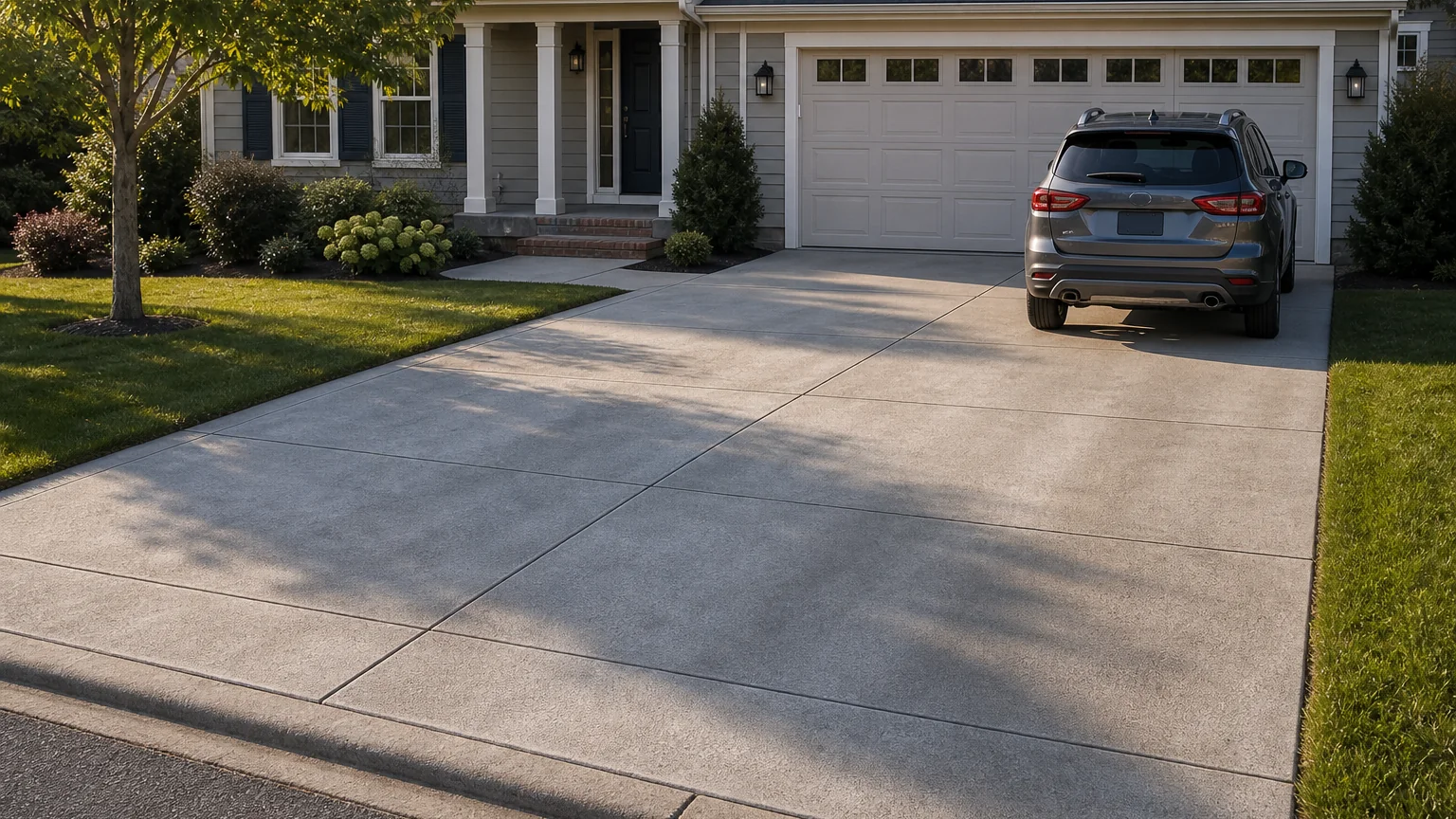
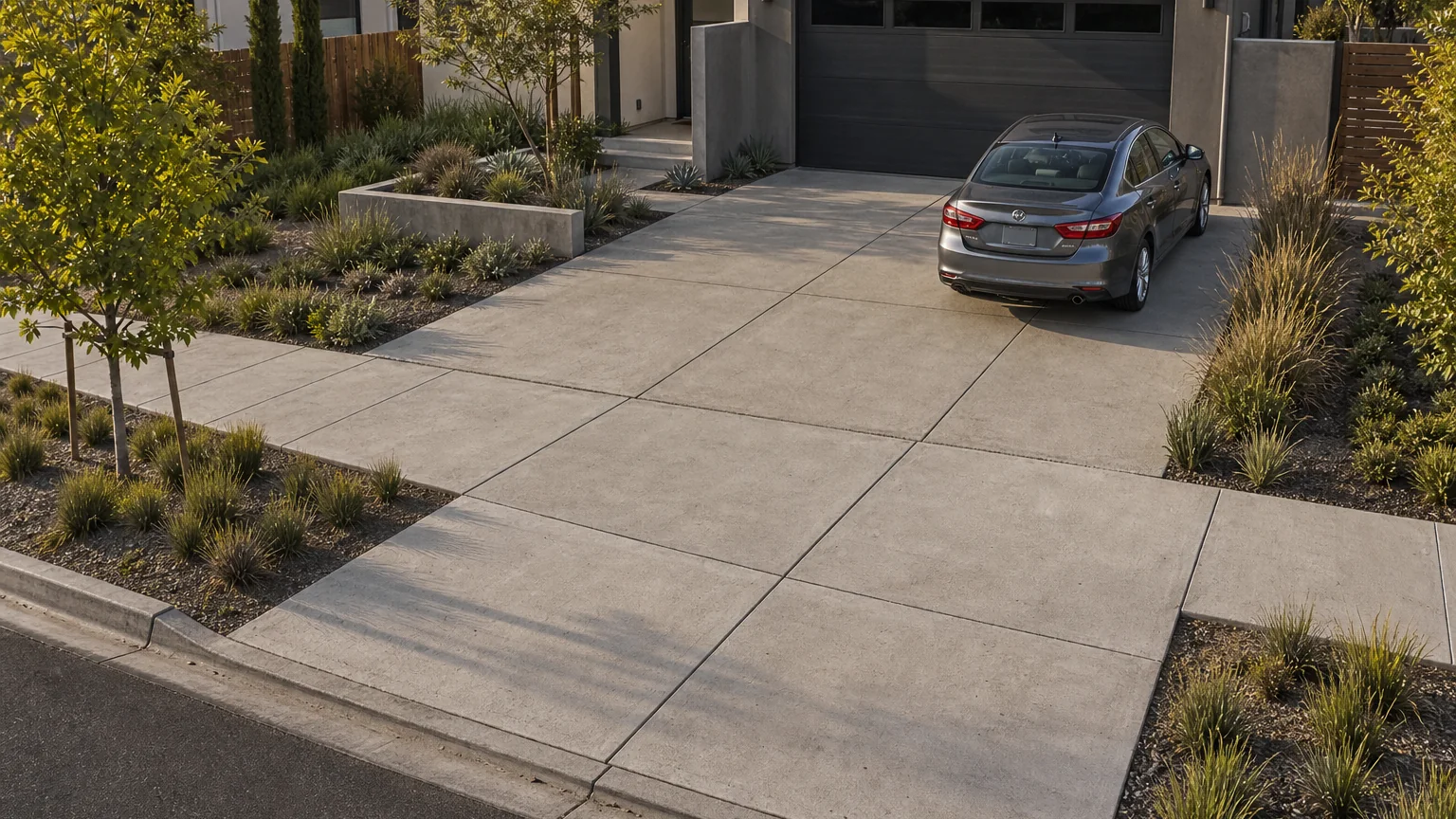
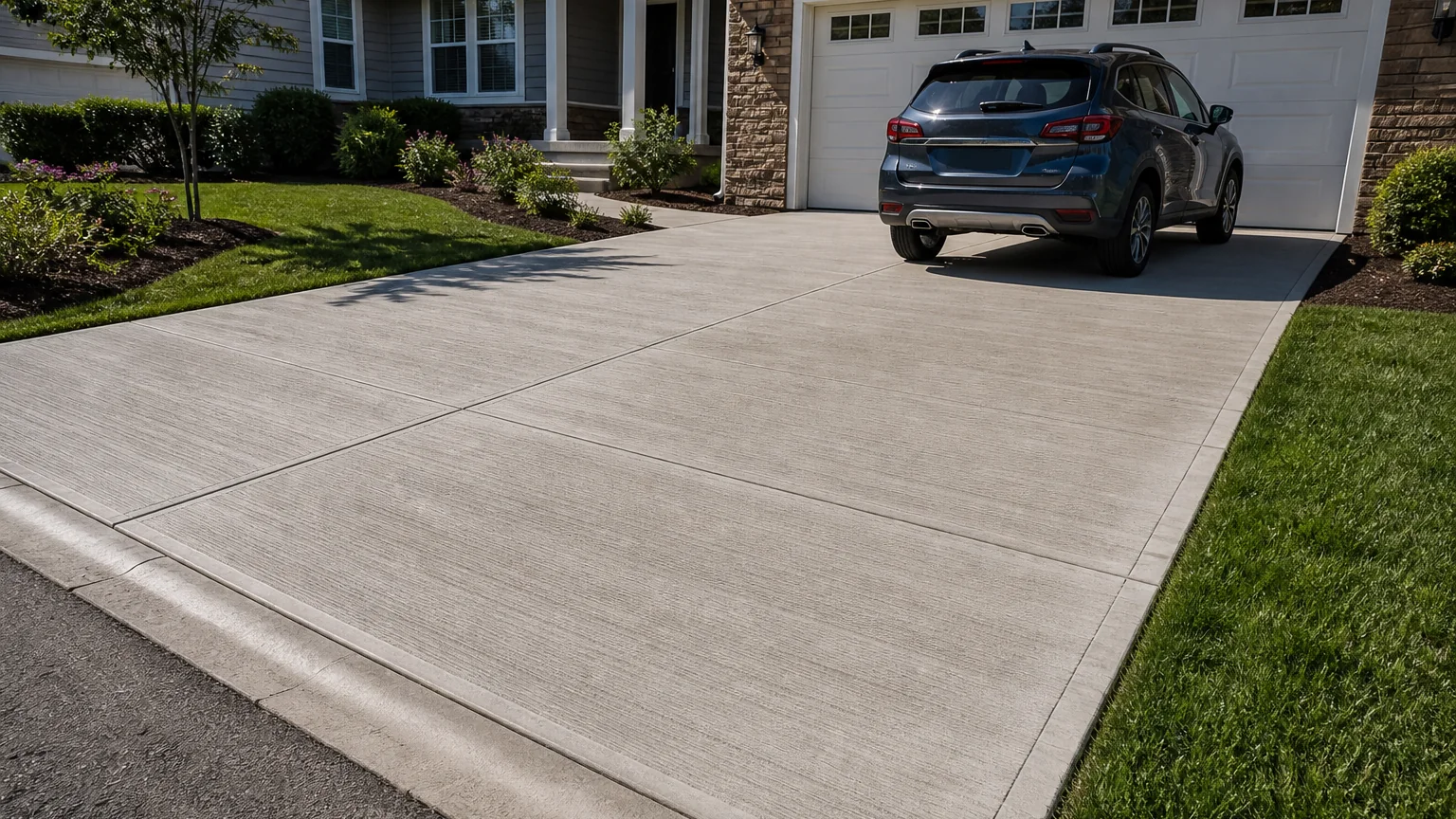
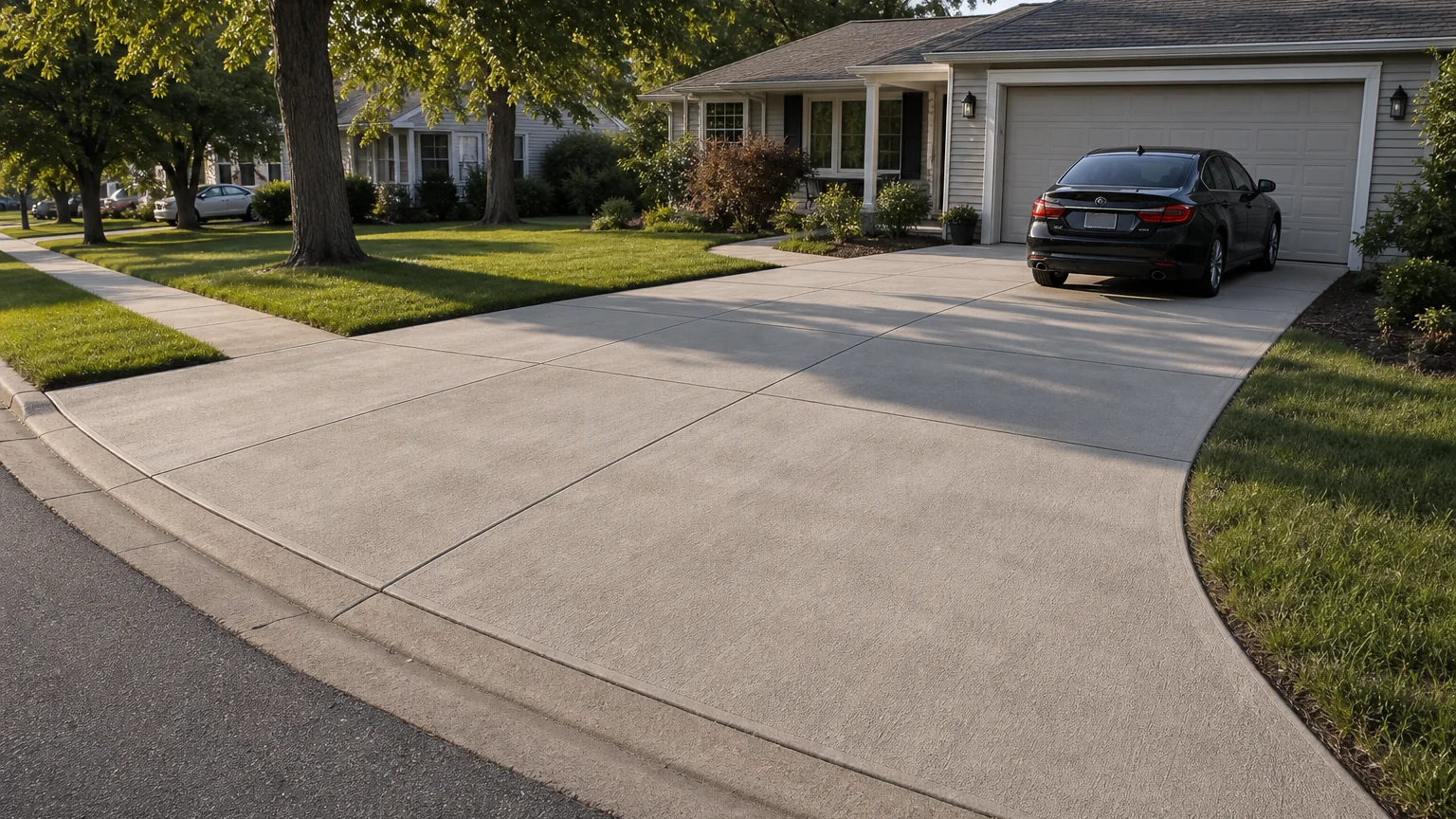
The apron is the hardest-working part of the drive, taking every turn in and out plus the transition to the public road. Flaring it gives vehicles room to enter without dropping a wheel off the edge, and it is often thickened because it carries the heaviest, most repeated loads.
- The tradeoff
- A flared apron protects edges and eases entry, but public-edge work can require permits and strict geometry.
- How to measure it
- Conceptual range: the driveway rectangle plus the flared apron measured separately at the street.
On your property
Plan it for your site
A broom finish holds traction through the tight turning an apron sees, and broad joints keep the wider paving orderly. Confirm the apron thickness and base for the loads and check local rules for the curb cut and any right-of-way work before forms are set.
- Flare the apron so vehicles enter and leave without dropping a wheel off the edge.
- Thicken the apron and base for the heavier, repeated loads at the street transition.
- Check local requirements for the curb cut, apron, and any public right-of-way work.
Before forms are set
Build implications
- Confirm before estimating Apron flare and width suited to the vehicles and turning.
- Confirm before estimating Apron thickness and base for the heaviest loads.
- Confirm before estimating Local curb-cut and right-of-way requirements.
- Measure the site and establish elevations Record boundaries, thresholds, grade changes, utilities, and the dimensions of vehicles, furniture, equipment, or structures that affect the layout.
- Test how the space will be used Check walking routes, turning paths, door swings, working clearances, maintenance access, and the route back to the house or street.
- Resolve drainage, services, and structural support Decide where water goes and coordinate drains, conduit, irrigation, fuel, electrical work, footings, and independent supports before forms are set.
- Define and estimate each concrete element Confirm the slab or footing section, base, joints, edges, and finish, then estimate simple measurable fields separately from steps, walls, drains, and supported features.
Prevent these problems
- Private forms inside the public right-of-wayAn unapproved apron can conflict with drainage, sidewalk slope, utilities, or the permitted curb opening.
What changes the work and quote
- Street-edge demolition, permits, curb work, and thicker loading zonesKeep it simpler: Keep the existing curb opening and soften the flare within private property.
Next step
Turn the idea into your estimate
Enter the dimensions and section for your property. The image does not provide a takeoff.
Estimate your drivewayQuestions this idea raises
Why thicken the driveway apron?
The apron takes the heaviest, most repeated turning and braking loads and the transition to the road, so it is often built thicker than the main drive. Confirm the section for your loads.
Do I need a permit for the street apron?
Work in the public right-of-way, including curb cuts and aprons, usually needs local approval, and rules vary by city. Check with your building or public-works department before you build.
- Best when
- Vehicles need more room at the street edge and local rules allow a wider apron.
- Reconsider when
- The flare would cross public utilities, exceed curb-cut limits, or conflict with a sidewalk.
- Verify first
- Confirm right-of-way limits, curb details, drainage, utility locations, and the vehicle path with the local authority.
- Professional input
- A concrete contractor should confirm the slab, base, joints, and drainage. Ask an engineer or the local authority to review retaining work, structures, unusual loads, or public-right-of-way changes.
Sources and further reading
- NRMCA CIP 6: Joints in Concrete Slabs on GradeJoint spacing, panel shape, isolation, and saw-cut depth for slabs on grade.
- FHWA: Bases and Subbases for Concrete PavementsProfessional guidance on uniform support, subgrade risks, drainage, and stable base layers.
- U.S. Access Board: Accessible RoutesSurface, slope, clear-width, and route guidance where formal accessibility rules apply.