Design decision
Why this idea works
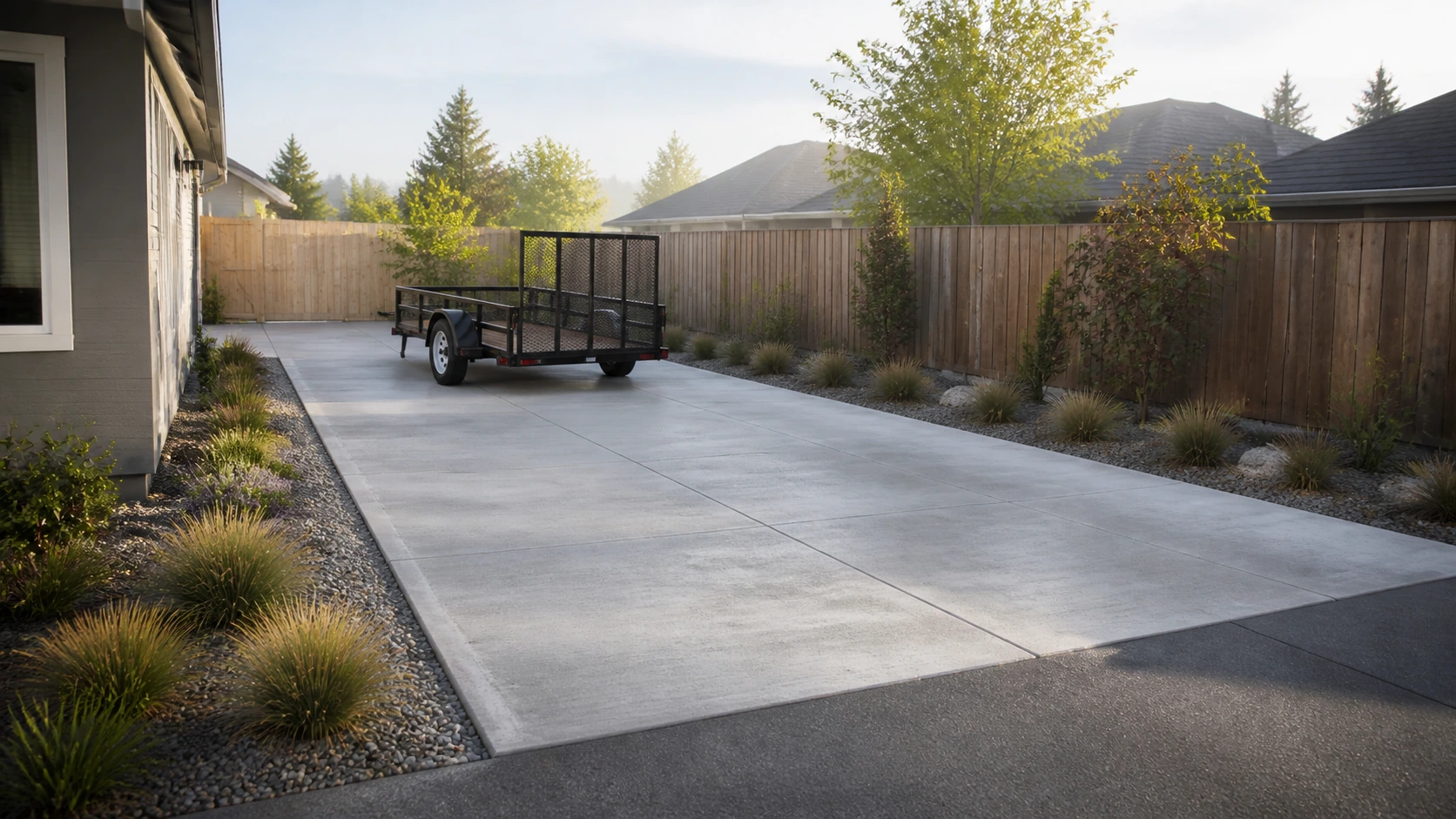
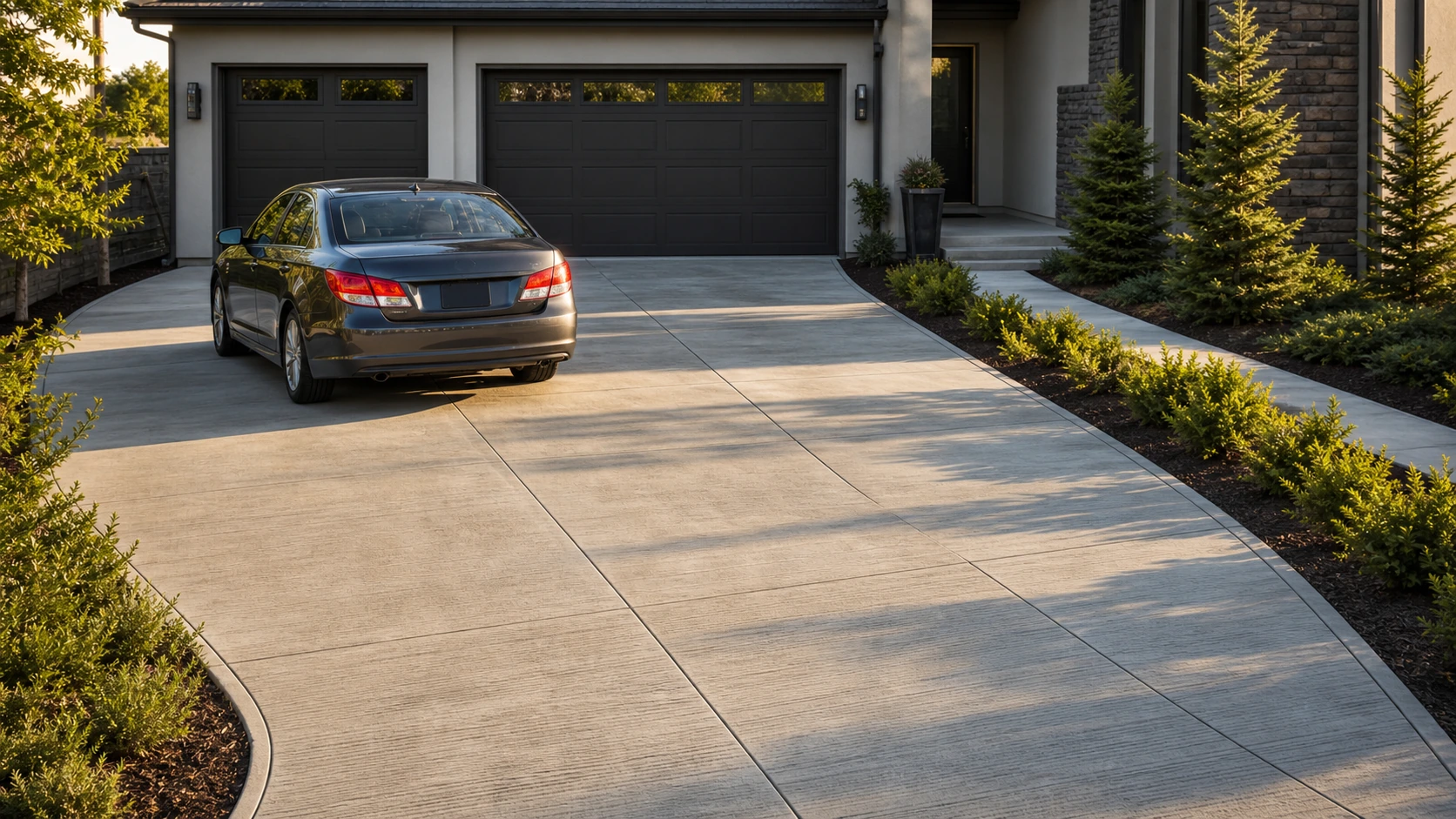
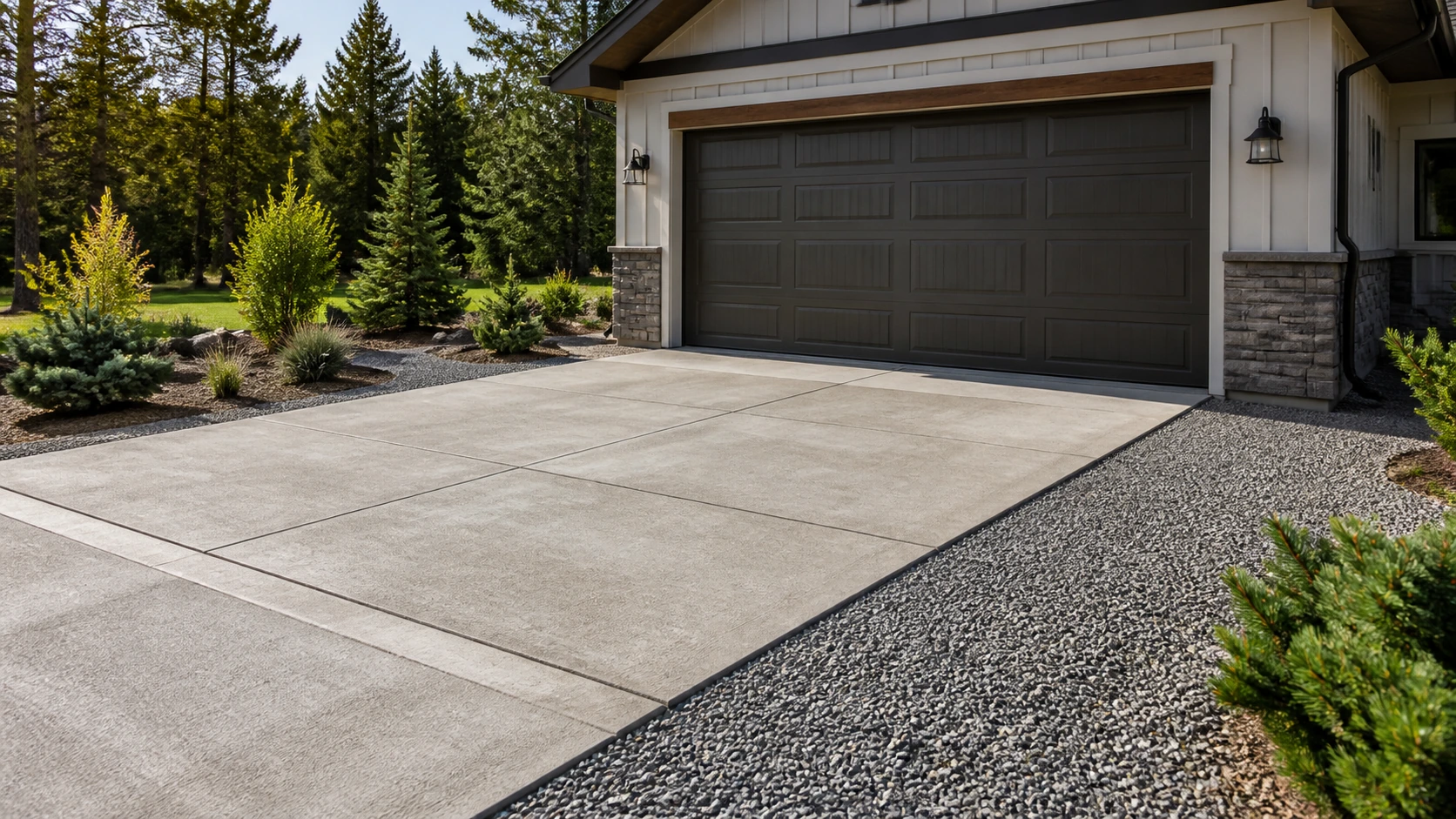
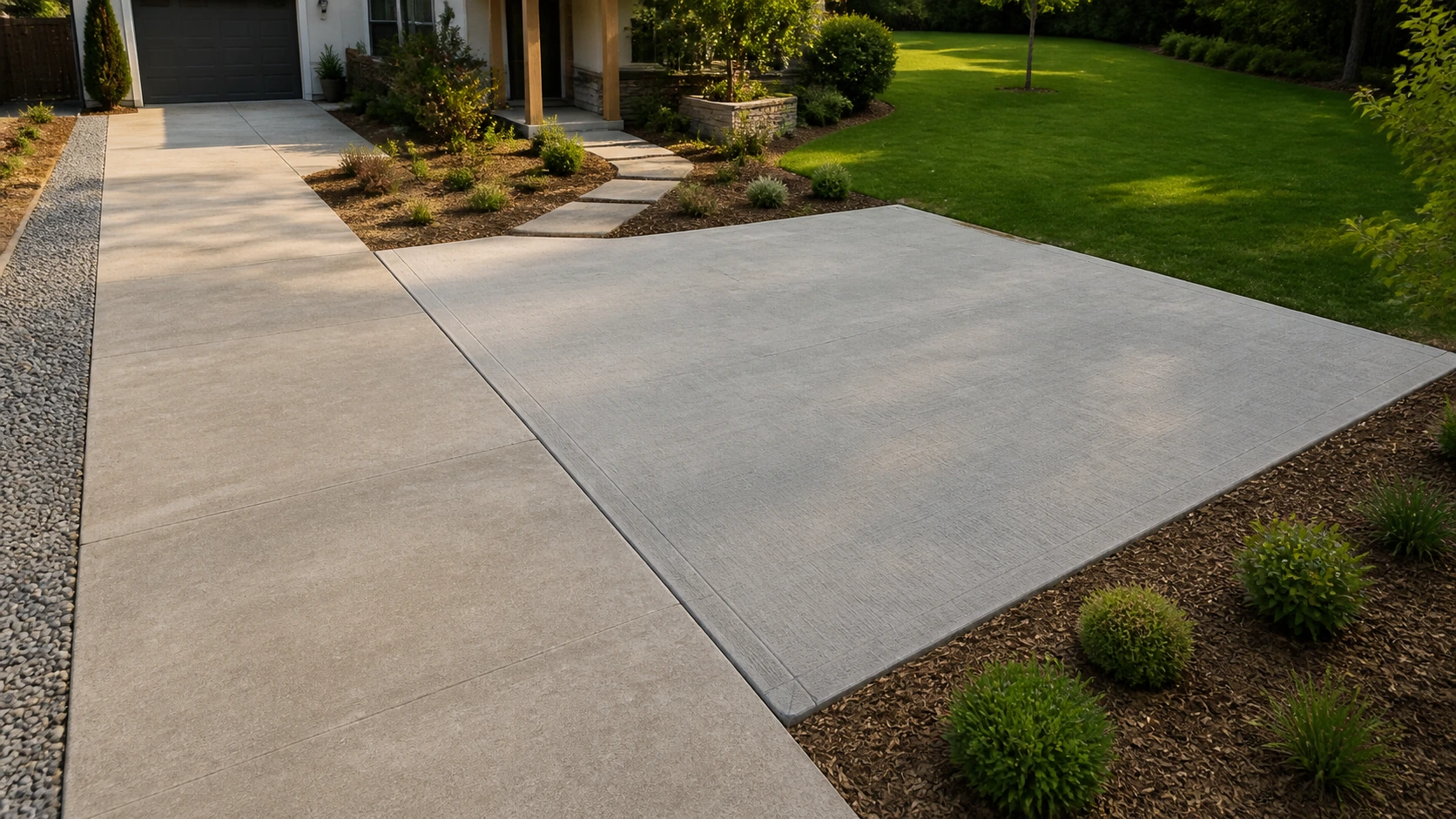
Adding a pad alongside the drive is a simple way to gain parking without re-pouring everything, and aligning the new joints to the existing ones is what keeps it from looking like an obvious add-on. Done well, the extra pad reads as if the driveway was always that wide.
- The tradeoff
- The layout sets a clear direction, but it also commits the project to fixed relationships. Detail the joint between old and new slabs so they move independently without cracking.
- How to measure it
- Conceptual range: the new pad as its own rectangle beside the existing drive.
On your property
Plan it for your site
Match the finish, color, and joint spacing of the existing driveway as closely as the older concrete allows, knowing a fresh pour will start lighter and blend over time. Tie the two together with an aligned joint rather than a visible seam.
- Put a proper joint between the new pad and the existing driveway so they can move separately.
- Match joint spacing and alignment so the addition looks planned.
- Match base and thickness to the driveway so the new pad carries the same loads.
Before forms are set
Build implications
- Confirm before estimating An isolation or tie detail between existing and new slabs.
- Confirm before estimating Joint alignment and spacing matched to the driveway.
- Confirm before estimating Base and thickness suited to vehicle loads.
- Measure the site and establish elevations Record boundaries, thresholds, grade changes, utilities, and the dimensions of vehicles, furniture, equipment, or structures that affect the layout.
- Test how the space will be used Check walking routes, turning paths, door swings, working clearances, maintenance access, and the route back to the house or street.
- Resolve drainage, services, and structural support Decide where water goes and coordinate drains, conduit, irrigation, fuel, electrical work, footings, and independent supports before forms are set.
- Define and estimate each concrete element Confirm the slab or footing section, base, joints, edges, and finish, then estimate simple measurable fields separately from steps, walls, drains, and supported features.
Prevent these problems
- Designing for a car instead of the heaviest loadTrailers, trucks, lifts, jacks, and equipment may require a different slab section, reinforcement, or edge detail.
- Forgetting working utilitiesEV conduit, drains, wash-down routes, compressed air, and power should be coordinated before the pad is placed.
- Using decorative panel sizesLarge or elongated panels may crack unpredictably when the joint layout is driven by appearance instead of slab behavior.
Next step
Turn the idea into your estimate
Enter measurements from the property. The conceptual image does not provide a takeoff.
Estimate a similar garage padQuestions this idea raises
Will new concrete match my old driveway?
A new pour starts lighter and weathers toward the existing color over time, so an exact match is unrealistic at first. Matching finish and joint layout matters more than chasing the current shade.
Do I need a joint between the new pad and the drive?
Yes. A joint lets the two slabs move independently so seasonal movement in one does not crack the other. It is a standard and worthwhile detail.
- Best when
- Motor & parking courts
- Reconsider when
- Reconsider the idea if actual vehicle or equipment loads, drainage, edge support, and joint layout cannot be resolved on the property.
- Verify first
- Detail the joint between old and new slabs so they move independently without cracking.
- Professional input
- Concrete contractor; engineer for lifts, heavy equipment, or unusual loading
Sources and further reading
- American Concrete InstituteTechnical context for slab-on-grade thickness, reinforcement, and jointing under vehicle loads.
- NRMCA CIP 6: Joints in Concrete Slabs on GradeA practical starting point for control-joint layout on aprons and parking pads.
- ICC model code portalModel-code context for garage slabs and the local amendments your building department adopts.