Design decision
Why this idea works
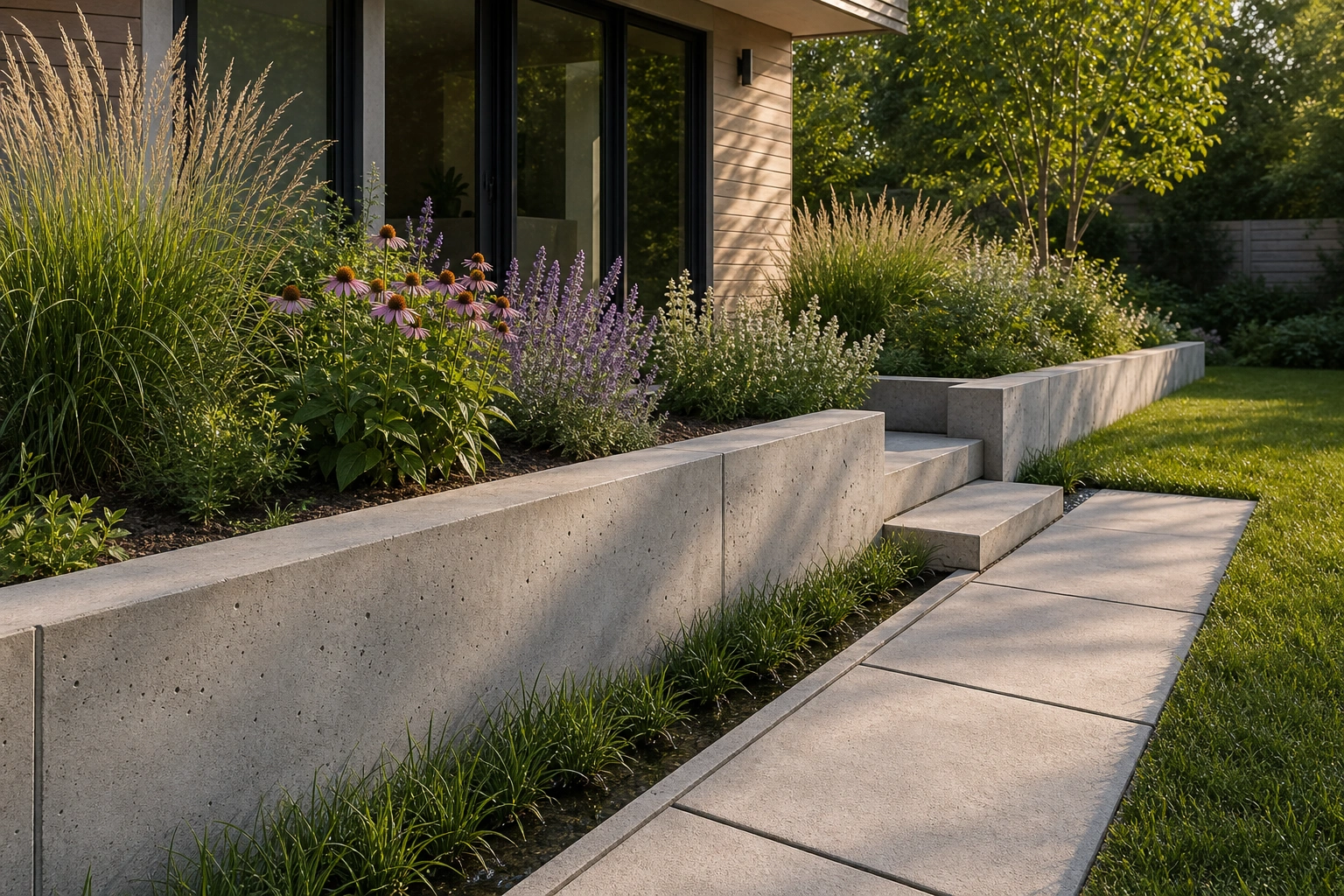
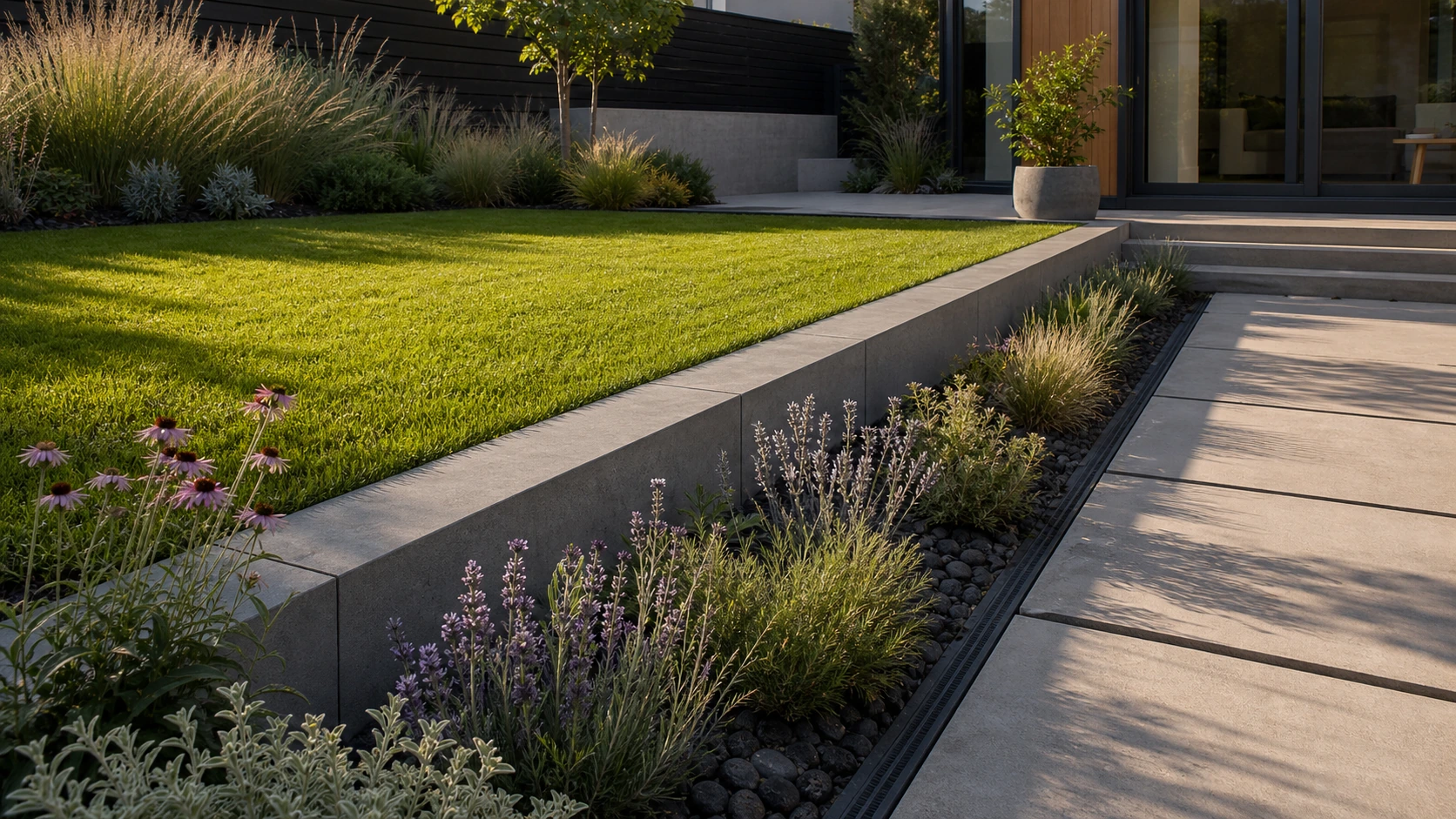
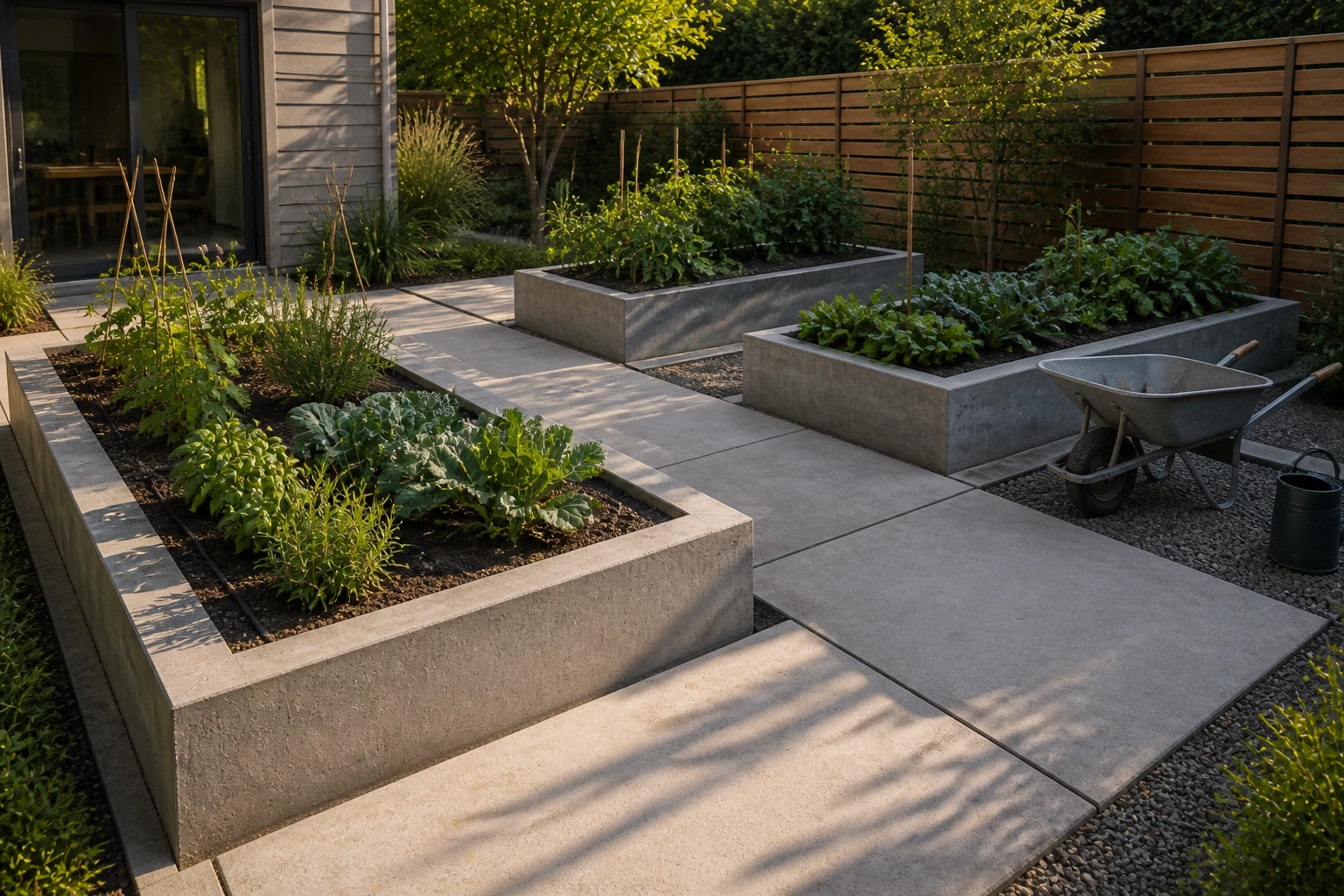
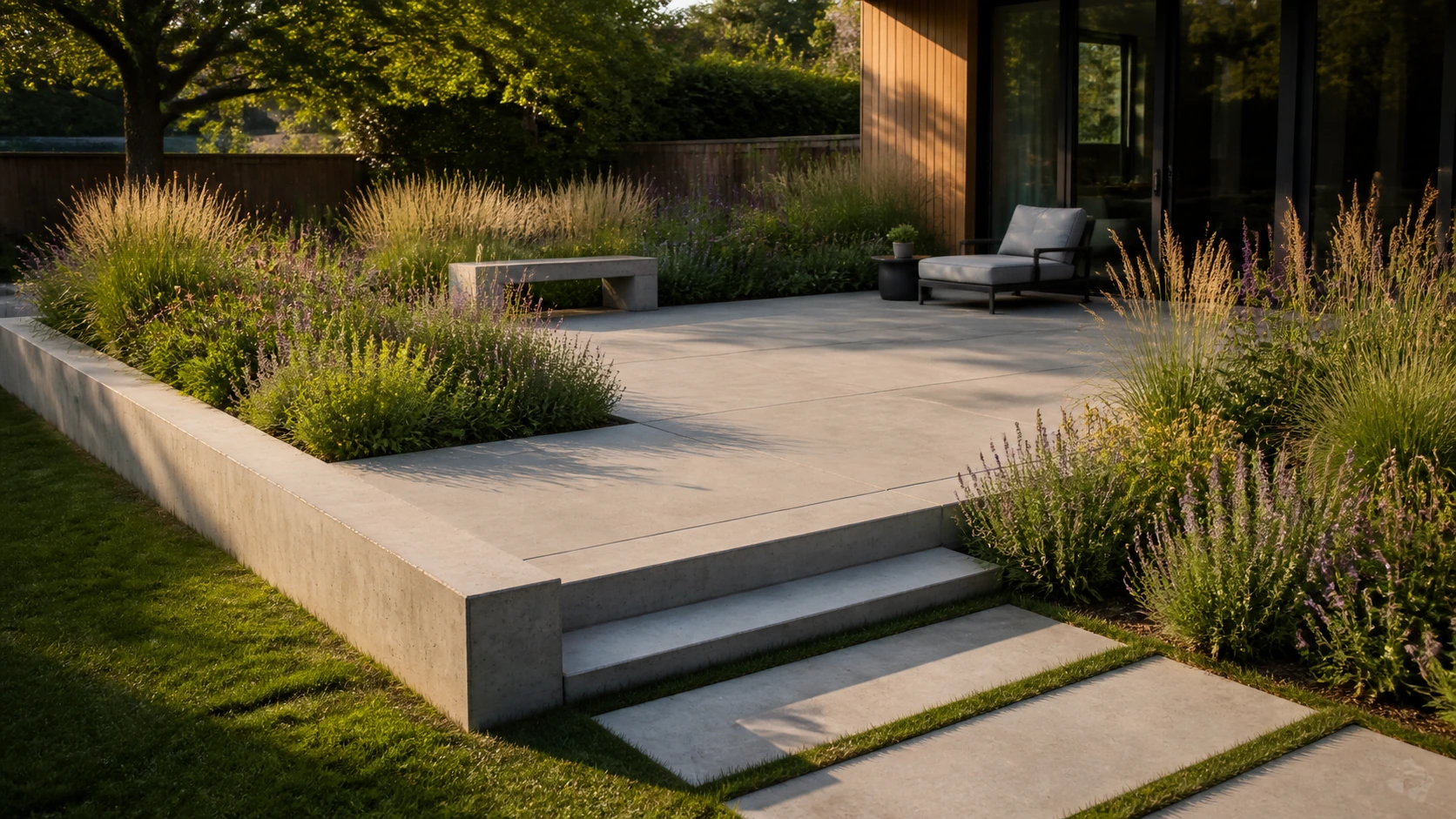
A native-grass matrix is beautiful and low-maintenance but wants to sprawl, so a concrete border keeps it contained and reads as intentional. The firm edge frames the loose, naturalistic planting, letting it look wild within a clear, ordered boundary that also keeps it off the lawn and paths.
- The tradeoff
- The layout sets a clear direction, but it also commits the project to fixed relationships. Set the border to contain spread and detail its base.
- How to measure it
- Conceptual range: the border measured as a running length around the grass matrix.
On your property
Plan it for your site
Keep the border a clean, simple line and let the grasses provide the movement and texture. Detail the border base so it holds the planting and drains, and set the level to contain spreading roots and mulch.
- Set the border to contain the grasses’ spread and mulch.
- Choose natives suited to your climate for a genuinely low-input scheme.
- Detail the border base so it stays stable and drains.
Before forms are set
Build implications
- Confirm before estimating A border that contains spreading grasses.
- Confirm before estimating Native plant choices suited to the local climate.
- Confirm before estimating A stable, well-drained border base.
- Measure the site and establish elevations Record boundaries, thresholds, grade changes, utilities, and the dimensions of vehicles, furniture, equipment, or structures that affect the layout.
- Test how the space will be used Check walking routes, turning paths, door swings, working clearances, maintenance access, and the route back to the house or street.
- Resolve drainage, services, and structural support Decide where water goes and coordinate drains, conduit, irrigation, fuel, electrical work, footings, and independent supports before forms are set.
- Define and estimate each concrete element Confirm the slab or footing section, base, joints, edges, and finish, then estimate simple measurable fields separately from steps, walls, drains, and supported features.
Prevent these problems
- Calling a retaining element decorativeA wall or planter that holds soil or water needs support, reinforcement, drainage, and often professional review.
- Hiding runoff with plantingA rain garden, swale, or planted edge must receive water intentionally and have a safe overflow route.
- Choosing the finish before defining the jobSeat walls, planters, edging, terraces, and retaining walls may look related but carry very different loads and details.
Next step
Turn the idea into your estimate
Enter measurements from the property. The conceptual image does not provide a takeoff.
Estimate a similar concrete featureQuestions this idea raises
Why border a native-grass planting?
A firm border contains grasses that want to sprawl and frames the loose planting as intentional, keeping it off lawns and paths. The edge is what makes a naturalistic scheme read as designed.
Are native grasses low-maintenance?
Natives suited to the local climate generally need less water and care, though some still spread and need containing. Choose species for your conditions and border them.
- Best when
- Edging & borders
- Reconsider when
- Reconsider the idea if retained soil or water, footing and reinforcement needs, drainage, and long-term access cannot be resolved on the property.
- Verify first
- Set the border to contain spread and detail its base.
- Professional input
- Landscape or concrete contractor; engineer for retaining or structurally loaded work
Sources and further reading
- American Concrete InstituteTechnical context for seat walls, planters, and small structural concrete elements.
- EPA: Types of Green InfrastructureContext for rain gardens, planted swales, and water-aware transitions beside concrete.
- NRMCA CIP 6: Joints in Concrete Slabs on GradeA starting point for jointing terraces, landings, and larger flat features.