Quick answer
Most residential flatwork starts with a simple rectangle, but the right estimate depends on the slab thickness, support below it, joint layout, and any sections that are thicker than the main field. Use separate measurements for thickened edges, aprons, drains, or equipment pads.
Frequently asked questions
What counts as flatwork?
For this site, flatwork covers slabs, patios, pads, garage floors, sidewalks, driveways, and other mostly horizontal concrete surfaces whose estimate starts with area and thickness.
When should a slab be split into separate calculations?
Split the estimate whenever thickness, support conditions, reinforcement, or project use changes enough that one average depth would hide an important difference.
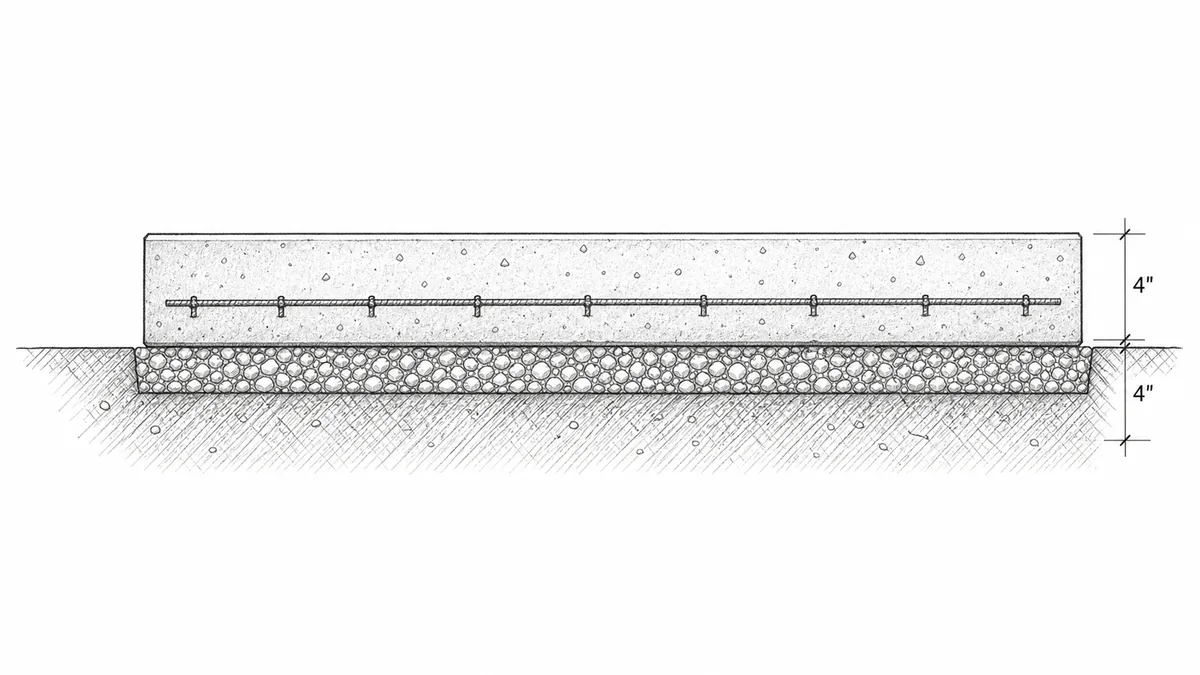
Planning estimate only. Pour Ready helps with quantity, ordering, and preparation questions. It does not determine whether a slab, pad, or garage floor is structurally adequate for the loads on your site.
Which guide should you read first?
| Project | Start here | Main decision |
|---|---|---|
| Patio or general slab | Slab thickness | How thickness changes volume, base, and joints |
| Garage floor | Garage slab planning | When floor field and thickened edges should be separated |
| Shed support | Shed pad foundation | Whether a floating pad is enough for the structure |
Flatwork planning sequence
- Confirm the finished footprint and any load-sensitive areas.
- Choose the slab thickness or sections that apply to each use area.
- Measure thickened edges, ramps, or separate pads outside the main field.
- Plan the base, reinforcement, joints, and weather window before ordering.
- Compare bag mixing with ready-mix delivery and confirm access with the supplier.