Design decision
Why this idea works
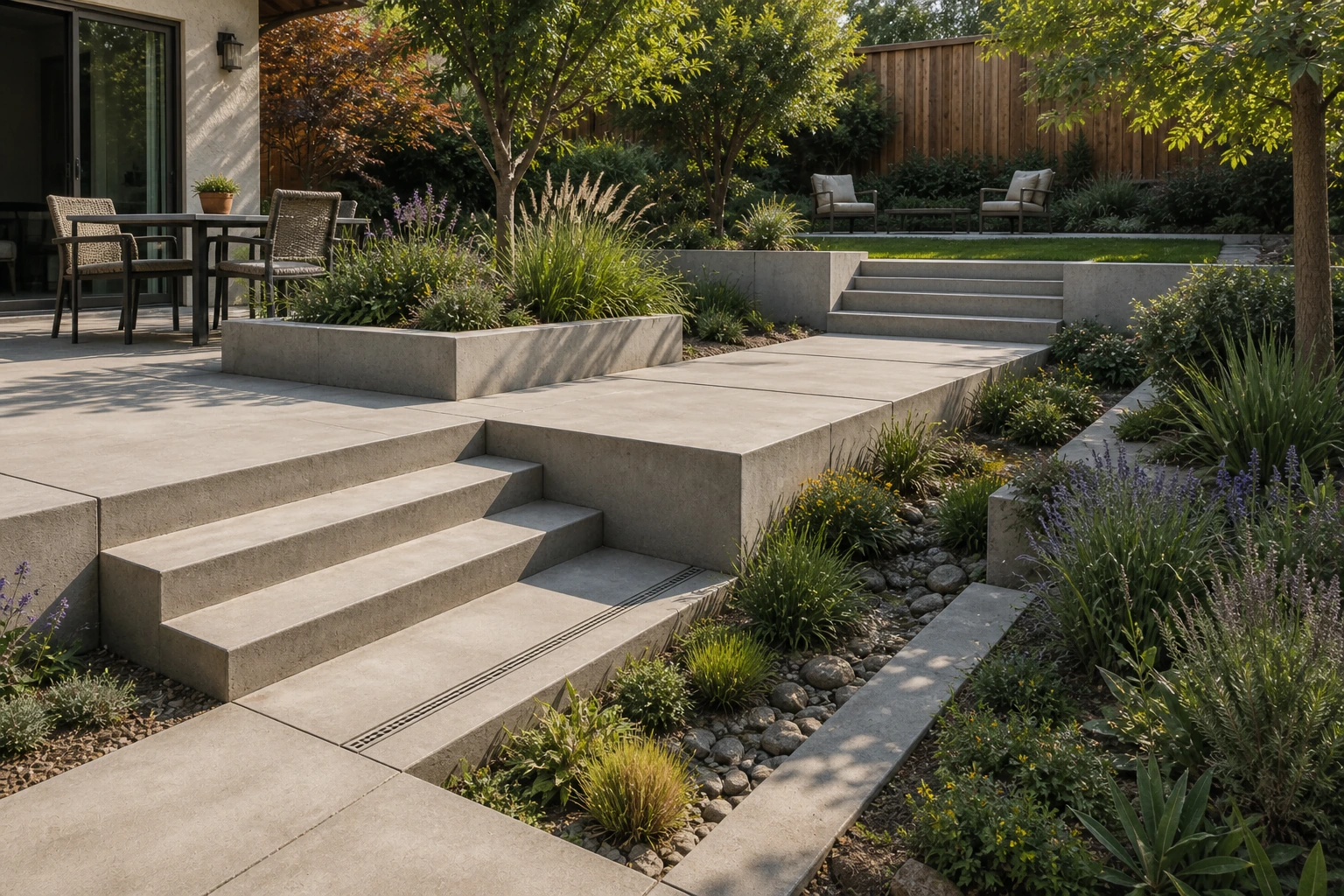
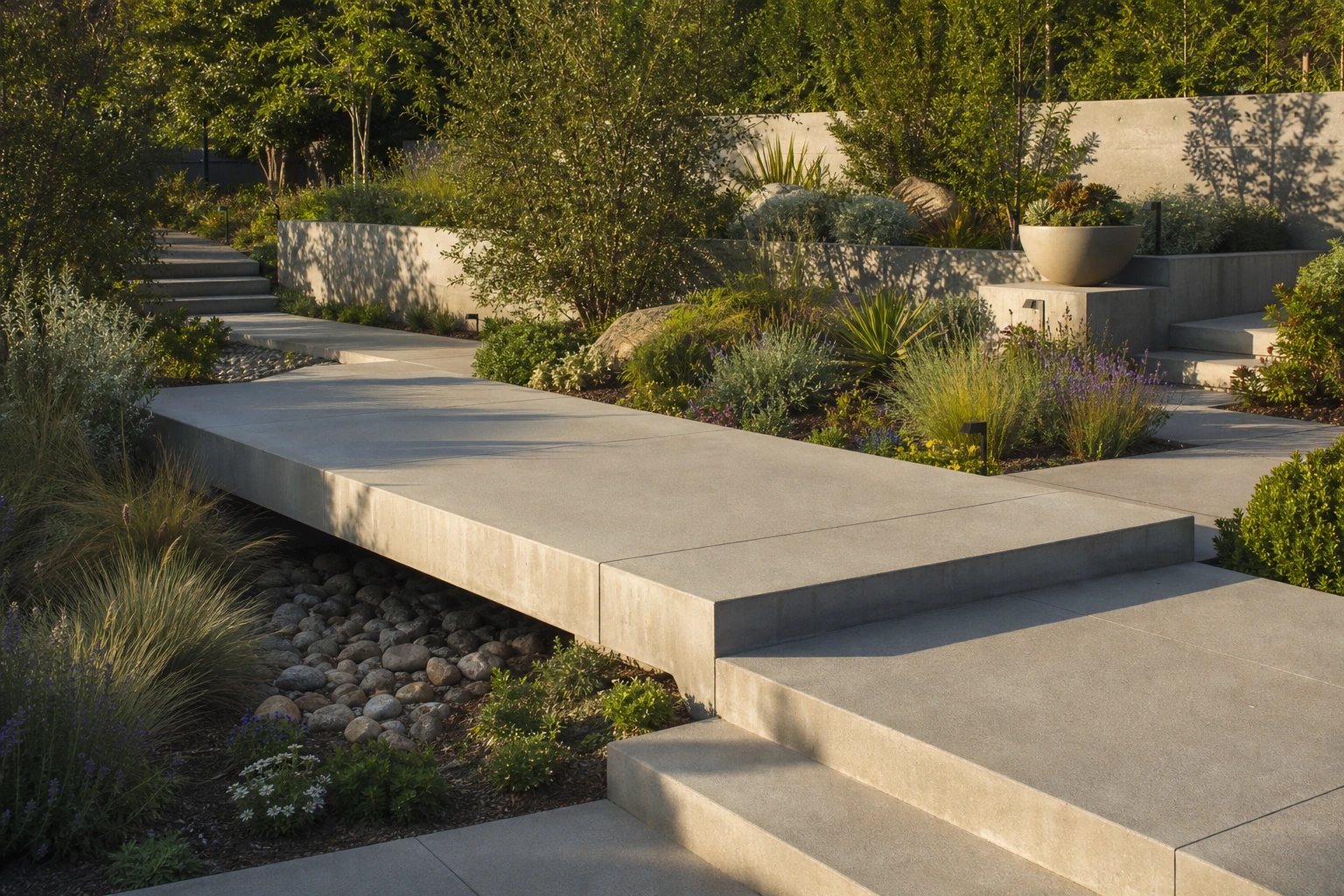
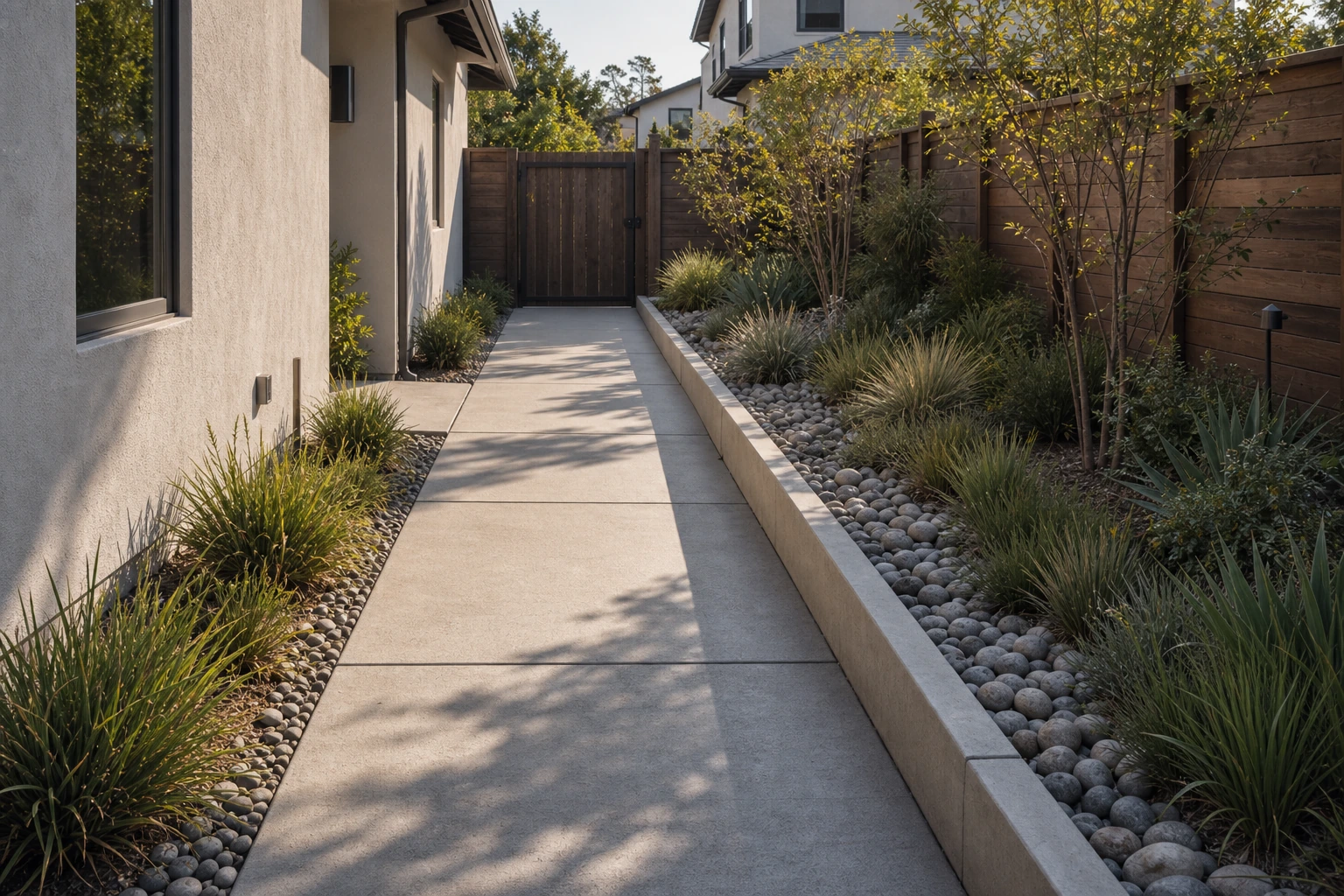
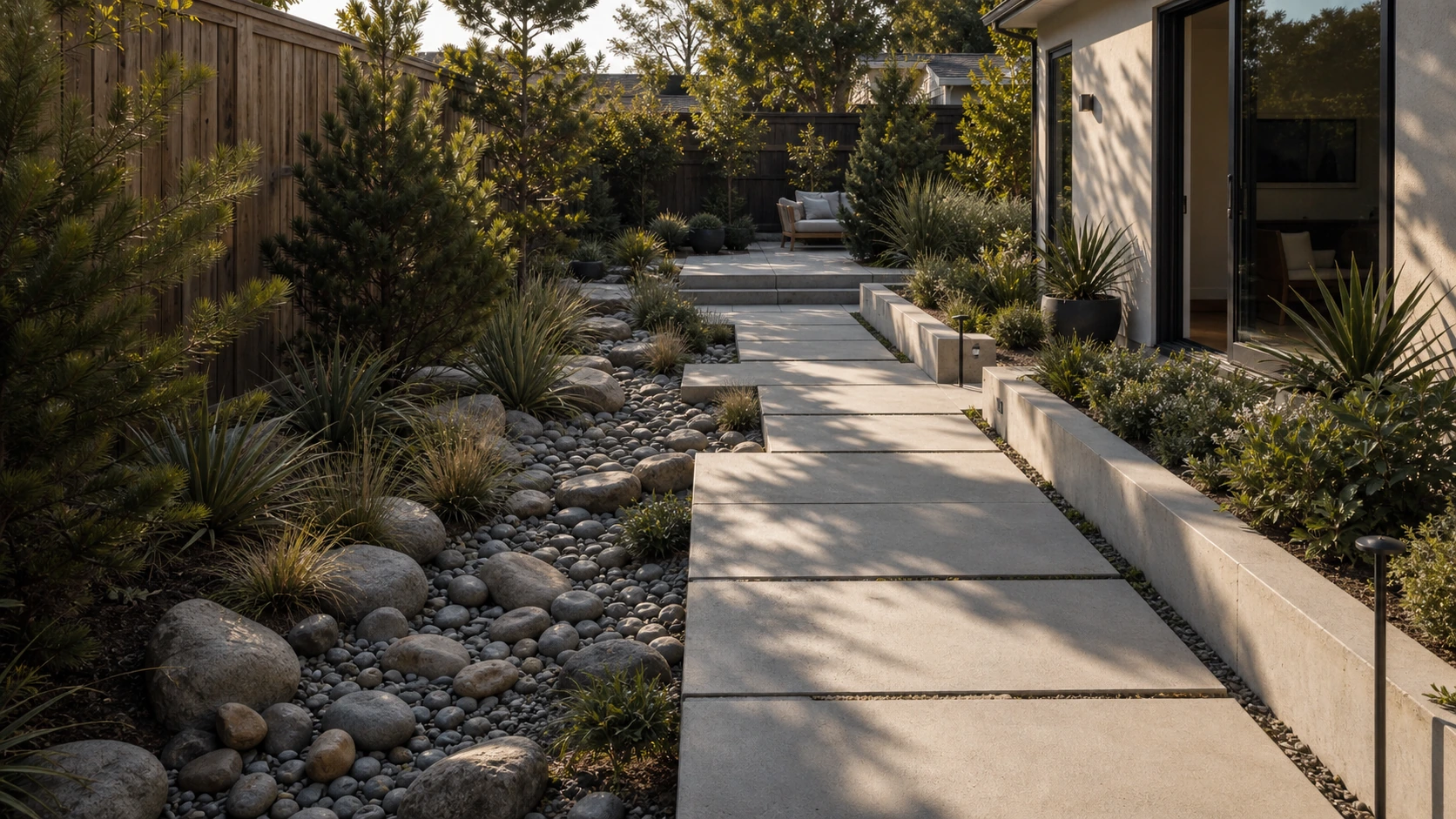
A dry creek bed beside a path stays an attractive band of stone most of the time and becomes a working channel when heavy rain arrives, carrying runoff without eroding the garden. Pairing it with the concrete path gives a firm walking route and a good-looking drainage feature in one, so the garden handles storms gracefully.
- The tradeoff
- The layout sets a clear direction, but it also commits the project to fixed relationships. Size the dry creek for peak flow and grade it against scouring.
- How to measure it
- Conceptual range: the path plus a separately measured dry-creek channel.
On your property
Plan it for your site
Keep the path a clean, firm surface and let the dry creek provide the naturalistic texture, detailing the edge between them. Size and line the creek bed for the peak flow it must carry and grade it to move water without scouring.
- Size and line the dry-creek bed for the peak runoff it carries.
- Grade the channel so heavy flow moves without scouring the garden.
- Detail the path edge so it holds against the stone channel.
Before forms are set
Build implications
- Confirm before estimating A creek bed sized for peak flow.
- Confirm before estimating Grading that moves water without scouring.
- Confirm before estimating A stable path edge against the channel.
- Measure the site and establish elevations Record boundaries, thresholds, grade changes, utilities, and the dimensions of vehicles, furniture, equipment, or structures that affect the layout.
- Test how the space will be used Check walking routes, turning paths, door swings, working clearances, maintenance access, and the route back to the house or street.
- Resolve drainage, services, and structural support Decide where water goes and coordinate drains, conduit, irrigation, fuel, electrical work, footings, and independent supports before forms are set.
- Define and estimate each concrete element Confirm the slab or footing section, base, joints, edges, and finish, then estimate simple measurable fields separately from steps, walls, drains, and supported features.
Prevent these problems
- Calling a retaining element decorativeA wall or planter that holds soil or water needs support, reinforcement, drainage, and often professional review.
- Hiding runoff with plantingA rain garden, swale, or planted edge must receive water intentionally and have a safe overflow route.
- Choosing the finish before defining the jobSeat walls, planters, edging, terraces, and retaining walls may look related but carry very different loads and details.
Next step
Turn the idea into your estimate
Enter measurements from the property. The conceptual image does not provide a takeoff.
Estimate a similar concrete featureQuestions this idea raises
What is a dry creek bed?
A stone-lined channel that looks like a decorative band most of the time and carries runoff during heavy rain, handling storms without erosion. It doubles as a naturalistic feature.
How big should a dry creek be?
Sized to the peak runoff it must carry, which depends on the catchment and rainfall, and graded to move water without scouring. Size it to real storm flow.
- Best when
- Drainage-aware features
- Reconsider when
- Reconsider the idea if retained soil or water, footing and reinforcement needs, drainage, and long-term access cannot be resolved on the property.
- Verify first
- Size the dry creek for peak flow and grade it against scouring.
- Professional input
- Landscape or concrete contractor; engineer for retaining or structurally loaded work
Sources and further reading
- American Concrete InstituteTechnical context for seat walls, planters, and small structural concrete elements.
- EPA: Types of Green InfrastructureContext for rain gardens, planted swales, and water-aware transitions beside concrete.
- NRMCA CIP 6: Joints in Concrete Slabs on GradeA starting point for jointing terraces, landings, and larger flat features.