Design decision
Why this idea works
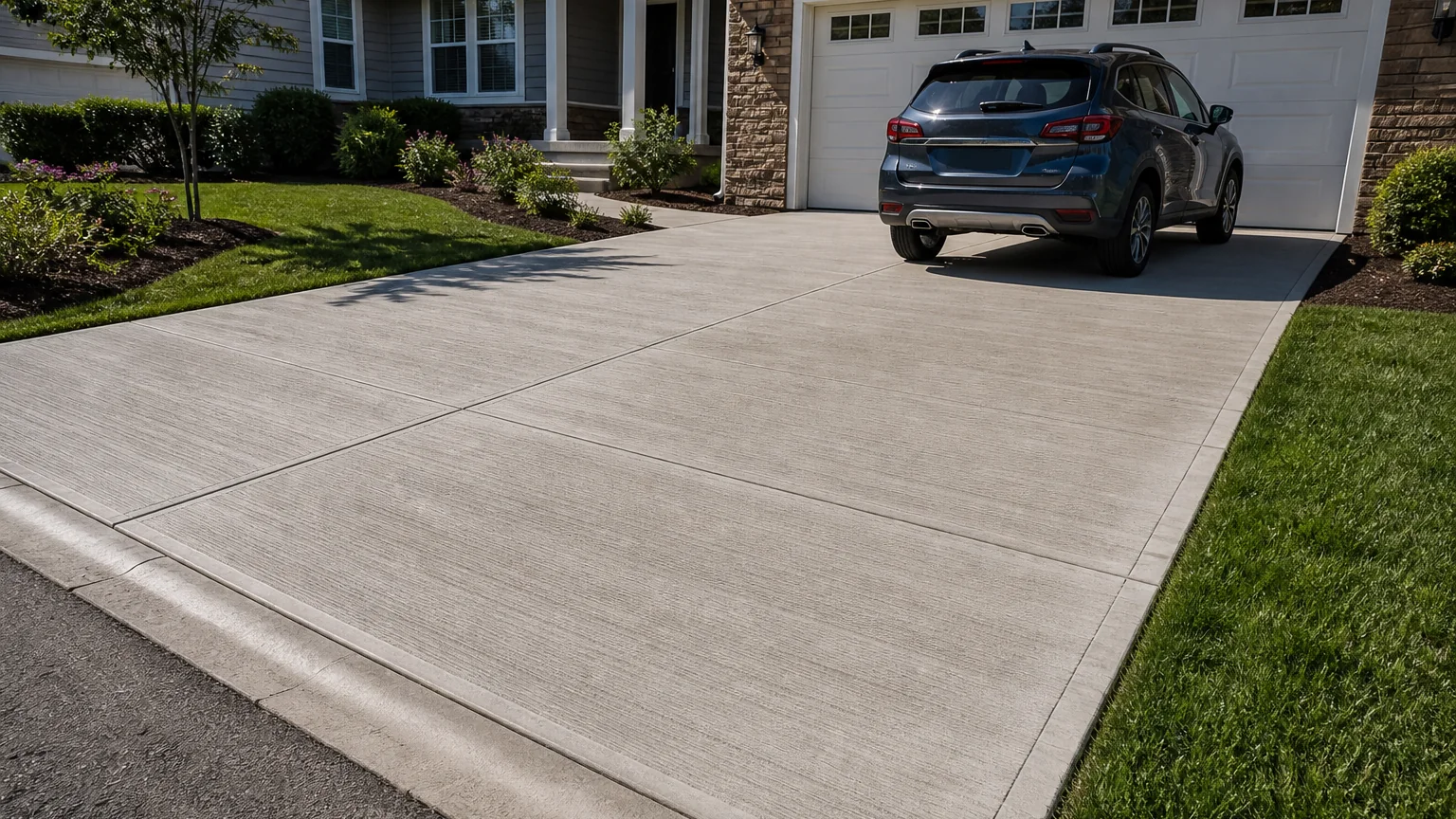
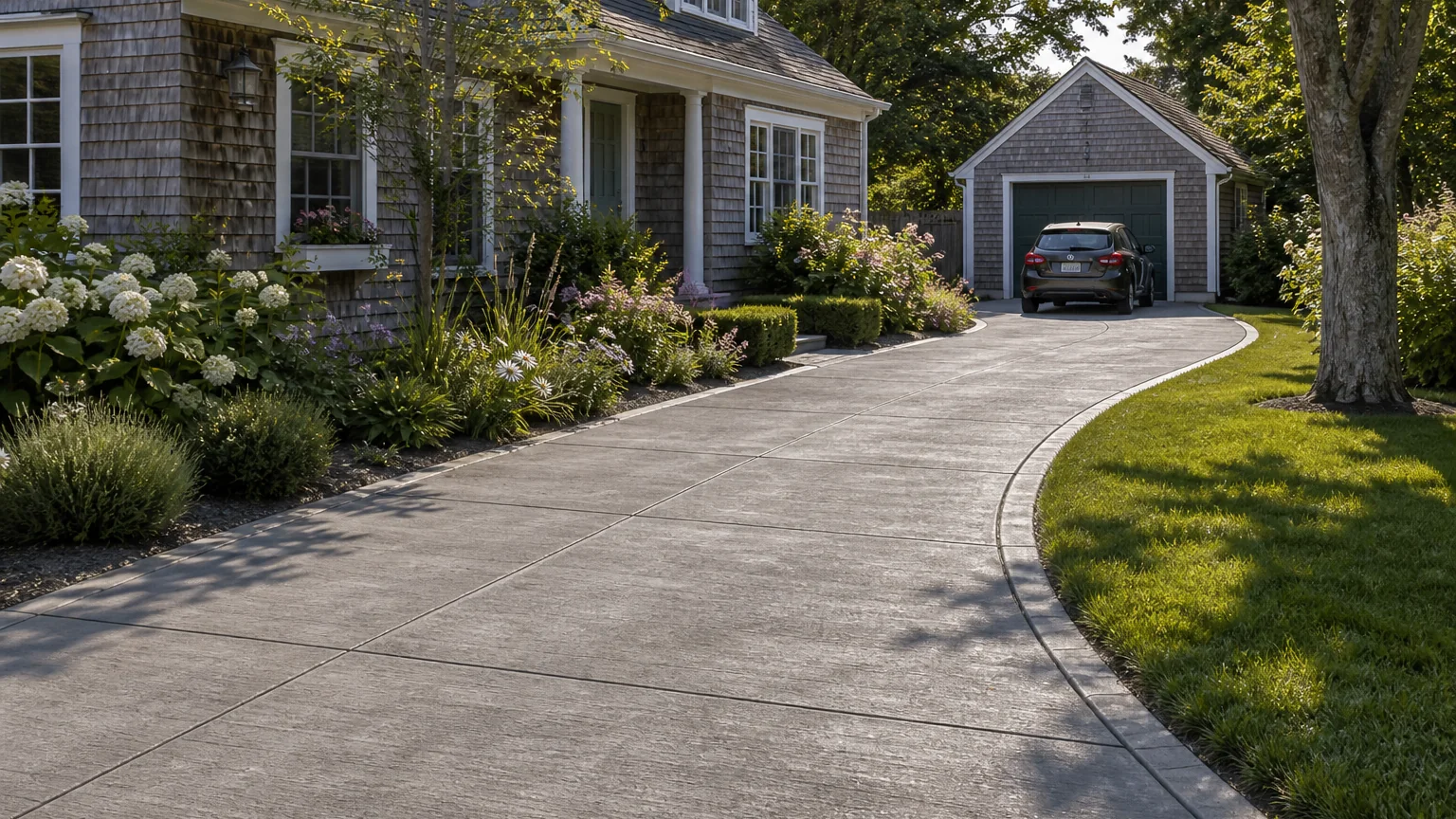
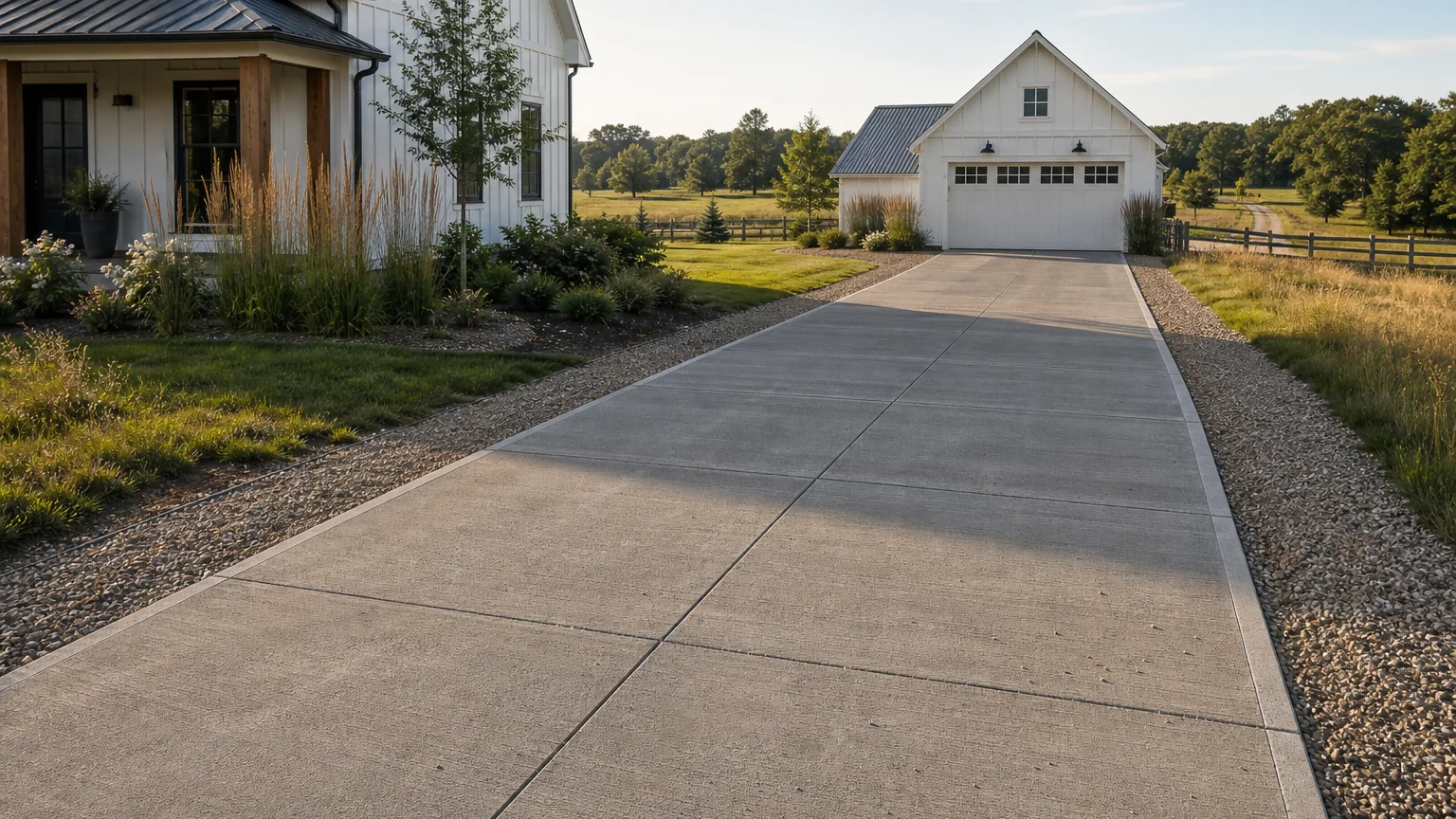
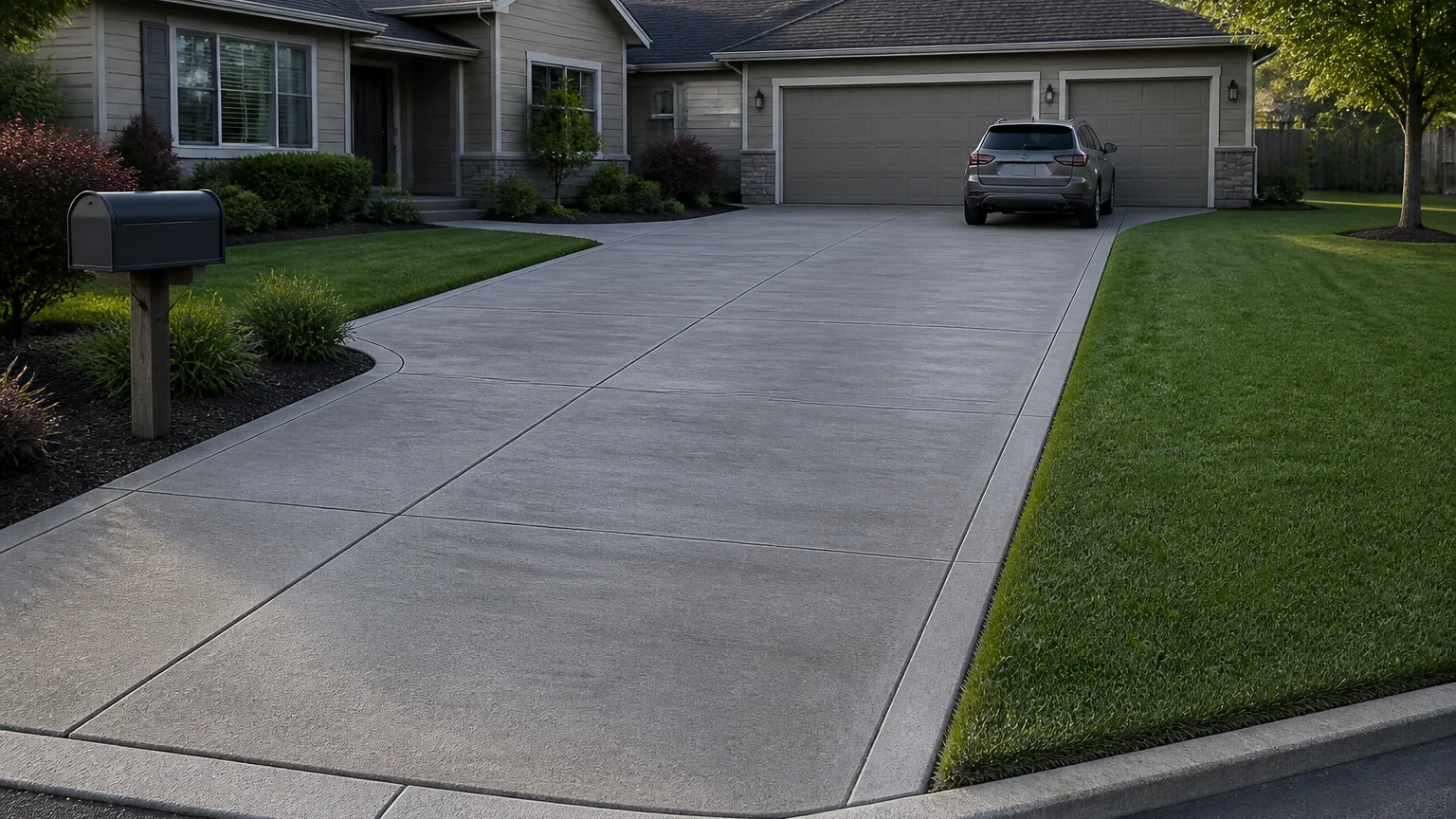
Not every home wants a large paved forecourt; a straightforward brushed drive with generous grass on either side keeps the hard surface to what the car needs and lets the lawn carry the setting. The verge softens the edges and absorbs some runoff.
- The tradeoff
- A grass verge reduces hardscape and softens the drive, but tires, plows, and concentrated runoff can wear the edge.
- How to measure it
- Conceptual range: a single driveway rectangle, with the grass verges as their own soft areas.
On your property
Plan it for your site
A brushed finish gives dependable traction and an even, unfussy texture that suits a simple house. Keep the drive edge clean and slightly proud of the lawn so grass does not creep onto the concrete and water sheds to the verge.
- Keep the drive width to what the vehicles need so the verge stays generous.
- Detail a clean edge slightly above the lawn so grass does not encroach and water sheds off.
- Grade so runoff moves into the verge rather than pooling on the slab.
Before forms are set
Build implications
- Confirm before estimating Drive width suited to the vehicles and the setting.
- Confirm before estimating A clean, slightly raised lawn edge.
- Confirm before estimating Grading that drains toward the verge.
- Measure the site and establish elevations Record boundaries, thresholds, grade changes, utilities, and the dimensions of vehicles, furniture, equipment, or structures that affect the layout.
- Test how the space will be used Check walking routes, turning paths, door swings, working clearances, maintenance access, and the route back to the house or street.
- Resolve drainage, services, and structural support Decide where water goes and coordinate drains, conduit, irrigation, fuel, electrical work, footings, and independent supports before forms are set.
- Define and estimate each concrete element Confirm the slab or footing section, base, joints, edges, and finish, then estimate simple measurable fields separately from steps, walls, drains, and supported features.
Prevent these problems
- An unsupported wet edgeSoft soil beside the slab can settle under wheel loads and leave the concrete edge exposed to cracking.
What changes the work and quote
- Edge preparation, grading, and landscape restorationKeep it simpler: Use a narrow compacted gravel shoulder at the tire edge and grass beyond it.
Next step
Turn the idea into your estimate
Enter the dimensions and section for your property. The image does not provide a takeoff.
Estimate your drivewayQuestions this idea raises
How wide does a single driveway need to be?
Wide enough for the vehicles plus a comfortable margin to open doors and walk beside the car, which is a real measurement rather than a default. Size it to your household.
Does the grass verge help drainage?
A planted verge absorbs some runoff from the slab, a small stormwater benefit, if the drive is graded to send water toward it. Set the levels so it actually receives the flow.
- Best when
- The household needs a simple drive and a broad lawn or verge can receive runoff without becoming muddy.
- Reconsider when
- Clay soil, a steep cross-slope, or frequent edge loading would damage the lawn and slab edge.
- Verify first
- Set the working width, edge support, lawn elevation, and a safe overflow route.
- Professional input
- A concrete contractor should confirm the slab, base, joints, and drainage. Ask an engineer or the local authority to review retaining work, structures, unusual loads, or public-right-of-way changes.
Sources and further reading
- NRMCA CIP 6: Joints in Concrete Slabs on GradeJoint spacing, panel shape, isolation, and saw-cut depth for slabs on grade.
- FHWA: Bases and Subbases for Concrete PavementsProfessional guidance on uniform support, subgrade risks, drainage, and stable base layers.
- U.S. EPA: Types of Green InfrastructureHow rain gardens, swales, and permeable pavement store, slow, or infiltrate runoff.