Design decision
Why this idea works
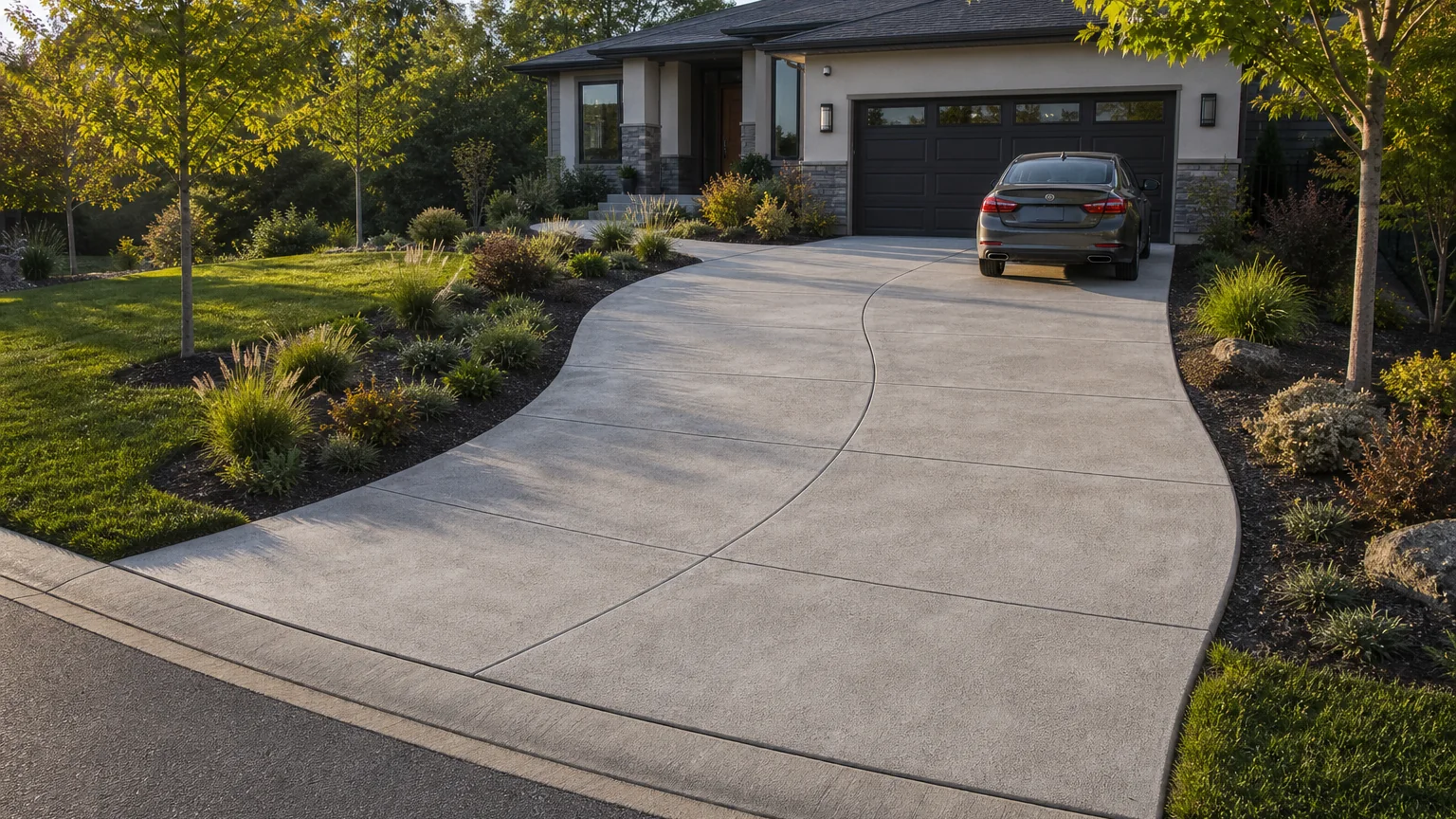
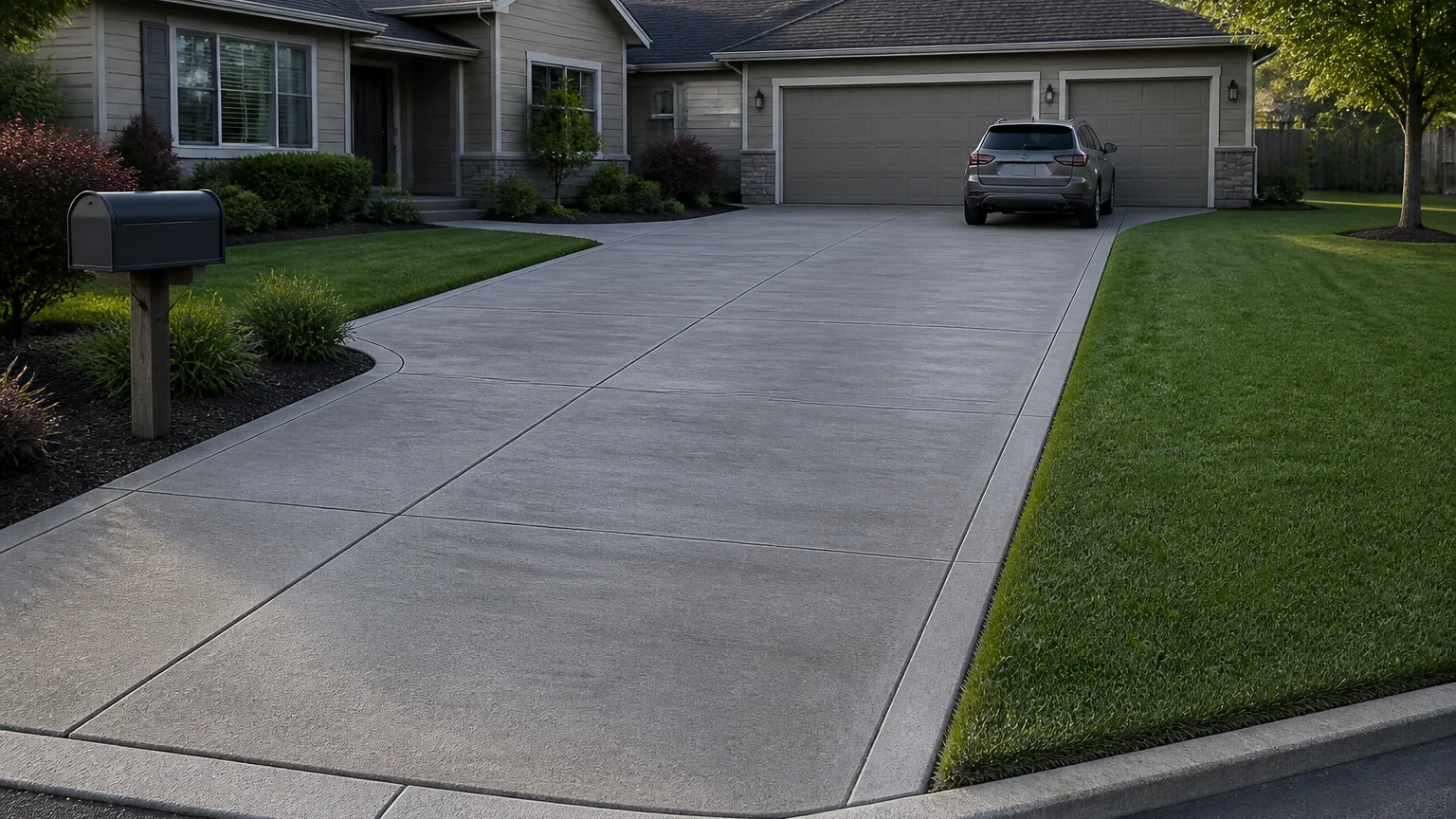
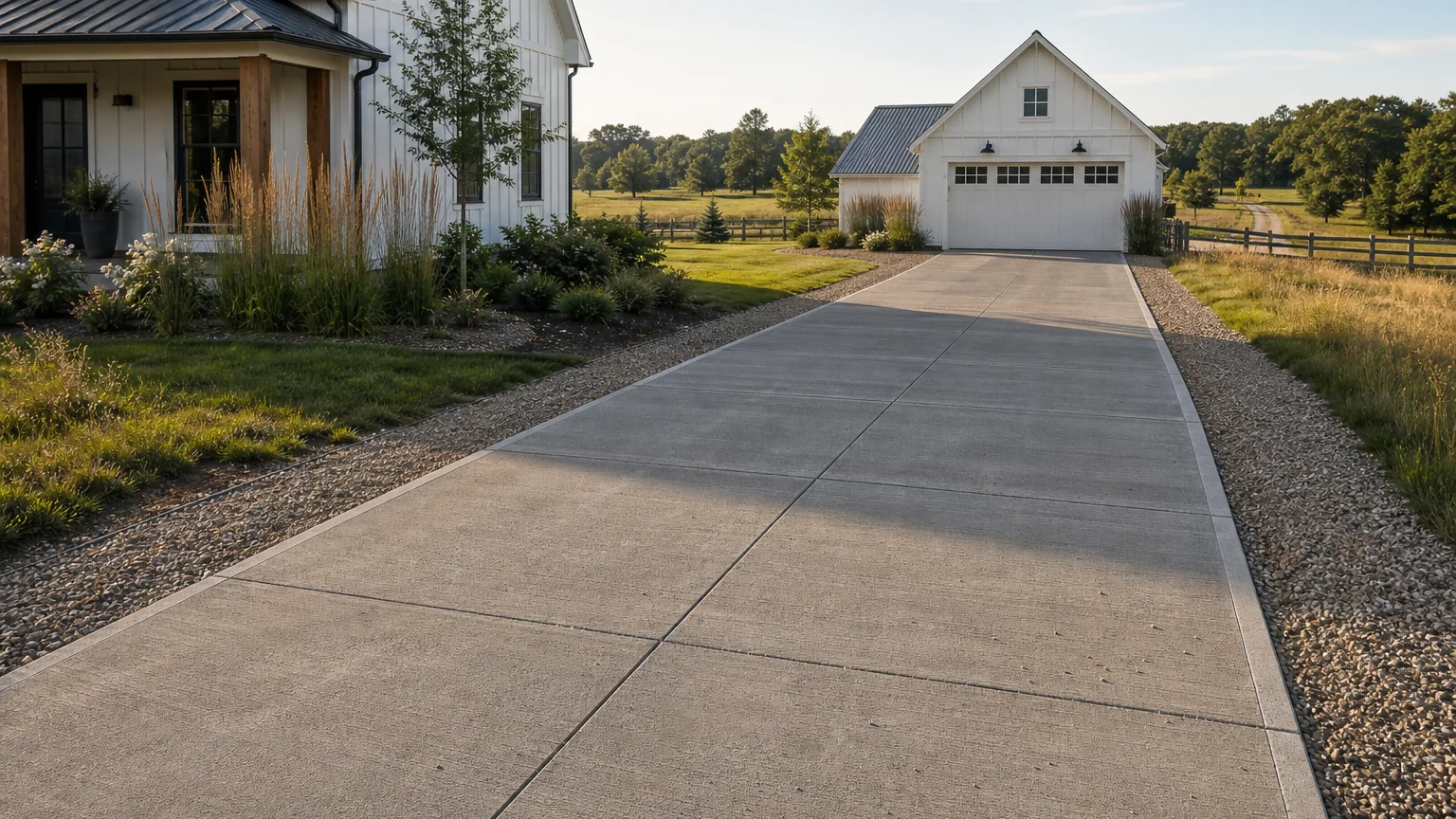
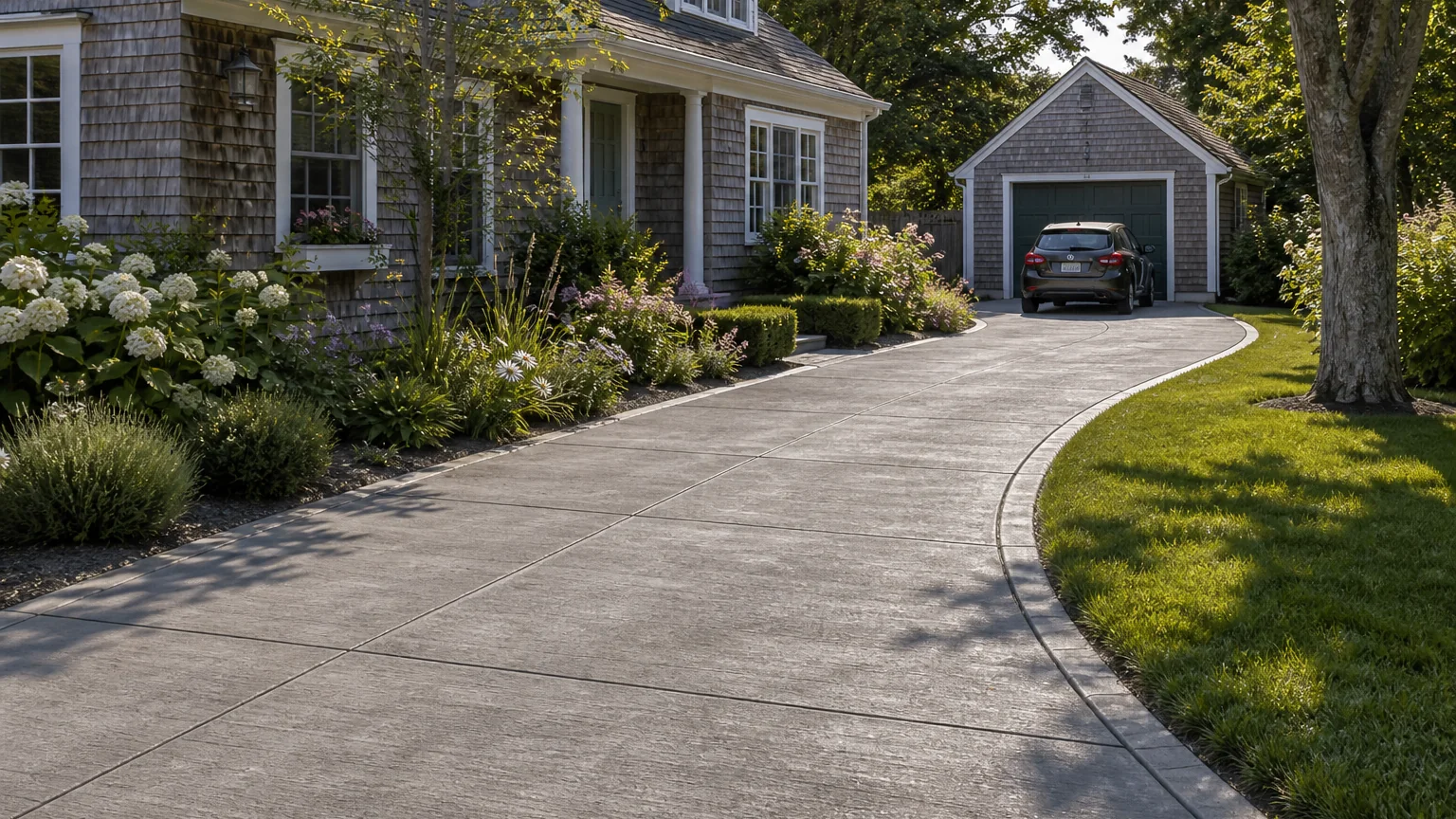
A curved lawn edge suits a cottage garden where straight lines would feel too rigid, giving the drive a relaxed, hand-shaped quality. The curve also lets the paving follow the natural line of arrival rather than forcing a boxy shape onto an informal setting.
- The tradeoff
- A curved lawn edge feels relaxed, but curved forms and edge support need more care than a straight drive.
- How to measure it
- Conceptual range: the driveway as one shape measured to its curved edge, with the lawn as its own soft area.
On your property
Plan it for your site
Keep the surface a simple brushed field so the curved edge is the feature, and lay the curve out full-size so it flows without kinks. Detail the edge clean and slightly proud of the lawn so grass does not creep and water sheds off.
- Lay the curve out full-size so it flows and still suits real vehicle paths.
- Keep the lawn edge clean and slightly raised so grass does not encroach and water sheds off.
- Keep the finish simple so the curve carries the character.
Before forms are set
Build implications
- Confirm before estimating A full-size curve that flows and fits vehicle movement.
- Confirm before estimating A clean, slightly raised lawn edge.
- Confirm before estimating Drainage off the curved edge to the lawn.
- Measure the site and establish elevations Record boundaries, thresholds, grade changes, utilities, and the dimensions of vehicles, furniture, equipment, or structures that affect the layout.
- Test how the space will be used Check walking routes, turning paths, door swings, working clearances, maintenance access, and the route back to the house or street.
- Resolve drainage, services, and structural support Decide where water goes and coordinate drains, conduit, irrigation, fuel, electrical work, footings, and independent supports before forms are set.
- Define and estimate each concrete element Confirm the slab or footing section, base, joints, edges, and finish, then estimate simple measurable fields separately from steps, walls, drains, and supported features.
Prevent these problems
- A curve shaped for looks instead of tiresVehicles can ride the edge, break the lawn, and overload the slab when the sweep is too tight.
What changes the work and quote
- Curved formwork, excavation, and landscape repairKeep it simpler: Use one broad tangent curve instead of several changing radii.
Next step
Turn the idea into your estimate
Enter the dimensions and section for your property. The image does not provide a takeoff.
Estimate your drivewayQuestions this idea raises
Do curved driveways cost more?
Curves take more careful layout and forming than straight edges, which can add labor, but the material difference is small. The main cost is in the setting out and finishing the curve cleanly.
Will a curved edge still fit my car?
It will if you lay the curve out full-size against real vehicle paths and turning before forming. Confirm the geometry works for the cars, not just the look.
- Best when
- A cottage or informal house benefits from a softer edge and the curve can follow the real vehicle path.
- Reconsider when
- The curve narrows the drive, creates a weak outer edge, or complicates drainage and mowing.
- Verify first
- Lay out the curve with the largest regular vehicle and check edge support along the full sweep.
- Professional input
- A concrete contractor should confirm the slab, base, joints, and drainage. Ask an engineer or the local authority to review retaining work, structures, unusual loads, or public-right-of-way changes.
Sources and further reading
- NRMCA CIP 6: Joints in Concrete Slabs on GradeJoint spacing, panel shape, isolation, and saw-cut depth for slabs on grade.
- FHWA: Bases and Subbases for Concrete PavementsProfessional guidance on uniform support, subgrade risks, drainage, and stable base layers.