Quick answer
Sidewalks are usually governed by pedestrian use, joint layout, and local accessibility or public-works expectations. Driveways add wheel loads, apron details, and stronger base concerns. Calculate each use area with its own thickness and support assumptions.
Frequently asked questions
Can a driveway and sidewalk be estimated as one slab?
Only if the whole section truly shares the same thickness, support, and use conditions. Most projects are easier to review when the driveway, crossing, and walkway are separate line items.
Why does drainage belong in a quantity guide?
Drainage changes where the concrete goes, how edges are formed, and whether one part of the slab needs to be treated as a different section.
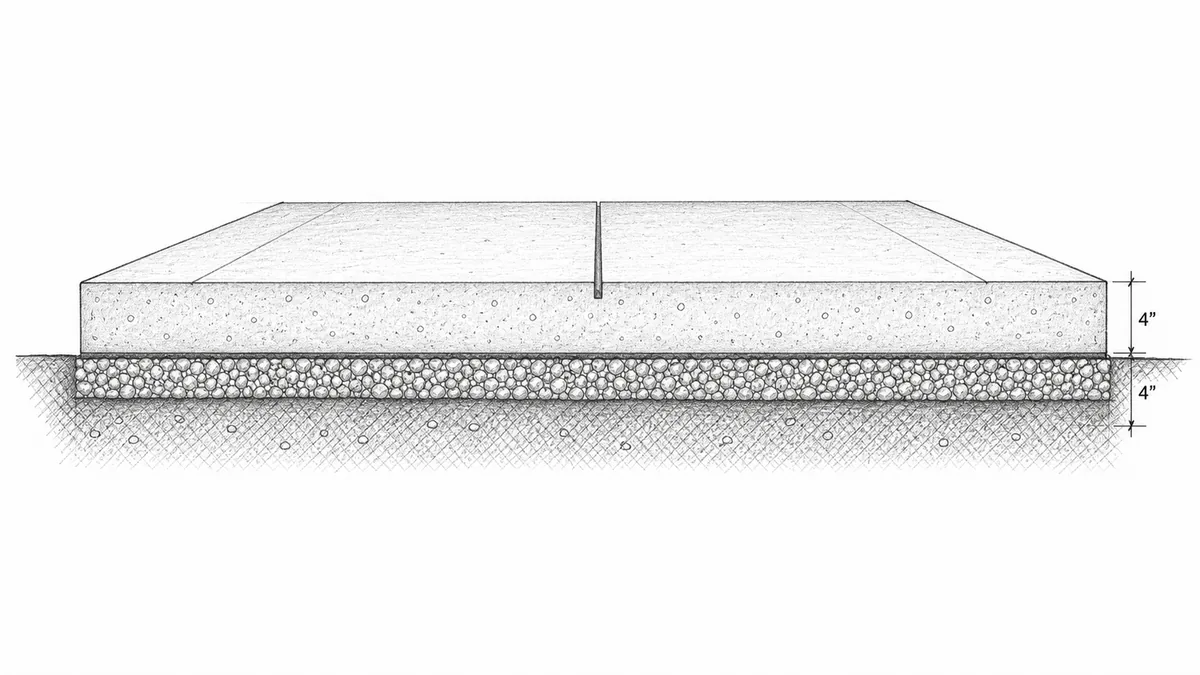
Local standards matter. Driveway aprons, curb ties, public sidewalks, and right-of-way work often have municipal requirements that go beyond a generic residential estimate.
Choose the right guide
| Project | Start here | Main question |
|---|---|---|
| Parking surface or apron | Driveway thickness and base | How load, base, and climate affect the section |
| Path, landing, or crossing | Sidewalk joints and thickness | How to keep panel layout and crossings honest |
| Street-edge drainage | Curb and gutter planning | When transitions and municipal details control the takeoff |
Planning sequence
- Separate the project into pedestrian-only, vehicle, and transition areas.
- Match each area to the right slab thickness and base assumptions.
- Lay out joints so the panels stay practical and fixed objects are isolated.
- Review drainage, frost, and right-of-way requirements before ordering.
- Confirm the final quantity and delivery approach with your supplier.