Quick answer
Use this hub when the concrete supports a structure or determines where the structure bears on the ground. The estimate starts only after the required width, depth, height, or footprint is known from the controlling detail.
Frequently asked questions
Can this hub tell me how deep my foundation must be?
No. The hub helps you organize the estimate after you know the required support geometry. Frost depth and local code interpretation are jurisdiction-specific.
Why are shed pads included in a foundation hub?
Because the key planning question is often whether the slab is only a pad or whether the structure actually needs a footing, pier, anchorage, or other foundation detail.
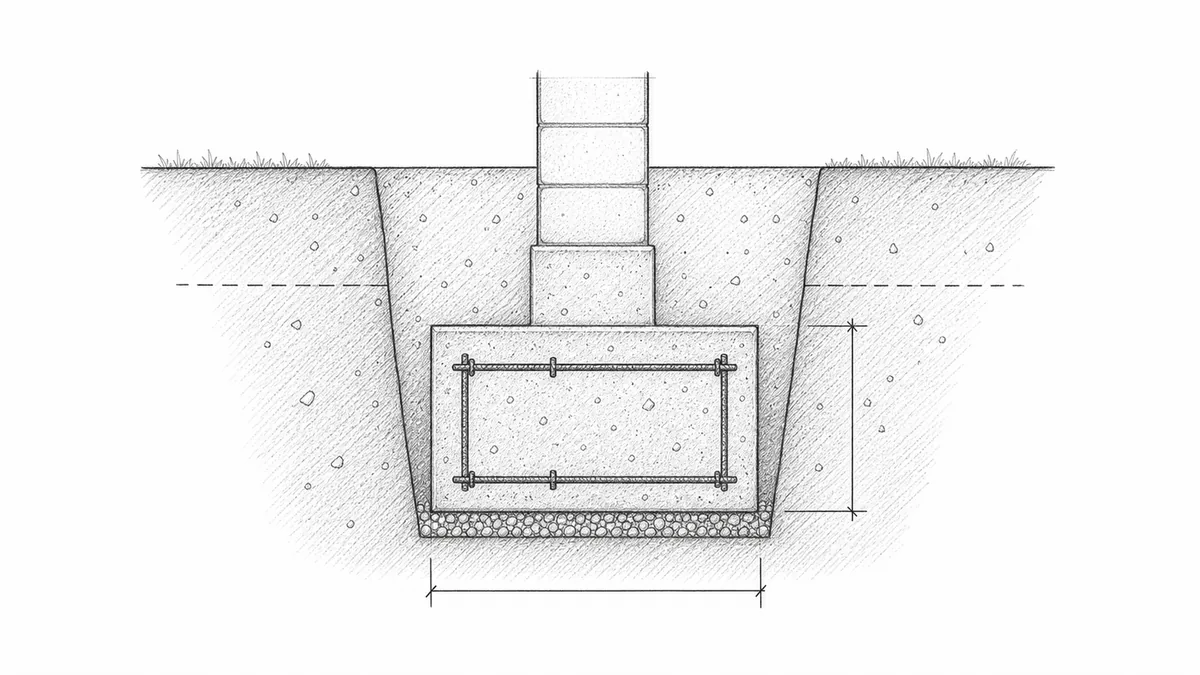
Structural review may be required. Footings, frost-depth foundations, and support elements should be checked against local code, soil conditions, and project drawings before the quantity estimate is treated as actionable.
Foundation guide map
| Need | Start here | What the guide clarifies |
|---|---|---|
| Continuous support under a wall | Strip footing planning | How to calculate finished footing sections without sizing them |
| Support for a shed or small structure | Shed pad foundation | When a pad is enough and when frost or anchorage changes the plan |
| Round pier or post support | Sonotube pier planning | How diameter, concrete height, and frost-depth context interact |
Foundation planning sequence
- Confirm the support type that the drawings, manufacturer, or permit path requires.
- Verify width, depth, frost, and bearing assumptions before calculating.
- Separate uniform sections from widened pads, flares, or thickened areas.
- Account for access, excavation, and utility-locate needs before scheduling the pour.
- Use the estimate to talk with the supplier and local reviewer, not to replace them.