Quick answer
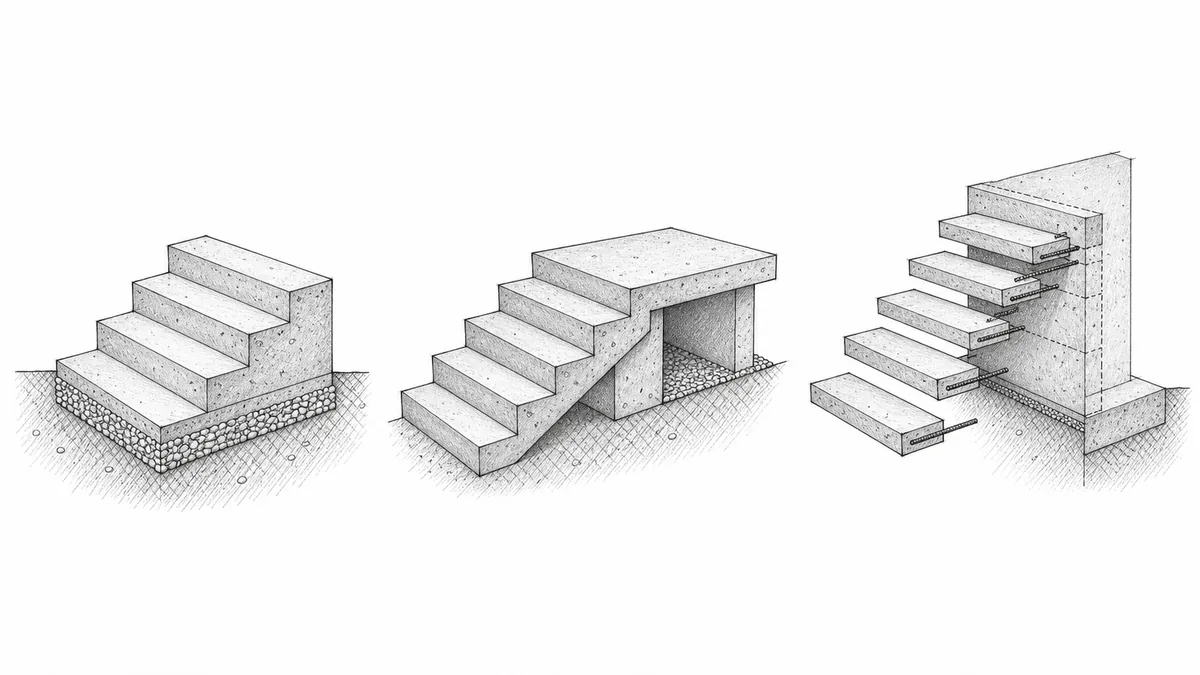
Pick the construction type before you start the takeoff. A solid stoop, an entry stair with a landing, and a hillside stair cast against compacted earth can share the same tread and riser geometry while needing different quantities and review paths.
Frequently asked questions
Why is the stair type the first decision?
Because different support types create different concrete shapes. The same rise and run can produce very different quantities depending on whether the stair is a solid stoop or cast against a slope.
Do step landings belong in the same estimate?
Only if the selected stair mode and the project detail include them. Many projects are clearer when landings, pads, or adjacent walks are measured as separate but related items.
Code checks are not approvals. Common stair prompts such as maximum riser or minimum tread help catch obvious issues, but the local code path and any structural support review still control.
Featured guide
| Need | Start here | Main distinction |
|---|---|---|
| Concrete stoop or stair planning | Concrete steps planning | Choose the stair mode before you estimate volume |
| Adjacent landings or walks | Sidewalk joints and thickness | Landing panels and walkways may need their own layout and joints |
Planning sequence
- Confirm whether the stair is solid, over fill, or structurally supported.
- Measure the rise, tread, width, and any landings from the approved geometry.
- Calculate walls, cheeks, landings, and bottom pads separately when needed.
- Use code reminders as planning checks, not as a final approval.
- Verify support, handrail, and frost concerns before the order is placed.